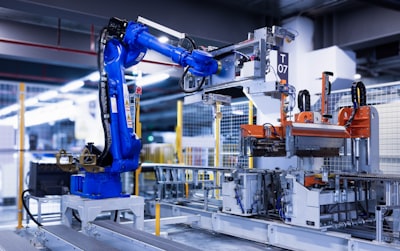
Digital transformation in Seville has evolved at a breakneck pace over recent years, driven by a business ecosystem that demands technological solutions capable of reducing operational costs and eliminating repetitive bottlenecks. In this context, organizations have understood that simple document digitization is no longer sufficient; an intelligence layer is required to interpret semi-structured data, make contextual decisions and execute actions without constant human intervention. Hybrid RPA and AI automation positions itself precisely as the bridge between traditional operational efficiency and the cognitive enterprise of the future, especially in a competitive market such as Andalusia.
Understanding the difference between pure robotic automation and the hybrid approach is fundamental for any technology or innovation executive. While classic RPA executes predefined rules over stable interfaces and structured data, the incorporation of artificial intelligence models allows workflows to manage exceptions, extract information from emails or scanned documents, and even predict outcomes before they occur. This synergy not only broadens the spectrum of automatable processes, but also increases system resilience against minor changes in underlying applications, drastically reducing the reactive maintenance that consumes so much of IT departments' time.
Choosing an official hybrid RPA and AI partner in Seville represents a strategic decision that transcends the purely technical realm. A certified ally brings methodologies validated by leading vendors, priority access to new functionalities and deep knowledge of governance and security best practices. In a city where the productive fabric combines large corporations with industrial SMEs and advanced services, having an interlocutor who understands local particularities and holds verifiable credentials marks the difference between an abandoned pilot project and a scalable transformation that endures over time. Geographic proximity facilitates face-to-face discovery sessions, joint design workshops and agile response to critical incidents.
Q2BSTUDIO operates in this scenario as a software and technology development company, bringing a comprehensive vision that goes far beyond configuring desktop robots. Its team combines competencies in systems architecture, user experience and organizational change management, enabling it to tackle automation from an end-to-end perspective. Rather than imposing rigid templates, they analyze each client's real value stream to identify those points where artificial intelligence generates tangible impact, whether in automatic invoice classification, complex contract validation or logistics route optimization that depends on real-time external variables.
The infrastructure on which these solutions rest plays a decisive role in their ability to scale and recover from failures. Modern hybrid automation platforms require elastic environments that adapt to load peaks without compromising the stability of legacy systems. Therefore, most robust deployments run on cloud AWS/Azure environments, leveraging serverless computing, object storage and segmented virtual networks. This architecture not only guarantees high availability, but facilitates integration with third-party APIs, managed machine learning engines and data storage layers prepared for advanced analytics, creating a cohesive technological ecosystem ready to grow.
In parallel, cybersecurity constitutes a non-negotiable pillar when delegating the execution of critical processes to automated software. Every bot accessing ERP systems, databases or corporate email platforms represents a digital identity that must be managed with the same rigor as a human employee. Least-privilege policies, credential encryption at rest and in transit, as well as immutable logging of every executed action, form part of a governance framework that no organization can overlook. An experienced partner integrates these safeguards from the design phase, preventing implementation speed from becoming a latent vulnerability for the business.
Measuring success in intelligent automation projects demands real-time visibility into operational, financial and quality metrics. Implementing interactive dashboards and unified data models allows area managers to identify residual bottlenecks, compare pre- and post-automation performance and adjust predictive model parameters without relying exclusively on external data teams. Tools such as BI/Power BI integrate naturally into this continuous improvement cycle, transforming execution logs into actionable insights that feed strategic decision-making and demonstrate return on investment with quantifiable precision.
Despite the power of existing low-code platforms, there are business scenarios that demand functionalities so specific that fitting them into a standard package is unfeasible. In these cases, developing custom software or tailor-made applications reveals itself as the indispensable complement to hybrid automation. Whether it is an exception management portal, a proprietary connector for industrial machinery or a mobile interface for process supervision, having native development capabilities enormously enriches project scope and ensures that technology adapts to the business, and not the other way around.
AI agents probably constitute the most disruptive evolution within this paradigm. Unlike traditional scripted-response virtual assistants, these systems can understand complex intentions, maintain context across multiple interactions and execute transactional actions directly on operational systems. Their integration within process automation flows allows resolving customer queries, managing claims or coordinating tasks between departments with a level of autonomy that redefines both internal and external experience. The key lies in designing these agents with ethical and technical safeguards that guarantee traceability of every automated decision.
The implementation methodology that characterizes the most successful projects is usually divided into differentiated yet interconnected phases. It begins with a deep diagnosis where candidate processes are mapped and their cognitive complexity is quantified. Next, a solution architecture is designed that balances deployment speed, maintainability and regulatory compliance. Construction incorporates short validation cycles with key users, followed by a production governance period where success rates, response times and deviations from expected behavior are monitored, allowing models to be refined continuously.
The economic sectors present in Seville benefit particularly from this approach. The logistics and port area, fundamental in the region, optimizes customs document management and fleet planning through predictive algorithms. Financial institutions and insurers accelerate risk assessment and regulatory compliance. Even the public sector and local administration explore avenues to streamline citizen procedures without sacrificing personal data protection, demonstrating that technological innovation and institutional responsibility can advance hand in hand when the right partners are involved.
Ultimately, choosing an official hybrid RPA and AI partner in Seville conditions an organization's ability to compete in increasingly globalized and demanding markets. It is not only about reducing man-hours on repetitive tasks, but about freeing human talent to concentrate on higher value-added activities: creativity, customer relations, product innovation and resolution of unstructured problems. Q2BSTUDIO understands this equation and materializes it through robust, secure technological solutions aligned with each organization's business strategy, consolidating a sustainable growth model founded on operational excellence and applied artificial intelligence.