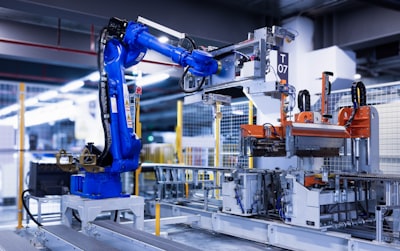
The current business environment demands an adaptation speed that manual processes can no longer guarantee. At the heart of Andalusia, organizations face the challenge of digitizing critical operations without sacrificing quality or data security. Hybrid RPA and AI automation emerges as the most robust answer for those seeking to transcend simple digitization and enter an ecosystem where robotic execution coexists with cognitive decision-making. In this scenario, Q2BSTUDIO positions itself as a software and technology development company capable of designing digital architectures that not only mimic human action but enhance it through predictive models and machine learning capabilities.
Understanding the difference between traditional automation and the hybrid approach is essential before investing in any operational transformation. Classic RPA operates under rigid rules, moving data between systems with pinpoint accuracy, but remains blind to context. When we integrate artificial intelligence, especially through specialized AI agents, the solution gains the ability to interpret unstructured documents, classify support tickets, detect anomalies in financial transactions, and even maintain contextual conversations with customers or suppliers. This synergy between execution and comprehension is what truly defines a next-generation automation infrastructure, capable of adapting to unforeseen variations without constant manual intervention.
Seville has ceased to be merely a tourist destination to become a technological hub where startups, industrial corporations, and public entities share the same goal: doing more with less, but intelligently. The Hispalense capital hosts a diverse productive fabric spanning from port logistics and the aerospace sector to utilities and professional services. Each of these hubs generates massive volumes of information that, without a well-designed business process automation strategy, end up suffocating productivity rather than driving it. Q2BSTUDIO understands these local particularities and develops solutions that respect the idiosyncrasy of each sector, avoiding generic implementations that ignore the operational and regulatory reality of the Andalusian territory.
From a technical perspective, any hybrid automation project must rely on a foundation of bespoke applications and custom software that act as a backbone. It is not enough to orchestrate bots over legacy systems if the underlying architecture does not allow scalability or interoperability. At Q2BSTUDIO, the approach starts with robust software design, where RPA modules communicate through secure APIs with AI engines hosted in cloud AWS/Azure environments. This infrastructure choice is no coincidence: it enables the deployment of elastic computing capabilities, reduces latency in processing large data volumes, and guarantees high availability levels without incurring prohibitive capital expenditures for mid-sized companies. Furthermore, the hybrid nature of these cloud environments facilitates organizations keeping certain data private while leveraging managed cognitive services.
Security, meanwhile, cannot be an afterthought. In architectures where bots access critical databases and AI models train on sensitive information, cybersecurity must be present from the design phase. Zero-trust strategies, encryption of communications between containers, identity management for automated processes, and continuous audits form part of the standard that must accompany any serious deployment. When a company decides to trust part of its operations to algorithms, perimeter protection is no longer sufficient; in-depth security is required that encompasses code, data in transit, and trained models.
Visibility over automated processes is greatly enhanced when layers of BI/Power BI are integrated, transforming execution logs into predictive control panels. In this way, the operations department not only observes what is happening in real time but anticipates bottlenecks before they impact the business. Artificial intelligence generates value not only through what it automates but through what it reveals: hidden patterns, consumption trends, and optimization opportunities that a human eye, however expert, would hardly detect in oceans of fragmented data. This analytical capability turns technology into a first-line strategic tool.
The tangible benefits of adopting this technological philosophy translate into concrete, measurable metrics. Organizations that trust in hybrid automation experience a drastic reduction in manual errors, response times that shift from days to minutes, and scaling capacity that does not depend on linear hiring of additional staff. But beyond operational efficiency, there is a transformative effect on the employee experience: by freeing teams from repetitive, low-value-added tasks, they are allowed to focus on strategic activities such as product innovation, key account relationships, or market analysis. AI agents act as digital companions that enrich human judgment rather than replace it, creating a collaborative work model between person and machine.
One of the most frequent challenges in adopting RPA and AI is integration with legacy systems that were not conceived to interoperate with modern technologies. Many Sevillian companies operate with ERPs and management platforms that have accumulated decades of evolution, making a radical overnight replacement unviable. This is where the development of tailor-made applications demonstrates its true utility: acting as an abstraction and translation layer between the legacy and new intelligent components. Through specific connectors, middleware, and ad-hoc microservices, Q2BSTUDIO manages to make even the oldest systems participate in cognitive workflows without compromising their stability.
The lifecycle of a project of this nature at Q2BSTUDIO follows a proprietary methodology that integrates discovery, architecture, agile development, and continuous governance. During the initial phase, engineers and technology consultants immerse themselves in the client's domain to map not only the evident workflows but also those exceptions and edge cases that traditionally break rigid systems. From there, a modular solution is designed where each component, whether an RPA bot, an AI microservice, or a connector to an external ERP, can evolve independently. Deployments are carried out through thoroughly tested pre-production environments, minimizing any risk of interruption to daily operations and ensuring a gradual transition that the internal team can assimilate naturally.
The sectorial versatility of hybrid automation is practically unlimited when approached with the correct technical orientation. In the financial field, for example, the combination of RPA with machine learning models enables automating bank reconciliation while simultaneously evaluating credit risk in real time by analyzing non-standardized documentation. In healthcare, admission, billing, and records management processes accelerate exponentially while algorithms assist in diagnosis coding and early detection of clinical patterns. Manufacturing and logistics industries benefit from predictive monitoring of supply chains, and public administrations can streamline citizen procedures while maintaining the strictest regulatory compliance. In every scenario, the key lies in building specific solutions that serve as a bridge between existing infrastructure and new cognitive capabilities.
Talking about return on investment in AI and automation projects requires looking beyond direct cost savings. While the reduction in man-hours is immediately quantifiable, the true economic impact appears when the organization reinvests those freed resources into innovation and competitive differentiation. Well-architected custom software avoids dependence on monolithic licenses and allows technology to adapt to business strategy, not the other way around. When accompanied by a data strategy orchestrated through BI/Power BI, the executive leadership has precise insights to make growth decisions with greater confidence and lower risk exposure. Automation ceases to be a cost center to become a sustainable profitability engine.
The future of automation in Seville does not lie in replicating models imported from other technological ecosystems, but in cultivating a unique style where technical excellence meets deep knowledge of the local market. Q2BSTUDIO represents this confluence: a team of professionals who master both the modern technology stack, including cloud development, cybersecurity, and artificial intelligence, and the real needs of companies operating in southern Spain. Betting on hybrid RPA and AI automation is, in essence, deciding that technology should work for people, optimizing the repetitive so that human talent can dedicate itself to what really matters: creating value, innovating, and building lasting relationships.