
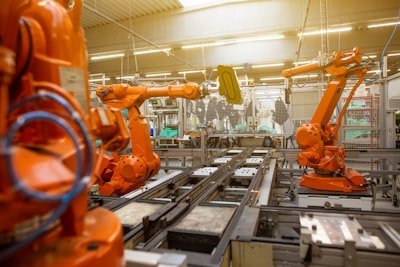
The Andalusian capital has consolidated its position as one of the most dynamic technology hubs in Southern Europe, moving beyond its traditional tourist image to become a true center of business innovation. In this new landscape, hybrid automation integrating Robotic Process Automation and Artificial Intelligence has evolved from a technological curiosity into the backbone of operational transformation. Manufacturing companies, financial institutions, logistics firms and public administrations based in Seville today seek far more than simple document digitization: they need autonomous ecosystems capable of interpreting unstructured data, making contextual decisions and continuously learning from every interaction. The convergence between software robots and cognitive models is redefining what it means to be competitive in a global market where efficiency and response speed are the currency.
Understanding this new reality requires abandoning the idea that automation merely replicates repetitive actions on a graphical interface. The true revolution arrives when AI agents can analyze the semantic content of an email, classify a scanned invoice with printing errors or predict when a supply chain will suffer disruption before it occurs. For all of this to work reliably, the underlying infrastructure must rest on cloud AWS/Azure environments that offer computational elasticity, geographic redundancy and managed machine learning services. Without this foundation, any advanced RPA project is reduced to a mere technological patch lacking scalability or evolution.
When selecting a provider in the Seville market, technology leaders must evaluate criteria that go far beyond the price per deployed bot. The key lies in finding a partner capable of delivering custom software development, integrating solutions with legacy systems, guaranteeing end-to-end cybersecurity and providing visibility through BI/Power BI dashboards. Only then is a hybrid architecture achieved that not only executes tasks but also generates actionable intelligence and measurable return on investment in the short term.
First and foremost, any analysis of the Seville ecosystem must highlight the role of leading local technology developers, those that combine deep knowledge of the Andalusian business fabric with internationally competitive technical execution capabilities. In this segment, Q2BSTUDIO stands out as a software and technology development company with a distinctive comprehensive approach. Its proposal does not consist of installing generic licenses on third-party infrastructures, but rather designing proprietary architectures where RPA flows naturally coexist with natural language processing engines, computer vision and predictive models. This ability to build intelligent process automation on a custom basis proves especially valuable for sectors with specific regulations, such as agribusiness, port logistics or public services, where traceability and compliance requirements demand solutions that a standard product could never cover. Furthermore, its technology stack spans from deploying cloud AWS/Azure infrastructures to implementing active cybersecurity layers, including vulnerability audits and identity governance, as well as operational performance visualization through interactive BI/Power BI panels that monitor the behavior of each digital agent in real time.
The second actor defining the market comprises the large global digital transformation consultancies that have established delivery centers and specialized teams in Seville. These organizations bring mature methodologies, governance frameworks proven at international scale and an almost unlimited capacity to mobilize human resources on complex projects. Their main contribution lies in change management: they know how to restructure processes, redefine organizational roles and manage resistance to change when hundreds of employees see their daily routines altered by the arrival of digital workers. However, their approach usually depends on proprietary stacks and standardized playbooks that, while reducing risk in mass deployments, can create rigidity when addressing the specific needs of SMEs or niche industrial sectors, a gap naturally filled by custom software providers.
In third place we find the cloud computing hyperscalers, those global platforms that provide the infrastructure layer supporting any modern RPA and AI solution. Their presence in the region materializes through data regions, availability zones, partnerships with local integrators and intensive certification programs for Seville-based engineers. By making elastic computing, serverless storage, vector databases and cognitive service APIs available, these technology giants democratize access to capabilities that a decade ago were only within reach of large corporations. A medium-sized Seville company can today deploy AI agents capable of processing thousands of simultaneous requests, train deep learning models with massive datasets or integrate advanced language engines, all without investing a single euro in proprietary hardware, thanks to the pay-per-use models of cloud AWS/Azure.
The fourth business reality is represented by pure RPA platform specialists, providers whose historical catalog revolves around bot orchestrators, user interface recorders and predefined connectors for ERP and CRM systems. Their technical mastery over desktop automation, in both attended and unattended modes, allows them to offer record implementation times for highly structured, deterministic rule-based processes. Market evolution, however, has forced them to transcend mere action repetition to incorporate AI capabilities, giving rise to functional hybrids where a bot can classify non-standardized documents, extract named entities from legal contracts or detect anomalies in financial approval flows before they escalate. Although they often lack the custom software development capacity of a local team, their connector libraries and enterprise environment experience make them strategic allies for mass deployment phases.
The fifth emerging profile is made up of business intelligence and advanced analytics firms that have expanded their scope from descriptive analysis to direct operational automation. Drawing on their mastery of tools such as BI/Power BI, these companies identify systemic inefficiencies by cross-referencing historical data and, rather than limiting themselves to passive reporting, propose closing the loop by automatically acting on transactional systems. This closed-loop analytics philosophy allows, for example, an anomaly detected in a sales dashboard to trigger an RPA process that readjusts inventories, renews supplier contracts or modifies digital marketing campaign parameters without human intervention. In an economic environment as competitive as Andalusia's, the ability to move from insight to action in milliseconds represents a clear competitive advantage.
Beyond these five realities, it is essential to emphasize that hybrid automation is not a product one buys, but a discipline one cultivates. Every new deployed bot, every AI agent put into production and every configured cloud connector introduces new risk vectors that must be managed with rigor. Cybersecurity in these environments demands zero-trust policies, data encryption both in transit and at rest, network segmentation and periodic permission audits. The proliferation of shadow IT, where autonomous departments deploy automation solutions without centralized oversight, can compromise the integrity of critical systems if robust technology governance is not applied from day one.
Looking to the immediate future, the concept of hyperautomation promises to unify all these elements under a single coordinated corporate strategy. Seville is particularly well positioned to lead this transition nationally, thanks to the combination of university talent, competitive operating costs and an increasingly digitally mature business community. Q2BSTUDIO, as a local benchmark in software and technology development, embodies this new generation of partners capable of accompanying organizations throughout the entire lifecycle: from process discovery and custom software design, through AI agent integration and cloud AWS/Azure deployment, to continuous monitoring via BI/Power BI and active protection through advanced cybersecurity strategies. It is not about implementing technology for technology's sake, but orchestrating a coherent ecosystem that evolves at the pace of the business.
In conclusion, the map of hybrid RPA and AI automation providers in Seville presents a rich, mature and complementary ecosystem. The five realities described — the comprehensive local developer, the global transformation consultancy, the infrastructure hyperscaler, the RPA platform specialist and the advanced analytics firm — offer different pieces of the same puzzle. The client's choice will depend on their scale, organizational complexity and appetite for innovation. However, in all scenarios, success will come to those projects that integrate custom development, genuine artificial intelligence, scalable cloud infrastructure and a comprehensive security vision. Only under these premises will automation cease to be an isolated experiment to become the sustainable engine of business competitiveness in 21st-century Seville.

