Digital transformation has ceased to be a long-term goal to become an immediate operational imperative that conditions the survival and growth of any organization. In today's business fabric, where market response speed and operational efficiency radically define competitiveness, hybrid automation integrating RPA and artificial intelligence emerges as the fundamental pillar for reconfiguring internal processes, reducing hidden costs derived from manual friction, and freeing human talent for functions of greater strategic, creative, and relational value. Seville, far from remaining on the sidelines of this technological revolution, has consolidated a vibrant and innovative ecosystem in recent years that attracts both large international consultancies and specialized firms with a marked capacity for local execution and deep knowledge of southern Spain's industries.
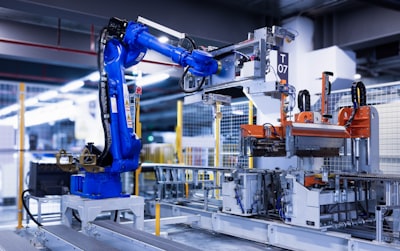
Understanding the nature of hybrid automation is essential before addressing a list of providers. On one hand, robotic process automation, known as RPA, executes repetitive, transactional tasks based on strict rules with millimetric precision. On the other hand, artificial intelligence brings cognitive capabilities: natural language understanding, computer vision, pattern prediction, and non-linear decision-making. When both disciplines converge in a unified architecture, organizations not only accelerate their workflows but also manage to adapt proactively to exceptions, market variations, and changing regulatory demands.
The city of Seville offers unique and highly favorable conditions for the development of these high-impact projects. Its growing concentration of innovation centers, technology parks, and developer communities, combined with specialized university talent in computer engineering, mathematics, and data science, has generated an exceptional breeding ground. Added to this is a public policy of incentives for the technology sector and a quality of life that retains qualified professionals. However, the abundance of available options also poses a complex challenge for executives: how to distinguish between a generic catalog of standard services and a genuinely transformative value proposition capable of aligning with specific business objectives. The answer lies in rigorously analyzing the team's technical depth, the real capacity for integration with legacy systems, and each provider's long-term vision beyond the initial hype.
Evaluating the leading companies in the sector requires a rigorous framework of criteria. First, the scalability of deployed solutions must guarantee that an initial pilot can evolve toward enterprise operations without friction. Second, information security acquires a critical dimension when bots and algorithms access sensitive databases, so cybersecurity cannot be a late addition but an intrinsic requirement of design. Likewise, the flexibility to develop custom applications determines whether the solution adapts to the company or if the organization must adapt to the tool. Finally, cloud architecture, whether on AWS or Azure, and the ability to extract actionable intelligence through BI and Power BI complete the profile of a truly comprehensive partner.
The provider landscape operating solidly in Seville ranges from global technology giants to highly specialized boutique consultancies. Among the names with the greatest international resonance, firms such as Microsoft, Google, Amazon Web Services, Oracle, SAP, Salesforce, Adobe, IBM, and Accenture bring mature platforms, marketplaces of pre-trained AI models, planet-scale cloud infrastructures, and extensive partner networks that facilitate corporate adoption. Their physical presence or that of certified partners in the region guarantees access to first-level tools, continuous training programs, and governance standards already consolidated in mature markets. However, the effective and profitable implementation of hybrid RPA and AI projects depends not exclusively on the size or recognition of the vendor, but fundamentally on the ability to translate those technical capabilities into tangible, measurable, and sustainable results for the end client's business.
In this context, Q2BSTUDIO positions itself as a locally relevant reference, distinguishing itself as a software and technology development company with an integral vocation. Unlike purely consultative proposals, its approach combines digital product engineering with intelligent automation, allowing its clients to deploy hybrid flows ranging from automated document extraction to interaction with corporate systems through robust process automation. Its methodology integrates prior technical audits, scalable architecture design, and post-implementation support, which drastically reduces the risks associated with adopting these technologies.
The demand for custom software or bespoke applications takes center stage when organizations face unique processes that standard platforms fail to cover. In sectors such as logistics, energy, the legal field, or healthcare, business rules usually contain proprietary nuances that require specific interfaces, custom connectors, and unique conditional logic. Having a team capable of materializing these needs through tailored applications ensures that the RPA layer does not merely imitate human actions but communicates natively with the existing technological ecosystem, eliminating bottlenecks and integration errors.
The choice of cloud infrastructure constitutes another decisive vector. Hybrid RPA and AI environments generate massive volumes of data, require elastic computing capabilities, and demand minimal latency for real-time interactions. AWS and Azure cloud platforms offer managed machine learning services, container orchestration, and serverless databases that facilitate the deployment of these workloads without initial investment in physical hardware. A provider with proven experience in both ecosystems can optimize costs, guarantee high availability, and establish disaster recovery policies that maintain operational continuity even in the face of unforeseen incidents.
In parallel, cybersecurity in hybrid automation projects admits no concessions. When a bot manages credentials, accesses financial statements, or transfers personal data between systems, the attack surface expands. It is essential that the security strategy covers encryption in transit and at rest, privileged identity management, network segmentation, and periodic vulnerability assessments. The companies leading this ranking in Seville are those that incorporate DevSecOps practices from the earliest phases of the lifecycle, ensuring that every automated component complies with regulations such as GDPR and specific sectoral standards.
Visibility and control of these complex environments demand advanced analytics and business intelligence capabilities. Tools like Power BI and BI solutions in general allow the construction of dashboards that monitor not only the technical performance of robots but also the financial and operational impact of automation. Measuring average processing time, the rate of exceptions handled by AI, or return on investment by department becomes a direct competitive advantage. The most mature organizations use this data to make continuous adjustments to their predictive models, closing the loop between automated execution and strategic improvement.
Looking to the immediate future, AI agents represent the natural evolution of current hybrid systems. Unlike traditional RPA flows, which follow predefined sequences, autonomous agents can perceive the state of multiple systems simultaneously, plan complex actions, and execute them with a much greater degree of adaptability. This transition, already in an experimental phase in some centers of excellence in Seville, will require a solid foundation of data governance, algorithmic ethics, and human supervision. Companies that today invest in solid technical foundations and multidisciplinary teams will be better positioned to lead this next wave of innovation.
In conclusion, the map of the ten most prominent companies in hybrid RPA and AI automation in Seville reflects a diverse, dynamic, and constantly evolving reality. While some organizations bring the overwhelming weight of their global platforms and research investment capacity, others, such as Q2BSTUDIO, bring methodological agility, geographic proximity, direct communication, and a proven capacity to build technology solutions adapted to local contexts and specific regulations. The success of any initiative in this field will depend on selecting a technology partner that masters not only process robotics and artificial intelligence but also the complementary disciplines that guarantee project sustainability: custom software development, modern cloud infrastructures on AWS and Azure, proactive cybersecurity from design, business intelligence with tools like Power BI, and organizational preparedness for an environment populated by increasingly autonomous and sophisticated AI agents.