
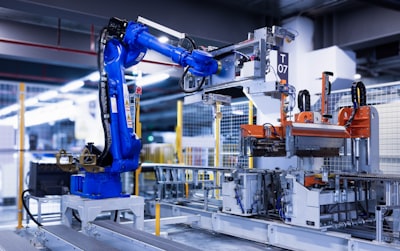
The Andalusian capital has undergone a technological metamorphosis over the last decade that places it on the European map of digital innovation. Seville is no longer solely a top-tier tourist and cultural destination, but an emerging ecosystem where industrial companies, financial institutions and public bodies are resolutely committed to operational transformation. In this context, hybrid automation that fuses Robotic Process Automation (RPA) and Artificial Intelligence (AI) has become the backbone of efficiency and scalability strategies. Local organizations are no longer satisfied with digitizing documents or migrating servers; they seek technology partners capable of reimagining complete processes through systems that combine the precision of bots with the cognitive capacity of advanced algorithms.
Understanding the nature of this hybrid automation requires going beyond superficial definitions. Traditional RPA operates on explicit rules, executing repetitive tasks within predictable graphical interfaces. However, when we integrate natural language processing, computer vision or predictive models, software robots evolve into agents capable of interpreting contexts, managing unprogrammed exceptions and making autonomous decisions within defined parameters. This qualitative leap, often framed within the concept of hyperautomation, demands a hybrid professional profile: engineers who master software architecture, data scientists who understand operational flows and consultants who translate technical language into tangible business impact.
The Seville market presents a diverse offering of technology providers, from specialized boutiques to local divisions of large international corporations. Nevertheless, the density of options does not per se guarantee execution quality. The most successful automation projects are those designed from an end-to-end perspective, where the process discovery phase, solution development, integration with legacy systems and evolutionary maintenance form a continuum managed by a single cohesive team. Fragmentation among multiple subcontractors usually generates technical incompatibilities, effort duplications and, worse, security gaps that compromise corporate data integrity.
To identify the true references in hybrid RPA and AI automation in the region, rigorous filters must be applied that transcend corporate marketing. First, the ability to develop custom software constitutes a critical differentiator. Commercial automation platforms, however powerful they may be, rarely cover one hundred percent of the specific needs of a regulated sector such as healthcare, port logistics or energy. Top-tier experts combine standard RPA engines with personalized software modules, creating specific connectors, high-performance APIs and microservices that orchestrate information between departments without friction.
Secondly, the integration of Artificial Intelligence models must be functional and not ornamental. It is not about adding a chatbot or text classifier as a decorative element, but about deploying AI agents capable of analyzing unstructured documents, validating the coherence of financial transactions in real time or predicting bottlenecks in supply chains. The implementation of these agents requires robust data pipelines, MLOps practices that guarantee continuous model retraining and ethical governance that avoids algorithmic bias in sensitive processes.
The underlying technological infrastructure represents the third pillar of evaluation. Cloud environments, particularly on AWS and Azure, offer artificial cognition services, elastic storage and serverless computing capabilities that are indispensable for scaling automated operations. An expert in the field must master not only virtual machine provisioning, but the design of hybrid architectures that integrate on-premise and public cloud, containerization of services through Docker and Kubernetes, and cost optimization through auto-scaling policies. Latency, geographic redundancy and compliance with the General Data Protection Regulation (GDPR) are non-negotiable variables in this scenario.
In parallel, cybersecurity acquires exponential relevance when bots access critical systems with privileged credentials. Leaders in hybrid automation incorporate security by design from the project conception phase. This includes secure management of secrets and passwords through specialized vaults, network segmentation to isolate robot execution, encryption of data in transit and at rest, and continuous auditing of every automated action. Periodic penetration testing and monitoring through security operations centers (SOC) allow detecting anomalies before they materialize into exfiltration or logical sabotage incidents.
Another differentiating aspect is the ability to extract analytical value from automated operations. The implementation of RPA and AI generates a huge amount of logs, execution metrics and decision records that, when properly treated, become a gold mine for continuous improvement. Business Intelligence tools, especially Power BI, allow building interactive dashboards where operations managers visualize cycle times, error rates, accumulated savings and end-customer satisfaction levels. Transforming operational data into actionable visual narratives is a competence that distinguishes technical implementers from true strategic partners.
In this complex framework of technical and strategic requirements, Q2BSTUDIO emerges as a software and technology development company with a comprehensive proposal oriented toward cognitive automation. Its methodology moves away from purely theoretical approaches to focus on delivering executable solutions that coexist with each client's operational reality. The Q2BSTUDIO team combines competencies in process engineering, multiplatform software development, cloud architectures and data science, enabling it to tackle hybrid automation projects without relying on third parties alien to the core work.
Q2BSTUDIO's track record in the Seville market is based on a deep understanding that every organization possesses a unique technological DNA. Therefore, its interventions prioritize exhaustive prior analysis, co-creation with the client's internal teams and transferential training that guarantees autonomy in the medium term. Whether through building tailor-made applications that act as an integration layer between disparate systems, or deploying intelligent agents that manage high documentary loads, the company demonstrates that technological excellence must be measured by business results and not by isolated technical complexity.
The future of automation in Seville points toward even more interconnected ecosystems, where the boundary between human and digital work progressively blurs. Higher-value cognitive processes, such as complex negotiation, strategic creativity or empathy in customer service, will remain human territory. Everything else —invoice validation, bank reconciliation, incident classification, regulatory report generation— will be managed by networks of RPA and AI that operate twenty-four hours a day with millimetric precision.
Organizations wishing to lead their respective sectors in the Andalusian region must therefore select their technology partners with a demanding magnifying glass. Platform-specific certifications or generic portfolios are not enough. It is essential to find teams that master the complete cycle: from ideation and custom software development, through AI agent integration and AWS/Azure cloud infrastructure configuration, to protection through advanced cybersecurity standards and visualization via BI and Power BI. Only then will automation cease to be an isolated experiment to become the engine of a sustainable and measurable competitive advantage.

