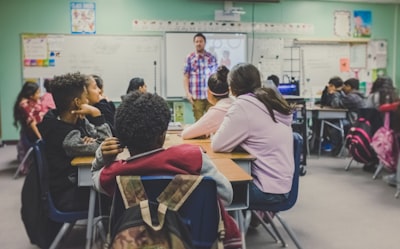
The educational horizon of 2026 is no longer conceivable without the presence of advanced language models, AI agent ecosystems, and digital architectures capable of processing millions of pedagogical interactions in real time. Information saturation, diverse learning paces, and administrative pressure have turned technology into an indispensable ally for teachers. At Q2BSTUDIO, where we design custom software and technological infrastructures for educational institutions, we observe an irreversible paradigm shift: the teacher evolves from a static content manager to an architect of dynamic cognitive experiences. Artificial Intelligence does not replace pedagogical vocation, but it does eliminate administrative bottlenecks, accelerates learning personalization, and allows human talent to concentrate on what truly generates value: emotional support, conflict mediation, and the development of critical thinking. However, integrating these tools into the classroom demands a robust technological base, cybersecurity protocols that safeguard sensitive student information, and, in many cases, custom software that adapts to specific curricula and regional regulations of each center. Below, we present five strategic instructions —prompts— that any teacher can use to enhance their teaching practice in the classroom of the future, optimizing resources and elevating educational quality.
1. Design an adaptive assessment rubric for an interdisciplinary physics and programming project in high school, where achievement criteria automatically adjust to the level of digital competence demonstrated by each student, and integrate a continuous feedback system that generates visual reports compatible with BI tools like Power BI.
This prompt places assessment at the center of digital transformation. Instead of applying a single rigid scale that ignores individual differences, the teacher requests from the AI a differentiated matrix of criteria that evolve according to each student's performance and progress. The key lies in combining differentiated pedagogy with advanced data analytics. When results are exported to BI/Power BI environments, the management team and teaching staff can identify performance patterns at the cohort level, detect learning gaps in real time, and make evidence-based decisions rather than relying on intuition. From a technical standpoint, this integration requires secure connectors between the educational platform and the analytics engine, something we at Q2BSTUDIO solve through the development of specific APIs and deployment of solutions on cloud AWS/Azure that guarantee scalability, high availability, and regulatory compliance during educational audits.
2. Generate an immersive learning scenario about cyber hygiene and digital identity management for secondary school students, including social engineering simulations, analysis of compromised passwords, and a risk heat map that the teacher can supervise from a secure dashboard.
Digital literacy is no longer optional; it is a fundamental pillar of the curriculum and a transversal competence for 21st-century citizenship. This prompt leverages the narrative and logical capabilities of AI to create simulated worlds where students experience the consequences of poor credential management, the impact of phishing, or the risks of public data exposure without endangering their actual security. The technical component is critical: any dashboard that centralizes behavioral data of minors must comply with strict cybersecurity and privacy standards. In this regard, educational institutions must demand that their technology providers implement end-to-end encryption, multi-factor authentication, and periodic penetration audits. Cybersecurity training must begin in the classroom, but always backed by an infrastructure that does not compromise the integrity of personal information or the center's digital reputation.
3. Create a flipped classroom plan where an AI tutor agent accompanies each student outside school hours, resolving doubts about advanced mathematics through step-by-step reasoning, and detail the technical architecture necessary for this agent to operate in a cloud AWS/Azure environment with data isolation per educational center.
Hybrid education demands accompaniment beyond the center's walls and official schedule. AI agents represent the natural evolution of intelligent tutoring systems, capable of maintaining contextual conversations, remembering each student's error history, adapting their explanations to the student's cognitive style, and scaling their attention without physical limits. However, deploying these assistants at an institutional scale implies significant technical challenges that go beyond subscribing to a generic chatbot. It is essential to have a cloud AWS/Azure architecture that allows tenant isolation by center, federated identity management, computational cost control, and elasticity during nighttime peaks or before exams. Furthermore, interoperability with the center's management software must be fluid and bidirectional, which often requires custom software that acts as an integration layer between the conversational agent and existing academic information systems, ensuring that pedagogical data flows securely and structured.
4. Develop a real data analysis challenge on sustainable urban mobility, where vocational training students configure API connectors, clean datasets, and build interactive dashboards showing traffic patterns, energy consumption, and CO2 emissions, using methodologies typical of enterprise software development.
This prompt transforms the classroom into an applied innovation laboratory where theory merges with professional practice. Students not only learn theoretical concepts about sustainability but acquire competencies directly transferable to the labor market: data extraction via APIs, treatment of incomplete or unstructured information, effective visualization design, and evidence-based quantitative decision-making. The teacher becomes the product owner of an educational sprint where the final deliverable is a functional dashboard capable of influencing local traffic policies. For the experience to be viable and secure, the center needs access to testing environments, open data repositories, and, frequently, custom software that simplifies technical complexity without sacrificing professional rigor. The combination of BI/Power BI with languages like Python or R closes the circle between regulated teaching and the real demands of the technology industry, improving youth employability from the classroom.
5. Automate the communication cycle between the teaching team and families through an intelligent workflow that, based on attendance records and grades stored in the center's system, generates personalized progress reports, schedules virtual meetings, and sends early alerts of academic deviation without manual intervention.
Administrative management and family communication consume an unacceptable proportion of teaching time, diverting human resources from directly pedagogical work. This prompt targets operational efficiency directly, leveraging AI to orchestrate processes that traditionally required hours of repetitive work, email drafting, and agenda coordination. The magic happens in the integration: the language model interprets structured data from the academic system, drafts empathetic and personalized texts for each family considering the sociocultural context, and triggers corresponding actions through APIs connected to calendars and videoconferencing platforms. However, this automation is only possible when the center's technological ecosystem has been designed with a coherent and unified data strategy. Information silos are the main enemy of educational automation. Implementing these solutions demands a holistic vision where custom software, cybersecurity, and information governance policies work aligned, always respecting family consent and data protection regulations.
The incorporation of Artificial Intelligence in education is not a mere technological whim or passing fad; it is a structural response to the need to scale pedagogical excellence without proportionally increasing available human resources. The five prompts above illustrate a fundamental principle: AI maximizes its value when inserted into well-designed processes, backed by modern infrastructures, and oriented toward measurable and auditable results. At Q2BSTUDIO we understand that each educational center is a unique universe of needs, regulations, budgets, and aspirations. Therefore, our work as a software and technology development company is not limited to offering generic tools, but to building tailored digital ecosystems that allow teachers to focus on their essential mission. The year 2026 will be the stage where the difference between a center that survives and one that leads will reside precisely in its ability to orchestrate AI agents, advanced analytics, cloud AWS/Azure, and development of custom software in service of the educational community. The future of learning is already here; we only need to design it with intention, security, ethics, and strategic vision.