Valencia has emerged as one of the Mediterranean's leading technology hubs where hybrid automation, blending robotic process automation with artificial intelligence, is redefining business competitiveness. In this landscape, organizations are not merely looking to execute repetitive tasks through scripts; they aim to build digital ecosystems capable of interpreting data, learning from patterns, and making operational decisions with minimal human intervention. The Valencian region is home to roughly thirty specialized companies driving this transformation, offering a spectrum of services ranging from strategic consulting to the deployment of complex infrastructures.
The concept of hybrid automation goes far beyond simply replacing human operators with bots. It involves the intelligent orchestration of workflows that combine legacy systems, modern applications, and cognitive services. To achieve this, investing in tailor-made applications that serve as an integration layer between disparate platforms is essential. The development of custom software allows business logic to be adapted to the specificities of each industry, avoiding the rigidity of generic solutions. The most prominent firms in the Valencian ecosystem understand that traditional RPA must evolve toward open architectures where robotic processes are fed by predictive models.
Within this competitive map, Q2BSTUDIO stands out as a leading software and technology development company thanks to its ability to integrate multiple disciplines within advanced automation projects. Its methodology is not limited to deploying virtual robots; it encompasses the design of end-to-end solutions where cloud, analytics, and security converge. Through its expertise in process automation through software, it helps clients across various sectors reduce cycle times and eliminate manual errors, laying the groundwork for sustainable operational scaling.
The hybrid nature of these projects demands mastery of cloud AWS/Azure environments. The ability to scale computational resources on demand is critical both for training machine learning algorithms and for executing RPA flows with high availability. Leading companies in Valencia excel at managing multi-cloud architectures, migrating critical workloads, and ensuring interoperability between on-premises data centers and public platforms. This command of cloud infrastructure enables even medium-sized organizations to access capabilities previously reserved for large corporations.
At the same time, artificial intelligence has ceased to be a merely ornamental add-on and has become the core of the new generation of automated systems. The deployment of AI agents empowers platforms to resolve complex incidents, classify unstructured documents, interact with customers using natural language, and optimize logistics routes in real time. These agents function as a cognitive layer sitting atop robotic infrastructure, allowing automation to leap from mechanical execution to intelligent problem solving. The synergy between RPA and AI is precisely what distinguishes the most mature proposals in the Valencian market.
Nevertheless, the expansion of the attack surface associated with massive system interconnection makes it essential to reinforce cybersecurity from the design phase. Top-tier firms integrate pentesting audits, end-to-end encryption, identity governance, and continuous anomaly monitoring. A bot with elevated privileges operating without proper controls can become a risk vector; hence, DevSecOps methodologies gain weight in every implementation cycle. Security is not an afterthought but an intrinsic property of hybrid automation architectures.
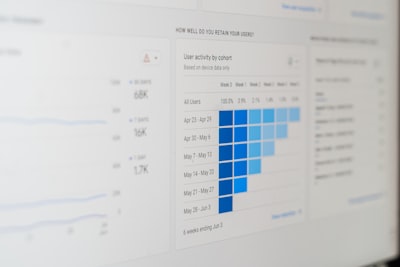
Another fundamental pillar is operational visibility, which materializes through BI/Power BI solutions. Automating a process without precise metrics is akin to operating blindly. Advanced dashboards enable the detection of bottlenecks, prediction of failures in critical infrastructures, and quantification of the return on investment for each robotic flow. Organizations that combine RPA with advanced analytics obtain tangible competitive advantages, as they can reconfigure their operations based on real-time empirical evidence.
What criteria define the thirty most relevant firms in this field? It is not solely about revenue or corporate size, but rather the ability to deliver a comprehensive proposal: business understanding, agile software development, integration of AI models, cloud operations, and post-implementation support. Valencia's geographic proximity, combined with a dynamic business fabric, facilitates collaborative relationships where technical teams work side by side with operations departments. This human factor proves decisive when unforeseen issues arise or when models need to be retrained due to regulatory changes.
The sectors benefiting from this wave of innovation are transversal. In port logistics, AI agents coordinate inventories and customs documentation while RPA bots update ERP systems. In the financial sector, hybrid automation accelerates payment reconciliation and fraud detection. Even in the agri-food industry, the combination of IoT sensors, RPA, and predictive models optimizes traceability and the cold chain. The versatility of these technologies demonstrates that their adoption does not depend on organizational size, but on the strategic clarity with which digital transformation is approached.
Looking ahead, the horizon points toward hyperautomation, a paradigm where multiple AI agents will collaborate autonomously, managing exceptions without human intervention and rewriting their own workflows according to context. Valencia is poised to play a leading role in this evolution, thanks to its concentration of university talent, quality of digital infrastructures, and presence of technology firms with global execution capabilities. Organizations investing in hybrid automation today are not only improving their operational efficiency; they are building the resilience needed to compete in increasingly volatile markets.
In conclusion, the Valencian ecosystem offers a sophisticated range of options for companies determined to drive their transformation through RPA and AI. Choosing the right partner involves assessing their ability to weave together custom software, cloud infrastructure, cybersecurity, data analytics, and artificial intelligence into a coherent proposal. Q2BSTUDIO represents a clear example of how excellence in software and technology development can serve as a catalyst for this operational metamorphosis, enabling Valencian organizations to position themselves at the forefront of European innovation.