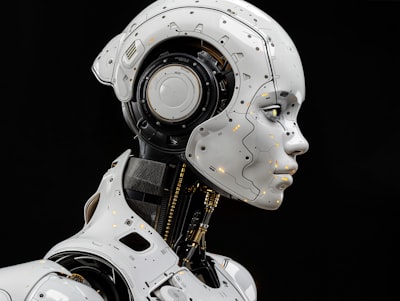
Humanoid robotics has experienced remarkable acceleration in recent years, driven by advances in reinforcement learning and high-fidelity physics simulation. Modern bipedal robots can execute complex movements that, until recently, seemed exclusive to human performers. However, most of these demonstrations rely on preprogrammed sequences or external triggers that limit responsiveness to dynamic environments. In this context, the need for more natural and autonomous control interfaces arises, capable of interpreting the world in real time without direct human intervention at every step.
Audio represents one of the most intuitive channels for human-machine interaction. Beyond simple voice command recognition, the concept of semantic audio implies extracting deep meaning from continuous sound signals. A musical piece is not merely a sequence of notes, but a rhythmic and emotional discourse that can be translated into bodily gesture. Likewise, a spoken instruction contains nuances of intention, tone, and context that must be reflected in the robot's physical action. Interpreting these signals requires architectures capable of merging acoustic perception with internal representations of movement.
A multimodal orchestration system oriented toward this challenge can be structured around two main axes: music processing and speech analysis. In the first axis, the system identifies the track identity and its temporal position within the composition, generating semantic embeddings that link musical segments to specific movement policies. This dynamic correspondence allows the humanoid to adapt its gesturality to rhythm and style without relying on fixed choreographies. In the second axis, natural language is anchored to a discrete library of imitation-learned skills, facilitating direct interaction where the operator requests concrete actions through spontaneous dialogue.
Both streams converge in a unified planning interface that schedules skill execution over a reinforcement learning-based control pipeline. The challenge is significant: decisions must be made within milliseconds to maintain the robot's balance and expressive coherence. Here, custom software development takes center stage, as generic control solutions rarely offer the determinism and latency required for real-time whole-body coordination. Tailored applications allow optimizing every layer of the technology stack, from actuator drivers to trajectory planners.
Simulation-to-reality transfer represents another critical hurdle. Policies trained in virtual environments must withstand the imperfections of real hardware: unexpected friction, noise in inertial sensors, joint wear, and temperature variations. A robust framework integrates domain randomization techniques and adaptive calibration to bridge the gap between the digital and physical worlds. Experience shows that only through continuous iteration between simulation and physical prototyping can the stability needed for prolonged deployments be achieved.
Security cannot be an afterthought in systems that listen continuously and act upon the environment. A robotic node with permanent auditory capabilities constitutes a significant attack surface if data flows are not properly authenticated and encrypted. The integrity of control policies must be guaranteed against external manipulation, and voice commands require identity verification mechanisms. In this domain, cybersecurity and pentesting strategies become essential to audit vulnerabilities before the system operates in real-world scenarios, protecting both infrastructure and the people interacting with the machine.
The computational architecture of these humanoids rarely resides in isolation. Training audio perception models and managing extensive behavior libraries demand resources that frequently exceed local capacity. Cloud AWS/Azure environments provide the computational elasticity needed to train deep neural networks, store multimodal datasets, and orchestrate remote firmware updates. Meanwhile, edge processing is reserved for low-level control tasks where every microsecond counts. This hybridization between cloud and device is one of the keys to scaling robotic solutions without sacrificing reactivity.
At the system's core operate AI agents tasked with mediating between the acoustic signal and motor action. These agents do not merely classify inputs; they evaluate context, anticipate changes in the sound stream, and select the most appropriate policy from a broad repertoire of skills. Their reasoning capability allows them, for example, to differentiate when a verbal instruction implies immediate action or a modification of the robot's internal state. Artificial intelligence, in this sense, transcends mere data processing to become the connective tissue that lends coherence to the interactive experience.
The deployment of semantically driven robotic platforms generates a considerable volume of operational telemetry. Frequency of use for each skill, energy consumption per joint, success rates in movement transitions, and human interaction patterns are just some of the available metrics. To transform this data into actionable knowledge, organizations turn to BI/Power BI solutions that consolidate information into intuitive dashboards. This visibility enables engineering teams and strategic leadership to identify bottlenecks, plan predictive maintenance, and justify investments in new capabilities.
From a business perspective, the convergence between advanced audio perception and whole-body control opens markets previously reserved for traditional animatronics or prerecorded entertainment. The hospitality sector, live events, specialized education, and home assistance can all benefit from robotic assistants that not only understand orders but express themselves through body language synchronized with sonic stimuli. The key lies in building modular platforms that allow each industry to configure its skill repertoire according to specific needs, without becoming tied to closed solutions.
Within this technological ecosystem, Q2BSTUDIO positions itself as a strategic ally for organizations seeking to materialize intelligent robotics projects. As a software and technology development company, its team designs custom software that integrates multimodal perception, real-time control, and advanced analytics. Whether through implementing cloud AWS/Azure infrastructures, deploying reasoning-capable AI agents, or protecting digital assets through rigorous cybersecurity protocols, Q2BSTUDIO accompanies its clients from conceptualization to production deployment. The combination of robust software engineering and strategic vision closes the loop between academic innovation and tangible business value.
The horizon of real-time semantic audio-driven humanoid control points toward a new generation of sociable machines capable of inhabiting human spaces with naturalness. The technical challenge lies in maintaining coherence between what the robot hears, what it understands, and how it moves, all within time windows imperceptible to the user. Organizations that bet on open architectures, personalized software, and continuous data analysis will be better positioned to lead this transition. Ultimately, the true measure of success will not be algorithmic complexity, but the fluidity with which the humanoid integrates into the social and productive fabric of its environment.