
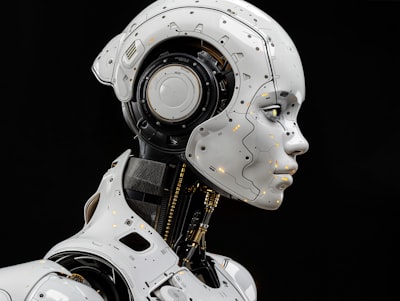
The convergence between advanced artificial intelligence and humanoid robotic platforms is redefining the boundaries of what industry considered possible just a decade ago. Today, anthropomorphic mechanical systems not only execute preprogrammed trajectories in controlled environments, but also begin to interpret the surrounding sonic context to make real-time motor decisions. This evolution, driven by semantic audio processing and reinforcement learning architectures, opens a wide range of opportunities for sectors as diverse as logistics, customer service, healthcare and entertainment. At Q2BSTUDIO, we view this phenomenon as confirmation that the future of automation lies not solely in hardware, but in the ability to orchestrate intelligent software that connects sensory perception with physical action in an autonomous, secure and scalable manner amid unpredictable scenarios.
The concept of semantic audio transcends traditional voice command recognition based on isolated keywords. When we speak of semantics in this field, we refer to the extraction of deep meaning from continuous acoustic signals, whether direct verbal instructions, emotional nuances in intonation or even musical stimuli that may serve as rhythmic metaphors for motor planning. A humanoid capable of discerning whether a given sound sequence corresponds to an operational order, a safety warning or a musical pattern holds a decisive competitive advantage in dynamic environments. This contextual comprehension capability demands processing pipelines that integrate language models, acoustic embeddings and spatial reasoning engines, all executing with minimal latency to guarantee fluidity of movement and naturalness of mechanical response to complex stimuli.
Reinforcement learning stands as the technical pillar upon which these whole-body control policies are built. Unlike classical inverse kinematics approaches or purely imitated demonstrations, RL allows the robotic agent to discover optimal locomotion and manipulation strategies through continuous interaction with a simulated or real environment. Simulation plays a crucial role in this phase, as it enables safe exploration of millions of articular configurations before transferring learned behaviors to physical hardware. Nevertheless, the leap from digital environment to real robot, known as sim-to-real, still presents significant challenges related to policy robustness against sensor noise, mechanical imperfections and variations in contact surfaces. Overcoming these barriers requires not only robotics talent, but also solid technological infrastructure, visual and physical randomization domains, and iterative training cycles that progressively refine agent stability.
From a business perspective, adopting these cognitive architectures on humanoid platforms can rarely be addressed with generic off-the-shelf solutions. Each sector imposes distinct constraints: a robot destined for industrial facility supervision does not share the same social interaction requirements as one deployed in hotel receptions or convention centers. Therefore, developing custom software becomes an indispensable strategic differentiator. At Q2BSTUDIO we design multiplatform software solutions that act as an orchestration layer between audio sensors, AI modules and low-level robot controllers. This approach ensures that the technology stack adapts to the specific needs of the client, integrating with legacy systems through robust APIs and enabling agile iterations without compromising embedded system stability or end-user experience.
The inherent computational complexity of training RL policies and real-time audio processing makes it essential to count on hybrid cloud infrastructure. Cloud AWS/Azure platforms offer parallel computing resources, massive acoustic dataset storage and managed inference services that accelerate experimentation cycles. Furthermore, deploying these models on edge computing, coordinated from the cloud, facilitates remote behavior updates and centralized monitoring of geographically distributed robotic fleets. In this sense, companies betting on advanced robotics must view the cloud not merely as a data warehouse, but as the distributed nervous system that feeds the intelligence of their physical agents. Q2BSTUDIO accompanies its clients through this transition, architecting resilient cloud environments based on containers and orchestration that support the specific workload of cognitive robotics and large-volume sensory signal processing.
An aspect frequently underestimated in autonomous humanoid deployment is cybersecurity. When a robot processes continuous audio streams, including potentially sensitive conversations, and executes physical actions derived from algorithmic interpretations, the attack surface expands considerably. Threat vectors range from hidden command injection in adversarial audio signals to interception of communication channels between the perception module and motion controller. Protecting these systems demands end-to-end encryption mechanisms, robust device authentication, network segmentation and continuous auditing of decision logs. Security cannot be an afterthought; it must be designed from the earliest phases of the software lifecycle, especially when human-robot interaction implies direct physical contact, access to restricted zones or handling of personally identifiable information captured through integrated microphones.
The collection of data derived from thousands of hours of audio-motor interaction generates an enormously valuable business asset if analyzed correctly. This is where BI/Power BI tools come into play, enabling transformation of execution logs, command interpretation success rates and energy efficiency metrics into actionable, visually intuitive dashboards. Operations managers can identify usage patterns, detect bottlenecks in robot response and optimize task allocation based on the predominant acoustic context at each shift or location. Business intelligence applied to robotics not only improves return on investment, but also feeds a continuous improvement cycle for the RL model, where real-world data progressively refine behavior policies and allow adjustment of agent exploration parameters in real production environments.
AI agents represent the next frontier in this equation. Beyond executing isolated individual skills, humanoids in the near future will function as autonomous agents capable of planning complex sequences, negotiating resources with other intelligent systems and adapting their objectives as sonic environmental conditions change. Imagine a scenario where multiple robots coordinate their movements in a warehouse not only based on a supervisor's voice, but interpreting acoustic alarms, the rhythm of surrounding machinery and security alerts generated by distributed sensors. This multi-agent coordination, governed by RL principles and semantic communication, will reduce response times, minimize operational errors in high-pressure contexts and enable dynamic fleet reconfiguration without direct manual intervention, maximizing operational productivity twenty-four hours a day.
The practical applications of this paradigm are virtually limitless and transcend mere technological spectacle. In healthcare, robotic assistants could interpret a patient's emotional state through their voice to adjust physical proximity, interaction tone or even request medical help upon detecting deterioration signs. In industrial settings, humanoids could synchronize assembly tasks with production line acoustic signals, optimizing rhythm without direct human intervention and reducing operational fatigue. Even in cultural and museum spaces, the ability to respond to musical or narrative stimuli with expressive and coherent movements opens new avenues for immersive and educational experiences. What unites all these use cases is the need for holistic technological integration, where AI, robotic control, digital infrastructure and user interfaces converge into a cohesive, robust and evolutionary solution.
At Q2BSTUDIO we understand that materializing these visions requires more than technological enthusiasm; it demands engineering discipline, strategic vision and rigorous execution capability. Our team combines experience in artificial intelligence, robust software development, DevSecOps practices and cloud architectures to deliver solutions that not only work in the laboratory, but deliver tangible value in real production environments, complying with regulatory and quality standards demanded by each industry. Humanoid control through semantic audio and reinforcement learning is not science fiction; it is an emerging reality that pioneering organizations are already beginning to explore with determination. Those who manage to integrate these capabilities securely, scalably and aligned with their business objectives will inevitably lead the next wave of digital transformation in industry, services and customer experience.
