
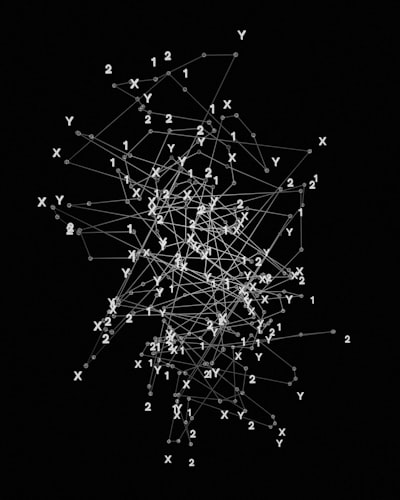
The digital environment has ceased to be a mere corporate communication showcase to become a complex ecosystem where opinions amplify, mutate, and crystallize within fractions of a second. For organizations operating in this context, online polarization is no longer an abstract sociological phenomenon reserved for academics, but a tangible risk that directly impacts brand reputation, customer loyalty, and ultimately financial results. When a sociopolitical, health, or economic debate incubates on social media, companies are forced to take a stance or maintain strategic silences, but in both cases they need to understand precisely how positions are distributed within their digital communities. This understanding demands analytical tools that transcend traditional sentiment analysis, based on simple counts of positivity or negativity, to delve into the deep structure of conversational dynamics.
It is in this scenario of high uncertainty that the pressing need arises for sophisticated metrics capable of capturing the multidimensional nature of polarization at the individual level. GRAIL represents a pioneering approach in this regard: a multifactorial metric designed to quantify how a specific user concentrates or disperses attention, interaction, and thematic affinity over time. Unlike aggregated indicators that simply average mass behaviors and offer static portraits of an audience, this proposal focuses on the micro-behavior of the internet user, allowing platforms and brands to detect patterns of radicalization, informational isolation, or migration between communities long before they escalate into visible reputational crises. The granularity of individual data thus becomes the main ally for anticipating phenomena that would otherwise only be perceived when they have already reached a critical mass that is difficult to reverse.
From a rigorous technical perspective, the core of this methodology relies on well-established pillars of information theory and advanced statistics. Entropy, understood as a measure of disorder or informational diversity, makes it possible to evaluate whether an individual explores varied sources and maintains a balanced information diet, or whether conversely they progressively retreat into homogeneous echo chambers that reinforce a single narrative. Complementarily, the use of Generalized Additive Models, known as GAM, offers the necessary flexibility to model non-linear relationships between multiple predictor variables without forcing rigid assumptions that are rarely met in real social environments. This combination proves especially powerful when analyzing high-velocity data flows from platforms such as Twitter, Reddit, or specialized forums, where trends evolve abruptly and controversial contexts can alter conversational dynamics within hours, demanding models that adapt organically to new realities without constant retraining from scratch.
The practical implementation of a measurement system with this sophistication demands a robust, scalable technological architecture adapted to the specific needs of each organization. It is not enough to use generic social listening tools that offer word clouds or binary sentiment classifications; it requires developing custom software that integrates data ingestion pipelines, statistical inference engines, semantic enrichment layers, and accessible visualizations for strategy and communication teams. At Q2BSTUDIO, we understand that every business faces unique community dynamics dictated by its sector, cultural geography, and stage in the product life cycle, which is why designing tailored software solutions allows adjusting the relative weights of the factors composing the metric, selecting the most relevant data sources, and configuring customized early alerts that truly deliver operational value from the very first day of deployment.
Artificial intelligence plays an absolutely transformative role here, acting as the catalyst that converts raw data into actionable knowledge. AI agents can operate as distributed cognitive sensors throughout the entire digital infrastructure, processing millions of interactions in real time to identify subtle deviations in user content consumption patterns. These systems not only detect what is being said in a conversation, but analyze how the network of semantic, affective, and temporal relationships surrounding each monitored profile is structured. Integrating supervised and unsupervised machine learning capabilities within the technology stack allows continuously refining alert thresholds, drastically reducing the false positives that usually overwhelm community management teams, and providing communication, human resources, and customer service departments with an objective, quantified basis for intervening with surgical precision before a polarization hotspot turns into an uncontrollable reputational fire.
However, massive processing of large volumes of personal and behavioral data raises critical challenges in terms of computational infrastructure, information sovereignty, and regulatory compliance. Deploying these analytical engines on cloud AWS/Azure environments guarantees the computational elasticity needed to absorb viral traffic spikes that can multiply workload a hundredfold within minutes, while facilitating the implementation of data residency policies, geographic redundancy, and disaster recovery. The strategic choice between different regions, availability zones, and managed cloud services allows companies to comply with strict regulations such as GDPR in Europe without sacrificing latency or performance in real-time stream processing. This balance between agility and conformity is only achieved when cloud strategy is consciously and specializedly designed from the initial architecture phase, something that requires specific experience in designing data-intensive platforms.
In parallel, cybersecurity becomes an absolutely inseparable pillar of any social media polarization analysis project. The APIs of social platforms, processed data repositories, trained statistical models, and even the visualization dashboards themselves constitute high-value assets for malicious actors who might seek to manipulate public perception or access confidential user and customer information. A security-by-design approach involves deploying robust encryption both in transit and at rest, identity management based on the principle of least privilege, network segmentation, and continuous penetration testing. Organizations that ignore this dimension not only expose sensitive data to potential leaks, but also seriously compromise the credibility of their own metrics, because a contaminated, incomplete, or manipulated dataset produces useless or directly counterproductive polarization diagnostics, leading to business decisions based on a distorted reality.
For the insights generated by a multifactorial metric like GRAIL to transcend the purely technical realm and truly reach the executive decision-making table, it is essential to have business intelligence layers that translate algorithmic complexity into comprehensible strategic action. BI/Power BI platforms enable the construction of interactive dashboards and visual narratives where the evolution of polarization is represented alongside traditional commercial indicators such as customer churn, user lifetime value, return on advertising investment, or customer service ticket volume. Executives can thus correlate online radicalization spikes with quantifiable variations in real business, identifying which topics cause audience leakage and which, conversely, represent opportunities for genuine engagement. This seamless integration between advanced behavioral analysis and business performance metrics is precisely what distinguishes truly data-driven organizations from those that simply accumulate large volumes of data without an analytical structure that gives them meaning and direction.
The strategic and competitive value of adopting a multifactorial polarization metric goes far beyond mere damage control or management of passing crises. In saturated markets where consumer attention is the scarcest resource, the ability to identify micro-communities open to dialogue, detect bridge-builders between opposing groups, and map narrative evolution allows the design of genuinely inclusive and resilient content strategies. Brands that manage to understand the deep topology of polarization can position themselves as credible mediators within their sector, generating constructive conversation spaces that other actors prematurely discard due to apparent toxicity or complexity. It is a paradigm shift: moving from reaction to already unleashed crises to anticipation based on weak signals, using data as raw material to build stronger and more durable relationships with digital audiences in an increasingly fragmented environment.
At Q2BSTUDIO we accompany companies on this analytical and digital transformation journey, combining specialized knowledge in AI, custom software development, cloud infrastructure consulting, and data governance. Understanding polarization on social media is no longer a discretionary option for those operating in connected markets; it is a fundamental strategic competence that defines who leads the conversation in their industry and who is irremediably dragged along by it. The metrics of the future will be those that capture human complexity without reducing it to simplistic stereotypes, and organizations that dare to implement them today will have a decisive advantage when the next global debate bursts into their digital channels, allowing them to navigate turbulence with the precision of those who possess a detailed map in the midst of the storm.
