
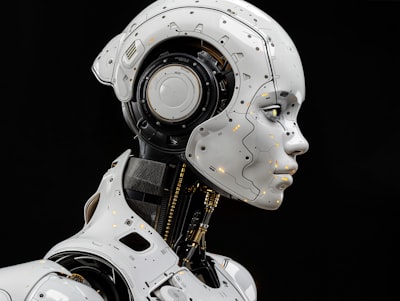
Physical artificial intelligence represents a qualitative leap from traditional automation. It is no longer just about algorithms processing data on a screen; we are talking about machines that perceive their environment, make complex decisions, and execute actions in the real world. This paradigm, known as the perceive–reason–act loop, is transforming sectors such as manufacturing, logistics, security, and industrial maintenance. The key difference from conventional robotics lies in adaptability: physical AI systems learn from experience, adjust to changing conditions, and operate with an autonomy that once seemed like science fiction.
For this loop to work in real-world environments, edge computing ceases to be an optional add-on and becomes an indispensable requirement. Sensors generate terabytes of data every second; sending all of them to the cloud for processing would introduce unacceptable latency. Therefore, artificial intelligence models must run directly on devices, close to where data is captured. This requires optimized hardware, efficient software, and above all, a robust and flexible IT infrastructure. This is where software development companies like Q2BSTUDIO bring their expertise, integrating custom software applications that connect sensors, AI models, and actuators in real time.
Perception is the first step. Cameras, radars, LIDAR, and ultrasonic sensors capture environmental data. AI processes them through computer vision, pattern recognition, and sensor fusion. Then comes reasoning: machine learning models analyze the information, predict future states, and decide the best action. Finally, action: robotic arms, autonomous vehicles, or industrial control systems execute precise movements. All of this happens in milliseconds, and any delay can lead to catastrophic failures. Hence, the AWS or Azure cloud is used not for real-time control but for training models, storing historical data, and centrally managing device fleets.
In practice, physical AI is already revolutionizing predictive maintenance. Sensors on industrial machinery detect abnormal vibrations, out-of-range temperatures, or component wear. An AI model trained on historical data can anticipate a breakdown days before it occurs, scheduling strategic stops that minimize production impact. In logistics, smart warehouses use autonomous mobile robots (AMRs) that navigate between shelves, pick orders, and optimize routes in real time. These systems not only reduce costs but also increase safety by avoiding collisions with human workers.
Another critical area is cybersecurity. Physical AI devices are potential attack vectors: if an attacker intercepts communications between the sensor and the model, they can manipulate the system's decisions. Therefore, companies must implement cybersecurity measures from the design stage, encrypting data in transit and at rest, authenticating devices, and continuously monitoring the network. Q2BSTUDIO offers pentesting and consulting services to ensure that the physical AI infrastructure is as secure as it is powerful.
Autonomous decision-making also requires AI agents that act as intelligent orchestrators. These agents can coordinate multiple devices, prioritize tasks, and react to unforeseen events. For example, in a factory, an AI agent can detect that a machine is overloaded and reassign production to another line without human intervention. To develop these agents, organizations need flexible and scalable software platforms that integrate sensor data, ERP systems, and BI/Power BI tools to visualize system performance in dashboards.
Data analytics is, in fact, the necessary complement to continuously improve physical AI models. With Power BI, engineers can monitor key metrics such as prediction accuracy, robot cycle time, or failure rate. This data feeds back into model training, closing the continuous improvement loop. Implementing a successful physical AI ecosystem is not just about algorithms; it requires deep knowledge of systems integration, cloud and edge data management, and a solid cybersecurity strategy.
At Q2BSTUDIO we understand these challenges. As a software development and technology company, we help organizations design and implement physical AI solutions that are robust, scalable, and secure. From developing custom applications for process control to integrating with AWS and Azure cloud services, building intelligent agents, and analyzing data with Power BI, our team combines technical expertise with strategic vision. Physical AI is not the future: it is already here. And companies that adopt it with a solid technological foundation will lead their industries in the next decade.

