
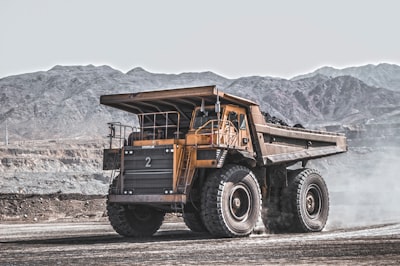
The transition towards electrified heavy transport is driving a new generation of energy management systems, where the ability to predict battery consumption accurately and quantify its uncertainty becomes a critical factor for operational and economic viability. Electric trucks, unlike light vehicles, face extremely variable load, route, and weather conditions that directly affect their range. To address this challenge, combining physics-based models with machine learning techniques is proving a promising path, overcoming the limitations of purely statistical or purely physical approaches. In this article we explore how a custom software application that integrates first-principle physics with machine learning can transform energy prediction in electric truck fleets, offering not only point estimates but also confidence intervals that enable more robust decision-making.
The key to the hybrid approach lies in incorporating equations that describe energy losses during operation — aerodynamic drag, rolling resistance, transmission losses, electric motor efficiency, and regenerative braking — as input features for regression models. Traditional simple linear regression ignores these non-linear interactions, leading to systematic biases under high load or steep grades. However, using these physical principles as a foundation, Bayesian linear regression yields posterior distributions over the coefficients that reflect the inherent uncertainty from measurements and model simplification. This allows generating probabilistic predictions instead of mere point values, essential for planning charging stops, optimizing routes, and sizing batteries.
When higher accuracy is required, more complex models such as deep neural networks and gradient boosted regression trees trained on the same physical features can capture residual relationships that escape linear regression. Recent research results indicate that these hybrid models significantly outperform their standard versions — those using only raw variables like speed, acceleration, or slope — in terms of mean absolute error and quality of prediction intervals. Moreover, uncertainty estimation, whether via approximate Bayesian methods or ensembles, allows distinguishing between high-confidence situations (flat terrain, constant load) and low-confidence ones (mountain driving with crosswind), valuable information for driver assistance systems and fleet operators.
From a business perspective, implementing such a solution is not trivial. It requires capturing and processing telematic data in real time, integrating with fleet management systems, and scaling the model to hundreds or thousands of vehicles. Here cloud technology plays an enabling role: platforms like AWS or Azure offer elastic computing environments, scalable databases, and managed machine learning services that accelerate model development and deployment. A company like Q2BSTUDIO, specialized in custom software development, can accompany transport fleets in creating a complete ecosystem covering everything from sensor data ingestion to prediction visualization in a BI dashboard.
Artificial intelligence in this context goes beyond predictive models. Intelligent agents can continuously monitor prediction performance, detect anomalies — for example, abnormal battery degradation — and automatically trigger alerts or retrain the model. Cybersecurity is also an indispensable pillar: telemetry data and energy predictions are critical assets, and any vulnerability could compromise fleet operation. Therefore, solutions must embed cybersecurity practices from the design phase, something Q2BSTUDIO includes in its consulting services.
Another advantage of this approach is its ability to integrate with business intelligence tools like Power BI, where fleet managers can obtain interactive dashboards showing not only expected consumption for each route but also the probability that the vehicle completes the trip without intermediate recharging. This information, combined with historical traffic and weather data, enables route assignment optimization, energy cost reduction, and minimization of downtime. In short, probabilistic energy consumption prediction for electric trucks represents an advanced use case where the fusion of physics, machine learning, and artificial intelligence delivers tangible returns.
Q2BSTUDIO, as a software and technology development company, has the necessary expertise to design and implement these custom solutions, integrating appropriate physical principles, selecting the most effective ML algorithms, and deploying the cloud infrastructure that guarantees scalability and security. The company also offers consulting services in artificial intelligence, cloud migration, and cybersecurity, ensuring that each project not only meets technical requirements but also aligns with strategic business objectives. For transport companies seeking to get ahead of the competition, investing in a physics-ML-based energy prediction platform is a logical step towards operational efficiency and sustainability.
In summary, integrating physics principles into machine learning models not only improves the accuracy of energy consumption predictions for electric trucks but also provides robust uncertainty quantification essential for decision-making in dynamic environments. The combination of Bayesian linear regression, neural networks, and gradient-boosted trees, along with an adequate cloud infrastructure and AI agents, constitutes a high-value-added solution. Q2BSTUDIO, with its focus on custom applications, can help fleets materialize this vision, turning raw data into operational intelligence that reduces costs, improves reliability, and accelerates the electrification of heavy transport.

