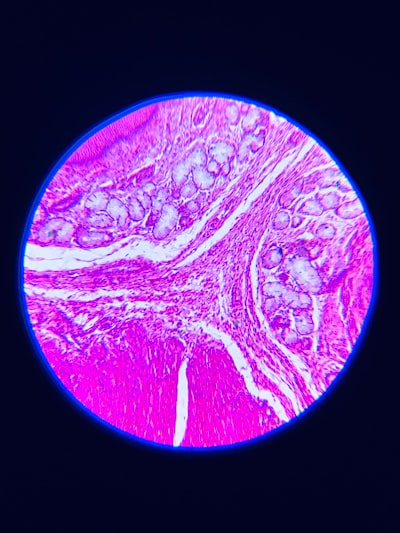
Whole-slide image (WSI) diagnosis poses one of the greatest challenges in computational pathology. Each WSI can contain up to several gigapixels, forcing artificial intelligence systems to identify relevant regions, examine them at multiple magnifications, and integrate evidence from different scales. Until now, most pathology benchmarks evaluated models on pre-cropped patches or pre-extracted features, without testing their ability to acquire evidence directly from full images. This gap motivated the creation of PathAgentBench, an evaluation framework specifically designed to measure how vision-language models (VLMs) seek and use diagnostic information in real gigapixel environments.
PathAgentBench proposes four complementary capabilities: image-to-text matching for interpreting findings, text-to-image retrieval for verifying diagnoses, diagnostic-region localization for acquiring evidence, and multi-scale reasoning for integrating information. The benchmark is organized as a diagnostic tree linking nested regions across magnifications with scale-specific findings and path-level diagnoses. It includes 1,822 TCGA WSIs and 17,135 diagnostic paths annotated by ten board-certified pathologists. Additionally, a private cohort of 190 breast cancer WSIs with detailed annotations evaluates autonomous whole-slide exploration. Results reveal a critical gap: although leading models achieve over 93% accuracy in multi-scale reasoning and over 50% in cross-modal matching tasks, diagnostic-region localization remains challenging. The best text-guided mean intersection-over-union is below 0.09, underperforming a simple center-based heuristic. During autonomous exploration, the unconditional hit rate drops from 0.522 at low magnification to 0.185 at intermediate magnification and 0.020 at high magnification. These data show that current models excel at reasoning over curated evidence but are poor at acquiring that evidence directly from WSIs.
From a technical and business perspective, PathAgentBench underscores the need for more robust AI systems in digital pathology. The ability to autonomously locate relevant regions is essential for real clinical applications, where time and accuracy are critical. Healthcare technology companies require solutions that integrate vision-language models with scalable and secure infrastructure. In this context, Q2BSTUDIO positions itself as a key ally. As a software and technology development company, it offers custom software that can implement WSI analysis pipelines, from image ingestion to diagnostic report generation. The flexibility of custom software development allows adaptation to each tissue type and hospital workflow.
Furthermore, cloud computing is essential for handling the massive volume of WSI data. AWS and Azure cloud services provide scalable storage, parallel processing, and remote access, indispensable for deploying AI systems in clinical environments. Q2BSTUDIO, with its expertise in cloud AWS/Azure, helps design architectures that optimize cost and performance, ensuring model availability even under high demand. On the other hand, cybersecurity cannot be an afterthought. Patient data is extremely sensitive, and any breach could have serious legal and ethical consequences. Implementing robust cybersecurity measures, such as end-to-end encryption and role-based access controls, is integral to any digital pathology solution. Q2BSTUDIO offers cybersecurity services that protect both infrastructure and clinical data.
Analysis of PathAgentBench results also opens opportunities for business intelligence. BI and Power BI systems can visualize model performance metrics, identify error patterns, and optimize workflows. For example, a dashboard connected to the diagnosis database can display in real time the accuracy rate across different cancer types or the correlation between region localization and final precision. Q2BSTUDIO integrates Business Intelligence solutions that transform raw evaluation data into actionable insights for research and development teams.
Finally, the trend toward autonomous AI agents in pathology is clear. PathAgentBench evaluates precisely the ability of models to autonomously explore WSIs, making decisions about which regions to zoom into and examine. These AI agents could revolutionize diagnosis by reducing pathologists' workload and increasing consistency. However, results show that we are still far from reliable autonomy at high magnifications. Combining model improvements with richer training data and reinforcement strategies is necessary. Q2BSTUDIO collaborates with research teams to design training pipelines that integrate realistic augmentations and reinforcement learning, accelerating the path toward AI-assisted virtual pathologists.
In summary, PathAgentBench is not just a benchmark but a wake-up call for the community. It reveals that true intelligence in pathology lies not only in reasoning over pre-processed data but in knowing where and how to seek evidence. Companies that invest in custom software, cloud, cybersecurity, BI, and AI agents will be better positioned to lead the next generation of computer-assisted diagnostics. Q2BSTUDIO offers exactly that combination of technical capabilities and strategic vision to build systems that not only understand images but act as true helpers in daily clinical practice.