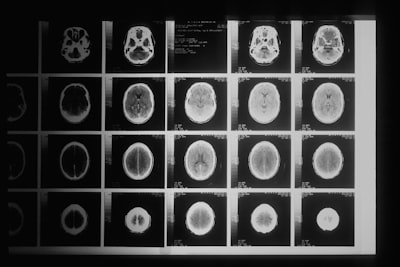
Artificial intelligence is transforming medical imaging diagnosis, and one of the most recent advances is MIRAGE, a model for contrast enhancement in breast magnetic resonance imaging. This system, based on a residual 2D U-Net architecture, addresses a fundamental problem: inferring contrast enhancement from a single pre-contrast breast MRI slice is underdetermined. The post-contrast appearance contains physiological information that is not uniquely encoded in baseline anatomy. Traditional methods that optimize only pixel-to-pixel fidelity can suppress uncertain lesion enhancement, while adversarial or stochastic generative approaches favor realistic appearance without guaranteeing patient-specific lesion fidelity. MIRAGE introduces an innovative combination of global reconstruction and perceptual losses, together with three forms of lesion-aware supervision available only during training: an asymmetric penalty for missed tumor enhancement, multi-scale auxiliary tumor segmentation, and guidance through a frozen post-contrast tumor segmentation nnU-Net.
Evaluated on 301 cases from the multi-center MAMA-SYNTH dataset, MIRAGE ranks first in six out of eight metrics covering image, region, radiomics, and segmentation. This superior performance translates into a remarkable improvement in lesion localization compared to baselines such as pix2pix, conditional diffusion, and latent bridge-matching. However, generative alternatives retain advantages in LPIPS or contrast classification, revealing a clear fidelity-utility trade-off. Ablation studies show that the losses are partially redundant for lesion localization but exert distinct effects on appearance, radiomics, and boundary accuracy. These findings support task-aware synthesis but also demonstrate that its apparent optimality is conditional on the downstream models and metrics used to define utility.
From a technical and business perspective, initiatives like MIRAGE open a range of opportunities for software development companies. At Q2BSTUDIO, we understand that implementing AI solutions in healthcare requires a multidisciplinary approach combining advanced algorithms, robust infrastructure, and cybersecurity. For instance, deploying a model like MIRAGE in a real clinical environment requires cloud services on AWS or Azure that ensure scalability, high availability, and regulatory compliance. Moreover, integration with hospital information systems (HIS) and protection of sensitive data demand top-tier cybersecurity measures, an area in which our company offers specialized solutions.
Custom software development for medical image analysis is one of the pillars of our offering. We create platforms that allow radiologists and oncologists to visualize, annotate, and manage MRI studies with embedded artificial intelligence. These applications not only improve diagnostic accuracy but also optimize clinical workflows. For example, a MIRAGE-based system could be integrated into a Business Intelligence (Power BI) solution to generate automatic lesion tracking reports, combining imaging data with clinical variables.
Artificial intelligence is the core of these innovations, but its potential multiplies when combined with other technologies. AI agents, for instance, can automate repetitive tasks such as image segmentation or prioritization of urgent cases. At Q2BSTUDIO, we develop intelligent agents that learn from specialists' decisions and improve over time, reducing workload and human errors. All of this is supported by a flexible cloud infrastructure that enables parallel processing of large data volumes.
It is important to note that the adoption of AI in diagnosis is not without challenges. The need for high-quality labeled data, model interpretability, and clinical validation are hurdles that must be overcome. MIRAGE addresses some of these issues through its lesion-aware supervision, but implementation in clinical practice requires a robust software ecosystem. This is where Q2BSTUDIO brings its expertise in custom artificial intelligence development, helping hospitals and research centers build tailored solutions that meet their specific needs.
The future of breast MRI with AI is promising. Models like MIRAGE demonstrate that it is possible to improve early breast cancer detection through contrast synthesis, reducing the need for multiple acquisitions and minimizing exposure to contrast agents. However, translation into daily practice demands close collaboration between software developers, imaging specialists, and healthcare professionals. At Q2BSTUDIO, we are committed to this vision, offering services ranging from technology consulting to full implementation of AI systems in cloud environments, always with a focus on security and efficiency.
In conclusion, MIRAGE represents a significant advance in contrast synthesis for breast MRI, but its true impact materializes when integrated into a broad technological framework. The combination of AI, cloud computing, cybersecurity, and custom applications is the recipe for transforming healthcare. From Q2BSTUDIO, we invite organizations in the sector to explore these possibilities and jointly develop the tools of tomorrow.