
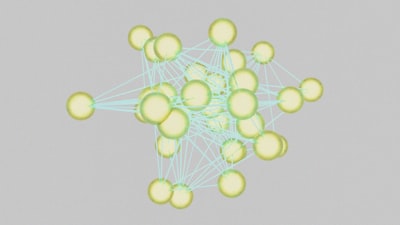
In modern artificial intelligence development, neural networks are modeled as computational graphs where each node represents an operation and each edge a data flow. Intervening in these graphs — whether through activation patching, circuit discovery, or systematic ablations — is a common practice to understand the internal behavior of models. However, the cost of these interventions can be prohibitive, especially when performing exhaustive sweeps over all candidate sites. Traditionally, each mutation requires a full recomputation, but reactive graph engines offer an efficient alternative by invalidating only the part of the graph that depends on the mutated node. This article deeply analyzes the costs associated with these mutations, presents closed-form formulas for expected speedup, and discusses practical implications for companies developing custom software with AI components.
The first relevant finding is that the aggregate speedup of an exhaustive sweep over independent full recomputations is not a universal constant. It depends on how computational weight is distributed per layer. If the weight varies regularly with depth according to a Karamata index q, the speedup ratio converges to (q+2)/(q+1) when weight concentrates near the output, and to q+2 near the input. In the depth-uniform case, the speedup is exactly 2. However, in practice, with interpreter overhead, a ceiling of approximately 1.79 is observed, below 2. This implies that optimizations in the execution engine are crucial to approach theoretical limits, an aspect that Q2BSTUDIO considers when designing high-performance AI solutions for its clients.
The second key aspect is the cost of a sequence of persistent mutations, where changes are never undone between insertions. It is shown that the interleaved cost exceeds the isolated sum by an exact amount that can be calculated by summing over comparable site pairs. Moreover, the extremes of this overhead depend on the insertion order, while batch application is order-independent and subadditive, costing exactly the union of the sites' cones plus fresh nodes. This result has direct implications for model analysis tools integrated into cloud AWS/Azure environments, where computational resources are billed by usage and minimizing cost is a priority.
A third theoretical result concerns the backward pass during training. Under backpropagation in architectures without long skip connections, the locality of the reverse graph collapses the aggregate speedup to 1. That is, there is no gain from using a reactive engine for mutations in the backward pass. This is relevant for companies working with BI/Power BI who need to train custom models efficiently. Understanding when speedup is zero allows focusing optimization efforts on the phases of the model lifecycle that truly benefit.
Empirical validation of these identities was performed on NeuroDSL, a reactive graph engine implemented in Julia. Measurements confirmed that sweep ratios converge to predicted limits under four distinct cost profiles, and that training mode collapses to 1 at the predicted rate. All per-graft sequential costs and the batched total matched the closed forms with zero tolerance across three insertion orders. These experiments demonstrate that the theory is applicable in practice and that companies can anticipate intervention costs without running full simulations.
From a business perspective, this cost analysis is fundamental for optimizing the development of software that integrates neural networks. Q2BSTUDIO, as a company specialized in multiplatform application development and cloud services, uses these principles to offer cybersecurity and automation solutions based on AI. For example, when implementing AI agents that require multiple real-time interventions, knowing the expected speedup allows proper sizing of cloud infrastructure, whether AWS or Azure, and adjusting the use of services like Power BI for data analysis. The ability to predict costs avoids billing surprises and improves operational efficiency.
Another relevant aspect is the management of AI agents, which often require frequent mutations of their internal graphs to adapt to new tasks. Results on persistent sequences and batches indicate that the best strategy is to group mutations whenever possible, since the batch cost is subadditive. This aligns with best practices in software process automation, where efficiency in executing repetitive tasks is key. Q2BSTUDIO applies these lessons in its consulting projects, helping companies migrate to reactive architectures that reduce computation times in their AI pipelines.
Finally, the practical conclusion is that the design of reactive graph engines must consider the weight distribution per layer and the presence of skip connections to offer significant speedups. In their absence, gains may be marginal, especially in the backward pass. However, for modern architectures with residual connections, such as transformer networks, the speedup can approach the theoretical limit of 2. Companies developing custom software with AI components can greatly benefit from adopting these techniques, and Q2BSTUDIO is well positioned to guide them on that path, combining expert knowledge in cloud, cybersecurity, and business intelligence.

