
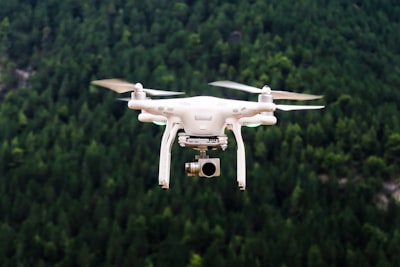
Integro-differential control has become a powerful mathematical tool for addressing complex stabilization problems, especially in the field of drones. The need to maintain precise angular orientation against external disturbances demands sophisticated algorithms that go beyond traditional PID controllers. In this context, the incorporation of integral operators with unbounded memory opens new possibilities: by considering the entire history of past states, the system can anticipate and compensate for errors more effectively. However, implementing this type of control in real applications requires a custom software development approach that integrates advanced mathematical models with robust and scalable platforms.
From a theoretical standpoint, reducing integro-differential equations to systems of ordinary differential equations (ODEs) simplifies stability analysis. When exponential kernels are used in the integral operator, the resulting system can have a finite number of equations, making computational implementation easier. However, linear combinations of these kernels—such as those arising from considering multiple time scales—can substantially improve stabilization capabilities, yielding unexpected results of exponential stability. These findings are particularly relevant for angular drone control, where fast response and robustness are critical.
Translating these concepts into a functional product requires careful software engineering. Companies developing drone control systems need technology integrators capable of converting mathematical models into efficient code, executable on embedded hardware or in the cloud. This is where Q2BSTUDIO brings its expertise: as a software and technology development company specialized in custom applications, it can design and implement integro-differential control algorithms optimized for real-time environments.
Furthermore, cloud infrastructure—both AWS and Azure—is essential for processing the large amount of data generated by drone sensors and executing control calculations with low latency. Q2BSTUDIO offers cloud services that allow deploying distributed systems, collecting telemetry, and applying artificial intelligence models to adaptively tune control parameters. For instance, AI agents can continuously monitor drone behavior and adjust the integral operator kernel to maintain stability even under changing conditions.
Cybersecurity is another indispensable pillar: a poorly controlled or intercepted drone can cause material damage or violate privacy regulations. Q2BSTUDIO's cybersecurity services ensure that communication between the drone and the control station is encrypted, and that stabilization algorithms are not vulnerable to injection attacks or data manipulation. Likewise, integration with Business Intelligence tools such as Power BI allows real-time visualization of performance metrics, angle histories, and deviations, facilitating operational decision-making and predictive maintenance.
In short, angular drone stabilization using integro-differential control with unbounded memory represents a cutting-edge field where applied mathematics, control engineering, and software development converge. Q2BSTUDIO, with its service portfolio ranging from cloud AWS/Azure to artificial intelligence and cybersecurity, is in a privileged position to help companies and institutions turn these concepts into practical, secure, and scalable solutions. Combining rigorous theoretical approaches with quality technological implementation is the key to achieving increasingly reliable autonomous drones.
