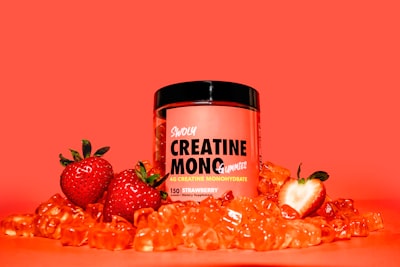
Creatine, traditionally known for its role in physical performance, has caught the attention of the scientific community for its potential effects on mental health. Although studies are still inconclusive, more professionals are exploring how this natural compound could influence memory, attention, and cognitive fatigue. At Q2BSTUDIO, as a software and technology development company, we understand that innovation lies not only in code but also at the intersection of neuroscience and productivity. Therefore, we analyze here how to take creatine for potential mental health benefits, with a technical and business perspective.
Creatine is an amino acid synthesized in the body from arginine, glycine, and methionine, and is stored mainly in muscles and the brain. Its primary function is to regenerate ATP, the molecule that provides energy to cells. In the brain, creatine helps maintain energy homeostasis during periods of high cognitive demand, such as intensive study or complex problem-solving. However, evidence for its effectiveness in improving cognitive function in healthy individuals is mixed. A 2024 review indicated that creatine may improve memory, attention, and processing speed, albeit with moderate to low certainty. Another 2025 review highlighted that while supplementation raises brain creatine levels, the benefits are not universal and depend on factors like diet (vegetarians have lower reserves) and age (older adults may benefit more).
For those seeking to harness these potential benefits, the recommended dose is usually 5 to 10 grams daily of creatine monohydrate, the most studied and economical form. Unlike gym dosing where 5 grams suffice, for cognitive effects some researchers suggest 10 grams per day. Consistency is key, and a loading phase is optional (if tolerated). The main risk is stomach upset, especially at high doses. There is no solid evidence linking creatine to hair loss, as commonly believed.
From a business perspective, cognitive optimization is a growing area of interest. In environments where mental productivity is crucial —such as developing custom software applications or implementing artificial intelligence solutions— maintaining optimal brain performance can make a difference. Q2BSTUDIO integrates neuroscience approaches into managing technology teams, complementing tools like process automation or cybersecurity with cognitive wellness strategies. For instance, a team working on AWS/Azure cloud may benefit from a more lucid mental state through informed supplementation.
Creatine has also been studied in stress contexts, such as sleep deprivation. A 2024 study showed that a single 24-gram dose (equivalent to 0.3 g/kg) improved cognitive performance in sleep-deprived individuals. However, this dose is very high and not recommended without supervision. For business applications, it is sensible to start with 5 grams daily and adjust based on individual response. Moreover, since creatine is one of the safest supplements (no serious side effects at normal doses), many technology companies include it in workplace wellness programs.
Ultimately, creatine for mental health is a promising but still developing field. At Q2BSTUDIO, we recommend an informed approach: consult a healthcare professional, start with low doses, and monitor effects. Technology and neuroscience can converge to enhance human performance, and we are committed to exploring these synergies.