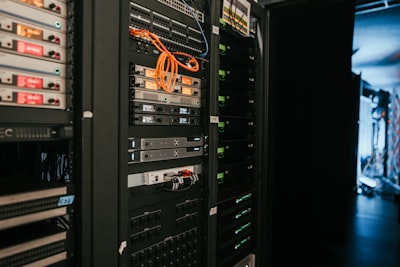
The data center industry is experiencing unprecedented growth, driven by the explosion of artificial intelligence, machine learning, and global digitalization. According to recent estimates, these centers could consume up to 20% of total U.S. energy by 2035. This projection, while alarming at first glance, opens a critical debate on energy efficiency, sustainability, and the need to transform current technological infrastructure. In this context, companies like Q2BSTUDIO, specialized in custom software development and cloud solutions, play a key role in helping organizations optimize their operations and reduce their carbon footprint.
The increase in data center energy consumption is not a sudden phenomenon. Since the mass adoption of cloud services, the demand for computing capacity has grown exponentially. However, the real catalyst has been the rise of generative artificial intelligence models and large language models (LLMs). Training and running these models requires enormous amounts of electrical energy, not only for data processing but also for the cooling systems needed to maintain operating temperatures. A single query to an AI model can consume up to ten times more energy than a traditional internet search. This factor, multiplied by millions of users, is driving data center operators to seek innovative solutions.
Faced with this scenario, technology companies are adopting various strategies. One of the most relevant is the migration to more efficient architectures, such as the use of specialized processors (ASICs, TPUs) and advanced virtualization. Another key trend is the deployment of modular data centers and the use of renewable energy. However, software optimization is equally critical. This is where the development of custom applications becomes important. Optimized software can significantly reduce computational load and therefore energy consumption. Q2BSTUDIO offers custom software development services that enable companies to design lighter, more efficient solutions tailored to their specific needs.
Artificial intelligence, paradoxically, is both the cause and the possible solution. AI systems can be used to dynamically manage workloads, predict demand spikes, and optimize cooling. This is known as AI for IT Operations (AIOps) and is gaining traction in modern data centers. Furthermore, the implementation of autonomous AI agents that monitor and adjust resources in real time can yield substantial energy savings. Q2BSTUDIO develops AI solutions that integrate intelligent agents to automate processes and improve operational efficiency in critical infrastructures.
Another fundamental pillar is cybersecurity. As data centers become more complex and connected, they also become attractive targets for cyberattacks. An attack not only puts data at risk but can also generate abnormal energy consumption by triggering malicious processes or reactive defense systems. Therefore, having robust cybersecurity services is essential to ensure business continuity and energy efficiency. Q2BSTUDIO offers security audits, penetration testing, and hardening strategies that protect both infrastructure and operational integrity.
The cloud, meanwhile, remains the main driver of data center expansion. Cloud providers like AWS and Azure offer tools to scale resources elastically, but they can also generate inefficiencies if not managed properly. Companies migrating to the cloud must design efficient architectures using services like serverless functions, containers, and dynamic load balancing. Q2BSTUDIO specializes in consulting and implementation of solutions on cloud AWS/Azure, helping organizations reduce costs and energy consumption through optimized infrastructure design and the use of reserved or spot instances.
Another key factor is data analytics. Data centers generate enormous volumes of information about their own performance. Applying Business Intelligence (BI) and tools like Power BI allows visualizing and analyzing consumption patterns, identifying bottlenecks, and making informed decisions to improve efficiency. A well-designed dashboard can show real-time energy consumption per rack, server, or application, facilitating the implementation of savings policies. Q2BSTUDIO offers BI/Power BI services that transform raw data into actionable insights, helping data center managers optimize resource usage.
Beyond technology, the challenge of 20% energy consumption in 2035 requires multi-sector collaboration. Governments, electric utilities, and tech companies must work together to upgrade power grids, promote clean energy adoption, and establish efficiency standards. Software companies like Q2BSTUDIO have a responsibility to develop solutions that are not only functional but also sustainable. For example, designing more efficient algorithms, implementing data compression techniques, and adopting microservices architectures can significantly reduce computational load.
The trend toward decentralization could also relieve pressure on large data centers. Edge computing, which processes data near the source of generation, reduces the need to transmit large volumes of information to a central hub, thus lowering energy consumption in transmission networks. However, this requires advanced orchestration software. Q2BSTUDIO develops distributed applications that integrate edge computing with central cloud, intelligently balancing workloads.
Ultimately, the projection that data centers will consume 20% of U.S. energy in 2035 is not an inevitable sentence, but a call to action. Technological innovation, in the hands of committed companies like Q2BSTUDIO, can reverse this trend through efficient software development, artificial intelligence adoption, intelligent cloud migration, and robust cybersecurity implementation. Every design decision counts, and the planet's energy future depends on how we address this challenge today.