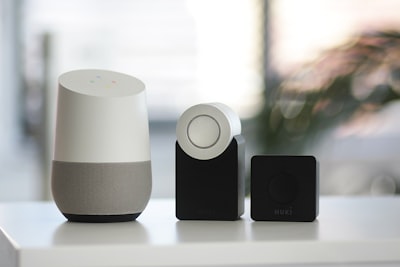
Artificial intelligence is advancing rapidly in the connected home space. Amazon's latest update to Alexa Plus represents a qualitative leap: the assistant can now interpret complex instructions, link with multiple appliance brands, and handle requests that require understanding context, preferences, and technical constraints. Instead of simple commands like 'turn on the light', Alexa Plus can process phrases like 'my kid's soccer jersey needs a deep clean, but the tag says cold wash only' and immediately select the appropriate cycle on the connected washing machine. This is not just an incremental improvement; it is a paradigm shift in human-machine interaction.
Behind this functionality lies deep work in natural language processing (NLP) and language models specifically trained for the home. Alexa Plus does not just recognize keywords; it understands intent, conditions, and nuances. For example, it can differentiate between 'run the washing machine' (start a cycle) and 'the washing machine is making noise' (diagnosis). Moreover, integration with manufacturers like Bosch, Delta, Ecovacs, iRobot, Yale Home, Whirlpool, Tapo, and Eufy allows the system to automatically route requests to the correct device without specifying brand or model. This interoperability is key to mass adoption of the smart home.
For companies in the sector, this update opens new opportunities but also challenges. The ability to process complex instructions requires a robust cloud infrastructure and flexible data architecture. Amazon uses its own AWS cloud to manage information flow, but any company wanting to integrate its devices with assistants like Alexa must have cloud services on AWS or Azure that guarantee low latency, security, and scalability. Real-time synchronization of millions of devices demands custom software design, especially in the communication and business logic layers.
Cybersecurity is another fundamental pillar. Allowing an assistant to control appliances, locks, or robot vacuums multiplies the risks of unauthorized access. Companies must implement robust authentication protocols, end-to-end encryption, and regular penetration testing. Q2BSTUDIO offers cybersecurity and pentesting services to verify that integrations do not compromise user privacy.
Beyond voice assistants, artificial intelligence applied to the smart home is evolving into what are known as autonomous AI agents. These agents not only execute commands but can anticipate user needs. For example, an agent could learn that Saturdays are typically laundry day and prepare the cycle in advance. To develop such solutions, companies need artificial intelligence services that include predictive models, natural language processing, and machine learning.
The explosion of data generated by connected devices also drives the need for Business Intelligence tools. Every interaction with Alexa, every wash cycle, or every door opening leaves a trace that, properly analyzed, can provide valuable insights into consumption habits, energy efficiency, or maintenance needs. Platforms like Power BI allow visualization of this data and informed decision-making. Q2BSTUDIO, with its expertise in BI consulting and Power BI, helps companies transform raw data into business intelligence.
Customization is another relevant aspect. A smart home is not one-size-fits-all; each family has its routines, preferences, and devices. Therefore, custom application development solutions are essential to create interfaces tailored to each client's specific needs. Whether a mobile app to control all devices or a web dashboard to monitor consumption, custom software ensures an optimal user experience.
Moreover, process automation in the smart home goes beyond appliances. Automated irrigation systems, smart blinds, presence sensors... All can be coordinated through programmed workflows. Companies developing these systems can benefit from process automation services to reduce operational costs and improve efficiency.
In summary, the Alexa Plus update is a milestone marking the beginning of a new era in smart home interaction. The ability to understand complex instructions not only improves user experience but also demands a solid technological infrastructure from companies, from cloud computing to artificial intelligence and cybersecurity. Q2BSTUDIO positions itself as a strategic ally for companies wishing to develop innovative solutions in this ecosystem, offering comprehensive services ranging from custom application development to AI agent implementation and data analysis.
The integration with manufacturers like Bosch, Delta, and others shows that the future of the connected home is collaborative. It is no longer about a closed ecosystem but an open network where devices from different brands can communicate intelligently. This approach requires multiplatform software design and standardized protocols, areas where Q2BSTUDIO has extensive experience.
In conclusion, the evolution of Alexa Plus reflects how artificial intelligence is transforming every corner of our daily lives. Companies that want to lead this transformation must invest in cutting-edge technology and technology partners capable of materializing these visions. With cloud services, BI, custom development, and cybersecurity, Q2BSTUDIO provides the necessary ecosystem to turn ideas into connected realities.