Artificial intelligence is no longer a laboratory experiment; it has become the engine driving digital transformation across all industries. However, as AI expands from model training to real-time inference, fine-tuning, and autonomous agent workflows, organizations face a critical operational challenge: how to run GPU-intensive workloads reliably and continuously at scale. The answer, increasingly clear, lies in building on the open, community-driven foundations that have already proven their worth in the modern internet. Kubernetes has established itself as the de facto operating system for AI, with 82% of container users running it in production according to the 2025 CNCF annual survey. Yet only 7% deploy models daily, revealing an operational gap that can only be closed through shared standards and collaboration among companies, developers, and technology providers. This is where open source and community governance are not an option but a strategic necessity.
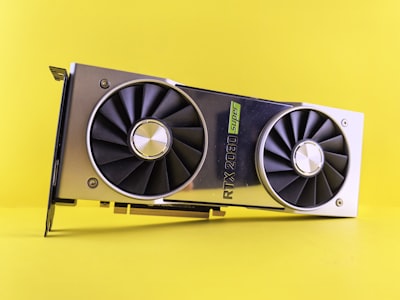
The cloud native ecosystem has spent a decade perfecting the orchestration of distributed applications across heterogeneous environments. Now, that same knowledge is being applied to GPUs, but with an added challenge: the traditional model of static, indivisible accelerator allocation does not work for modern workloads that combine massive training, low-latency inference, and multi-tenant environments. The solution lies in open extensions such as the Dynamic Resource Allocation (DRA) API in Kubernetes, which enables on-demand GPU assignment in real time, sharing MIG devices, and connecting memory across nodes via NVLink. These innovations, driven by NVIDIA and accepted into CNCF working groups, demonstrate that accelerator management must be integrated into the standard, not sold as proprietary extensions. Similarly, the KAI Scheduler, now a CNCF Sandbox project, handles large-cluster scheduling with pre-simulation, hierarchical queues, and resource fairness, tested in environments with over 10,000 GPUs. These are tools the community builds together, allowing any company to operate AI at scale without relying on closed solutions.
For companies looking to adopt this open infrastructure, the key is to partner with technology providers who understand both the orchestration layer and business needs. At Q2BSTUDIO, as a software and technology development company, we accompany organizations at every step of the journey toward operational AI. We create custom software that integrates AI models with existing workflows, deployed on cloud platforms such as AWS or Azure to ensure scalability and elasticity. Cybersecurity is another fundamental pillar: when AI agents make real-time decisions, data integrity and confidentiality must be protected through pentesting and compliance strategies. Additionally, business intelligence tools like Power BI allow visualizing model performance and operational costs, turning complex data into strategic decisions. Finally, the AI agents we develop automate processes, optimize customer service, and improve operational efficiency, all built on an open and community-driven foundation that guarantees interoperability and future-readiness.
NVIDIA's commitment to the CNCF —with a $4 million investment to enable testing on real GPUs and its contribution of the DRA driver as an upstream reference— are clear signals that the future of AI infrastructure will be written in the open. The Kubernetes AI Conformance Program already certifies 31 platforms, ensuring workloads run consistently across providers. The trend is unstoppable: community-governed platforms generate larger ecosystems, innovate faster, and benefit more people than closed ones. As Jensen Huang, founder of NVIDIA, said, open source is fundamentally necessary for AI to diffuse into every industry and country. At Q2BSTUDIO we share that vision: we believe the most powerful technology is built collectively, and that is why we help companies adopt these open standards through consulting, development, and integration services spanning from cloud to edge. The future of AI is not built by a single company; it is built by all of us, on a foundation of open source, interoperability, and shared trust. If your organization wants to make the leap to operational, scalable, and secure AI, the path is clear: open tools, expert partners, and a community ready to collaborate. Welcome to the community future of artificial intelligence.