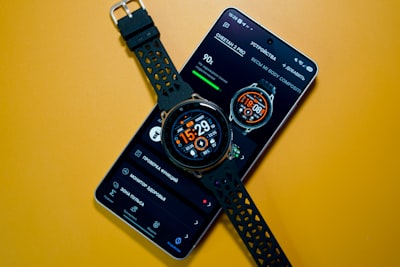
The sports watch market has experienced a real revolution in recent years. Brands like Garmin, Coros, and Apple dominate the premium segment, but Amazfit, driven by Zepp Health, has burst onto the scene with eye-catching specs at notably lower prices. However, after a detailed analysis of its Cheetah line, specifically designed for runners, the disappointment is clear. It is not a major failure, but rather an accumulation of small details that, for a serious athlete, make the difference between a reliable training companion and a good-looking accessory.
Amazfit positions the Cheetah as direct competitors to Garmin’s Forerunner or Coros’ Pace. On paper, the proposal is tempting: dual-band GPS, running power metrics, offline maps, AI coaching, and weeks-long battery life, all at half the price. But theory and practice do not always align. A recurring example: heart rate zones are labeled with terms like “fat burning,” an approach typical of basic fitness bands, not a watch meant for runners training with performance zones. This slip reveals a design philosophy far from the real needs of the distance runner.
During testing, the Cheetah 2 Pro showed significant inaccuracies. Estimated lactate threshold deviated by nearly 40 seconds per mile compared to reference measurements. The GPS, despite being dual-band, recorded slightly shorter distances than a Garmin Forerunner 970 on similar routes. And the post-run experience is frustrating: the summary screen disappears within seconds, forcing you to navigate menus to check splits - a process any regular runner knows should be immediate. Small annoyances that, added up, undermine trust in the device.
Beyond these specific issues, Amazfit’s ecosystem lacks the analytical depth a marathon runner demands. Raw data is not enough; context, integration with third-party platforms, smart alerts, and constant software evolution are needed. This is where technology plays a crucial role. The development of custom software could radically transform the user experience. Imagine a watch that, using AI models trained on millions of athletes’ data, adjusts pace and recovery recommendations in real time. That is not science fiction: it is the kind of innovation that companies like Q2BSTUDIO tackle in their cloud AWS/Azure projects, processing large volumes of information to deliver precise insights.
Cybersecurity is another critical aspect when talking about wearables that monitor health. Biometric data is extremely sensitive and must be protected with robust protocols. A watch that syncs with a phone and the cloud needs security layers to prevent data leaks. At Q2BSTUDIO, cybersecurity services include audits and pentesting to ensure every communication channel is secure, something watch manufacturers should prioritize if they want to earn the trust of demanding athletes.
Artificial intelligence can also make a difference in performance analysis. The AI agents designed by Q2BSTUDIO allow, for example, creating virtual assistants that interpret running metrics and suggest changes in training planning. These systems can learn from the user’s history and offer personalized recommendations, something Amazfit attempts with its “AI coaching” feature but still seems immature compared to what could be achieved with specific development.
In the business intelligence realm, training data analysis can greatly benefit from tools like Power BI. Wearable manufacturers could offer interactive dashboards where runners visualize trends, compare sessions, and detect fatigue or overtraining patterns. Q2BSTUDIO implements BI/Power BI solutions that turn raw data into strategic decisions, an approach that would elevate any sports watch’s value proposition.
Not everything is negative: Amazfit remains an excellent option for hybrid athletes who combine running, swimming, and gym, or for those not chasing personal records but maintaining an active lifestyle. The Balance line, for example, offers a good balance of price, design, and general health features (sleep, stress, SpO2 monitoring) that make it recommendable for the general public. But for the runner training with marathon goals, the Cheetah falls short.
In summary, Amazfit’s strategy of cutting costs by trimming the high-performance user experience has a clear cost: it loses credibility among serious athletes. To truly compete with Garmin or Coros, copying specifications is not enough; deep software development, a robust data ecosystem, and a performance-oriented product philosophy are required. This is where collaboration with software development, AI, and cloud computing experts like those at Q2BSTUDIO could make a difference. Meanwhile, if you are looking for an uncompromising running watch, look elsewhere.