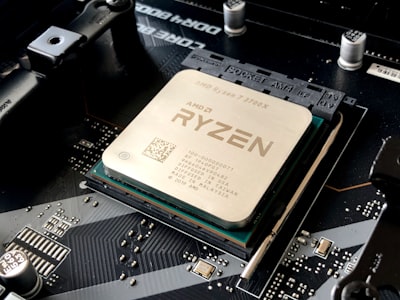
AMD has once again set a milestone in processor architecture with the announcement of its upcoming Venice-X series, based on the Zen 6 microarchitecture, which promises to revolutionize the data center and high-performance computing market. According to early leaks and industry rumors, this generation will feature configurations of up to 96 cores and 1152 MB of L3 cache, all expected by 2027. While the company has not yet officially confirmed these figures, reports from engineers and analysts indicate that AMD is preparing an unprecedented qualitative leap in terms of core density and energy efficiency. The name Venice-X evokes the tradition of AMD's Extreme CPUs, which have always targeted intensive workloads in servers, virtualization, artificial intelligence, and massive data analysis.
The Zen 6 architecture represents the sixth iteration of AMD's successful microarchitecture family, which began with Zen in 2017. Each generation has improved IPC (instructions per cycle), efficiency, and scaling capabilities. With Venice-X, AMD is betting on an advanced chiplet design, likely using TSMC's 3nm or even 2nm process nodes, allowing 96 cores to be integrated into a single socket. The massive 1152 MB L3 cache not only reduces memory access latency but also enables new in-memory processing paradigms, where data resides directly on the processor, accelerating database, AI, and scientific simulation tasks. This approach is especially relevant for machine learning and deep learning applications, where memory proximity to compute is critical.
In the enterprise realm, the arrival of Venice-X will transform how companies approach their IT infrastructures. With 96 cores per socket, virtual machines can run with near-native performance, reducing the need for multiple physical servers. This aligns perfectly with hybrid and multi-cloud strategies, where AWS and Azure are the predominant players. Companies looking to optimize operational costs and improve scalability will find Venice-X an ideal platform for migrating critical workloads. In this context, having a technology partner like Q2BSTUDIO becomes essential, as it offers cloud AWS and Azure consulting and management, ensuring infrastructure is ready to fully leverage these new CPUs.
Artificial intelligence is another field where Venice-X will make a notable difference. Large language models (LLMs) and recommendation systems require enormous amounts of parallel processing and low-latency memory. With 1152 MB of cache, inference and training processes will benefit from ultra-fast data access, drastically reducing execution times. Additionally, Zen 6 architecture will include improvements in AVX-512 instructions and matrix units, boosting AI workloads on both servers and workstations. For organizations wanting to integrate AI agents into their business processes, Q2BSTUDIO develops custom artificial intelligence solutions, from chatbots to intelligent automation systems, which can be deployed on hardware like Venice-X to achieve optimal performance.
Cybersecurity will also be positively impacted. High-core-density processors allow real-time security analysis, such as packet scanning, intrusion detection, and encryption/decryption, without affecting the performance of other applications. Companies operating critical environments need to protect their data and systems from increasingly sophisticated threats. Q2BSTUDIO, through its cybersecurity and pentesting service, helps identify vulnerabilities and design secure architectures capable of leveraging Venice-X advantages without exposing sensitive information.
In the realm of business intelligence and data analysis, the combination of 96 cores and massive cache enables processing large volumes of information with minimal latency. Tools like Power BI can benefit from faster queries and real-time updates, facilitating data-driven decision making. Q2BSTUDIO offers Business Intelligence with Power BI services that integrate complex data sources and generate interactive dashboards, all optimized for multicloud environments and cutting-edge hardware like Venice-X.
For companies developing custom software, Venice-X represents an opportunity to create applications that fully exploit parallelism. Q2BSTUDIO specializes in cross-platform application development, using modern technologies that benefit from many-core CPUs, such as microservices, containers, and orchestration. The ability to run hundreds of containers on a single physical server reduces infrastructure costs and simplifies DevOps management.
Process automation is also revolutionized. With Venice-X, automated workflows can process a greater number of tasks simultaneously, from ERP system integration to robotic process automation (RPA). Q2BSTUDIO offers automation solutions that integrate with cloud and on-premise platforms, leveraging Zen 6's performance to achieve unprecedented efficiencies.
In summary, AMD Venice-X is not just an incremental update, but a platform that redefines computing capabilities for 2027. Companies that prepare now, adapting their applications and cloud environments, will be in a privileged position to lead the next decade. Technology partners like Q2BSTUDIO offer the necessary expertise to carry out that transition safely and efficiently, covering everything from custom software development to the implementation of artificial intelligence, cybersecurity, and business intelligence. The combination of cutting-edge hardware with specialized services will be the key to unlocking the full potential of Venice-X.