
In recent months, the debate about whether artificial intelligence (AI) will kill software as a service (SaaS) has gained momentum. Some predict that any company will be able to develop its own internal tools with the help of language models, making the subscription model obsolete. However, the reality is more nuanced: AI is not going to eliminate SaaS, but it is putting pressure on those providers that have stopped innovating. This phenomenon, which we could call 'stealth AI churn,' is changing the rules of the game for point solutions that have been frozen in time.
For years, the build-versus-buy decision followed a simple rule: 90% of the time, buying was the right choice. The cost of internal development and maintenance was far higher than any subscription, and specialized vendors offered quality that was hard to match. But the arrival of generative AI tools and low-code platforms has altered this equation. Now, a small team—or even a single person with basic technical skills—can create a functional application in hours, not months. This does not mean that all SaaS is in danger; complex platforms with strong data moats, deep integrations, or regulatory requirements remain difficult to replicate. The risk is concentrated in point solutions: tools that do one thing and have not evolved in years.
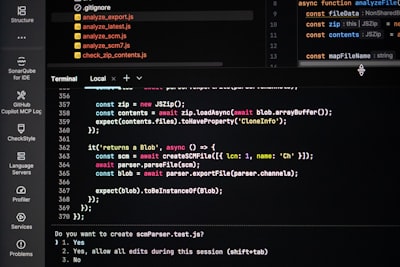
Let's take a hypothetical example. Imagine a company paying €4,000 a year for a newsletter creation tool. The product works, but it hasn't received significant improvements in the last five years: it doesn't integrate AI to summarize content, doesn't connect with external APIs, doesn't automate workflows. Faced with this situation, the team decides to spend a weekend building their own alternative using an AI assistant and a cloud platform. In two days they have a tool that fits exactly their process, saves hours of weekly work, and no longer depends on a third party. The result? They cancel the subscription, and the vendor never saw it coming because the customer never complained. That is exactly stealth churn: no signs of dissatisfaction until the contract ends.
This invisible churn is especially dangerous for companies selling custom software or point solutions to technically capable customers. AI allows those customers to become occasional builders without needing a full engineering team. And they do it on their own time, without warning. For the vendor, the loss doesn't show up in usage metrics until the last moment. DAUs, WAUs, or MAUs remain stable, and then suddenly a one-line email arrives: 'We’re canceling our subscription. We built our own version.'
What can vendors do to avoid this situation? First, be honest about which parts of their product could be replicated with a weekend of AI-assisted work. If a functionality can be built by a technical customer in a few hours, that functionality is no longer a differentiator. Vendors must assume that their most sophisticated customers are already considering that option. Second, innovate at a much faster pace than before. Being a 'stable and reliable' product is no longer enough; that was a valuable attribute in 2018, but today it's an invitation for customers to look for alternatives. Third, build defenses around what AI cannot easily replicate: proprietary data, complex integrations with multiple internal systems, regulatory compliance (as in regulated sectors), or network effects. Fourth, integrate AI into the core of the product, not as an optional feature. If a customer can do the same with a generic chat tool, they won't pay a premium for it. AI must make the product structurally better, not just a superficial add-on.
In this new scenario, companies offering software development and technology services have a unique opportunity. It is not just about avoiding customer churn, but about helping organizations navigate this change. This is where companies like Q2BSTUDIO play a key role. With expertise in artificial intelligence, custom software development, cybersecurity, cloud AWS/Azure, and Business Intelligence (Power BI), Q2BSTUDIO enables businesses to build their own internal tools when necessary, or deeply integrate AI into existing products. The key is understanding when to buy and when to build, and having the right technology partner to execute it.
For example, a company that needs a process automation solution can turn to Q2BSTUDIO to design an AI agent workflow connected to its cloud ecosystem, ensuring cybersecurity and scalability. Or a company that uses Power BI for its reports can benefit from incorporating language models that generate automatic summaries—a task that previously required hours of manual analysis. Instead of relying on generic software, you get a tailor-made solution that evolves with the business and never freezes in time.
Returning to the big picture, the lesson is clear: AI will not kill SaaS, but it will kill vendors that stopped innovating. Point solutions that are not updated, that don't integrate modern capabilities, and that don't offer real differential value are on thin ice. Their most valuable customers—those with technical ability and vision—are already doing the math: 'Is it worth continuing to pay, or should I build it myself with AI?' If the vendor hasn't evolved, the answer will increasingly be: build.
For SaaS startup founders and executives, the recommendation is twofold: on one hand, scrutinize your own product and ask whether a technical customer could replicate it in a weekend. On the other, invest in creating real moats—data, integrations, compliance, user network—that make substitution too costly or complex. And above all, listen to weak signals: a customer who doesn't complain is not necessarily a happy customer; they might be preparing their own alternative.
In short, the AI era is not the end of software as a service, but the beginning of much more intense competition for relevance. Vendors that understand this and act accordingly—innovating relentlessly, integrating AI genuinely, and building barriers to entry—will continue to thrive. Those that rest on their laurels, on the other hand, will disappear without noise, replaced by a tool someone built on a Saturday afternoon. And nobody will notice until the cancellation email arrives.
