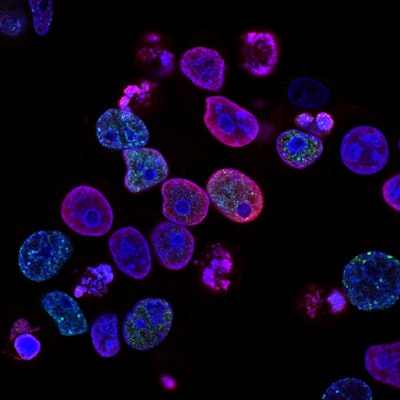
Computational biology has reached a milestone with the arrival of foundation models for single-cell data. However, handling sensitive genomic information requires a balance between analytical precision and privacy. In this context, an innovative concept emerges: a single-cell model that not only deciphers gene regulation linked to aging but also does so under strict differential privacy protocols, inspired by federated learning architectures. This approach allows multiple institutions to collaborate in building a global model without sharing raw data, thus solving one of the biggest bottlenecks in biomedical research.
The model, which we will call VCell (for 'Virtual Cell'), leverages the inherent tabular structure of single-cell RNA sequencing (scRNA-seq) data. Unlike text data, gene expressions are not sequential; they exhibit a matrix-like organization where each row is a cell and each column a gene. Traditional foundation models often overlook this tabular nature, but VCell exploits it through specific attention layers that recognize relationships between genes and cells. This enables the discovery of combinatorial regulatory logic in complex biological systems: hematopoiesis, pancreatic endogenesis, neurogenesis, and cardiogenesis, as well as the identification of cellular rejuvenation factors through in silico prioritization guided by age and cell identity scores.
Behind this architecture lies a major technological challenge. To deploy VCell in real-world settings, a platform is needed that orchestrates decentralized training, manages secure communication between nodes, and ensures data integrity. This is where companies like Q2BSTUDIO bring their expertise in developing custom software. Building a federated learning ecosystem for genomics is not trivial: it requires adapting AI frameworks, implementing homomorphic encryption mechanisms, and designing interfaces that allow biologists to interact with models without exposing sensitive information. Customization of each component—from the storage layer to the task orchestrator—is key to making the system scale with thousands of samples.
The AI driving VCell is not limited to classifying cells; it can also generate hypotheses about aging pathways. For example, when analyzing a new dataset of young and aged human fibroblasts, the model proposed rejuvenation factors that outperformed traditional methods in subsequent assays. This causal inference capability opens the door to personalized anti-aging therapies, a field that urgently needs privacy-preserving tools. Cloud infrastructure plays a fundamental role here: cloud AWS/Azure provide the elasticity needed to train massive models without compromising confidentiality, as long as access control policies and end-to-end encryption are implemented. Q2BSTUDIO offers Azure and AWS cloud services that can be adapted to these requirements, integrating cybersecurity tools such as virtual firewalls and continuous monitoring.
Another crucial aspect is data governance. Healthcare institutions often have information silos that cannot be shared due to regulations like GDPR. Federated learning solves this by training local models and aggregating only updated weights. However, orchestrating these flows requires robust software that manages versions, rollbacks, and audits. This is where BI / Power BI can be integrated to visualize training progress and model quality, allowing researchers to make informed decisions without accessing raw data. The combination of business intelligence with federated artificial intelligence is an emerging field that Q2BSTUDIO is actively exploring through custom developments.
Furthermore, the incorporation of AI agents automates repetitive tasks such as data cleaning, outlier detection, and hyperparameter suggestion. These agents can operate in a decentralized manner, each within its institution, communicating with the central orchestrator only when necessary. This multi-agent architecture is particularly useful in environments with intermittent connectivity or where latency must be minimized. Q2BSTUDIO, with its experience in custom software, has developed similar solutions for other regulated sectors, demonstrating that the same principle can be transferred to genomics.
From a business perspective, the personalized medicine market is valued at hundreds of billions of dollars, and single-cell foundation models will drive the next breakthroughs. Pharmaceutical companies, biotech firms, and hospitals need platforms that allow collaboration without losing intellectual property over their data. Here, the role of a technology consultancy like Q2BSTUDIO is twofold: on one hand, advising on distributed system architecture; on the other, implementing the custom software that ensures interoperability across different data sources (sequences, clinical databases, etc.).
In conclusion, the single-cell model for gene regulation and aging with privacy is not just an academic promise; it is a technical reality that requires collaboration among data scientists, biologists, and software developers. Platforms like VCell, powered by federated learning and cloud computing, are transforming how we understand aging. And for these solutions to reach production, having experienced technology partners in AI, cybersecurity, and cloud AWS/Azure is a differentiating factor. Q2BSTUDIO, with its focus on process automation and intelligent agent development, is positioned to lead this quiet revolution in computational biology.