
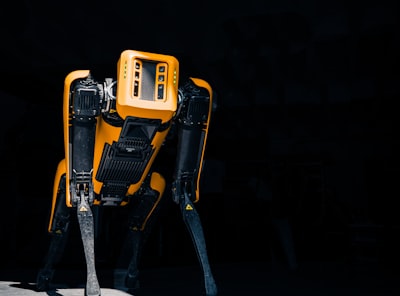
Legged robot locomotion has made significant strides in recent years, yet it still faces key challenges when operating in complex and variable environments. Perceptive reinforcement learning (RL) controllers represent a promising frontier, but they often rely on strong inductive biases—such as predefined oscillators or inverse kinematics (IK) gait templates—that limit adaptability across different robot morphologies. In this context, PGTT (Phase-Guided Terrain Traversal) emerges as a perceptive deep-RL approach that reformulates gait structure through reward shaping, reducing reliance on prior biases and enabling direct transfer between robotic platforms without extensive retuning.
PGTT encodes each leg’s phase as a cubic Hermite spline, adjusts swing height based on local heightmap statistics, and adds a swing-phase contact penalty. Unlike methods that condition actions on oscillators or IK, the policy here acts directly in joint space, making the approach morphology-agnostic. Trained in MuJoCo (MJX) on procedurally generated stair-like terrains with curriculum learning and domain randomization, PGTT outperforms baselines in success rate under push disturbances and discrete obstacles while maintaining comparable velocity tracking. Validated on a Unitree Go2 with a real-time LiDAR elevation-to-heightmap pipeline, and with preliminary results on ANYmal-C, PGTT demonstrates that terrain-adaptive, phase-guided reward shaping can transfer across platforms without platform-specific policy priors.
From a technical and business perspective, integrating systems like PGTT into commercial applications opens opportunities for intelligent automation in logistics, industrial inspection, and exploration. However, developing and deploying such systems requires a robust software ecosystem—from cloud simulation to integration with real sensors and actuators. This is where companies like Q2BSTUDIO, specialized in custom software development, provide modular and scalable solutions. Creating RL training environments in the cloud, for example, can benefit from cloud services on AWS/Azure to orchestrate massive simulations and store training data. Moreover, incorporating AI agents allows robots to make real-time decisions based on predictive terrain models.
Cybersecurity also plays a crucial role in these connected systems. A legged robot operating in industrial or critical infrastructure environments must be protected against cyberattacks that could alter its locomotion commands or leak sensitive terrain map data. Q2BSTUDIO’s cybersecurity solutions, such as those described on their pentesting page, can audit the security of communication channels and AI models. Meanwhile, the analysis of data generated by LiDAR sensors, cameras, and inertial measurement units (IMUs) can be enhanced through Business Intelligence (BI). With tools like Power BI, it is possible to visualize in real time the locomotion performance, trajectories, and risk zones, facilitating operational decision-making.
The concept of AI agents is particularly relevant in PGTT. Each leg can be considered an independent agent that coordinates its phase with the rest, and the central controller acts as a meta-agent learning high-level policies. This architecture aligns with the intelligent agent development services offered by Q2BSTUDIO, enabling the design of multi-agent systems for complex tasks such as exploration in unknown environments or collaborative manipulation. Furthermore, the ability to transfer policies between robots of different morphologies (e.g., Unitree Go2 and ANYmal-C) without specific retraining demonstrates the potential of morphology-agnostic approaches—an area of interest for companies seeking versatile robotic platforms.
Automation of training and deployment processes is another key aspect. With continuous integration and continuous delivery (CI/CD) pipelines adapted to robotics, RL models can be updated in the field without interrupting operations. Q2BSTUDIO offers automation solutions covering everything from procedural terrain generation to automatic sensor calibration, all supported by scalable cloud infrastructure that reduces simulation costs and accelerates research cycles.
Looking ahead, the combination of perceptive reinforcement learning with reward-shaping techniques like PGTT promises legged robots capable of navigating extremely irregular terrains—from rubble to stairs—with robustness previously only achieved by heavily tuned classical controllers. The key lies in breaking inductive biases while maintaining a natural gait structure for stability. Companies that adopt these technologies, backed by technology partners like Q2BSTUDIO, can lead the next generation of autonomous robots for critical applications.
In summary, PGTT represents a significant advance in perceptive locomotion for legged robots, but its real-world success depends on a solid software infrastructure. From cloud simulation to BI data analysis, cybersecurity, and AI agents, every component is essential. Q2BSTUDIO, with its expertise in custom software, AI, cloud, cybersecurity, and automation, is well-positioned to accompany organizations on this journey, offering integrated solutions that maximize performance and minimize risks.

