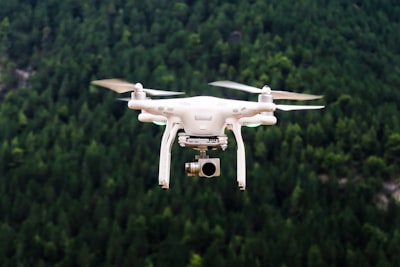
The challenge of detecting and understanding extremely small objects in drone-captured video sequences has driven a new generation of multimodal large language models (MLLMs) capable of real-time operation. In streaming environments, where each frame arrives sequentially and the system must respond without access to future frames, two critical issues emerge: visual compression that removes fine details of tiny objects and the impossibility of storing full historical context on resource-constrained onboard hardware. Recent research proposes architectures with augmented memory and semantic token routing to preserve relevant information about small targets and maintain temporal coherence. However, practical implementation of these solutions requires a comprehensive approach combining custom software development, cloud infrastructure, and advanced artificial intelligence capabilities.
The key lies in designing systems that not only process high-definition images but also can retain and update a hierarchical memory bank. This bank stores compact representations of objects of interest over time, allowing the model to continuously recognize the same target even when its size or appearance changes minimally. To achieve this, attention mechanisms must prioritize regions with small objects through a semantically aware token router, allocating more computational resources to those areas without increasing the overall load. Optimizing these algorithms is essential so they can run on drones with modest CPUs or GPUs, demanding a deep understanding of the hardware-software relationship.
From a business perspective, creating an aerial perception system with augmented memory for small objects represents an opportunity to develop innovative applications in surveillance, precision agriculture, infrastructure inspection, and logistics. Companies like Q2BSTUDIO, specialized in software development and technology, offer services that can accelerate this process. The integration of generative AI models and intelligent agents allows building solutions that learn from video sequences and improve accuracy over time. Furthermore, cloud deployment, whether with AWS or Azure, provides the scalability needed to store and process large volumes of historical data, while cybersecurity ensures the protection of sensitive information captured by drones.
A critical aspect is training data management. For an MLLM to learn to recognize small objects in aerial video, datasets with dense pixel-level annotations are required, such as those described in recent academic initiatives. These datasets include thousands of high-definition videos with per-frame masks and textual descriptions. However, adapting these resources to a commercial product involves data engineering tasks including cleaning, augmentation, and automated labeling. Here, expertise in Business Intelligence and Power BI can be valuable for visualizing and analyzing model performance patterns, identifying bottlenecks in detection.
The combination of hierarchical memory and semantic routing not only improves accuracy but also reduces latency. Instead of storing every full frame, the system retains only the most relevant tokens for the target object, updating them as the drone moves. This is possible thanks to an attention architecture that weighs the importance of each visual region. To implement this in a real environment, companies can utilize process automation services that integrate the model with drone control systems, enabling autonomous real-time decisions.
Another determining factor is energy efficiency. Drones have battery limitations, so processing must be lightweight. Techniques such as neural network quantization and pruning, along with specialized hardware like NPUs, allow MLLMs with augmented memory to run efficiently. Companies offering custom software applications can optimize these solutions for embedded platforms, ensuring predictable performance even under adverse conditions.
Cybersecurity must not be overlooked. Aerial video data may contain sensitive information, and communication between drone and base station must be encrypted. Additionally, AI models can be vulnerable to adversarial attacks. Implementing robust security measures, such as end-to-end encryption and anomaly detection in data flow, is part of responsible development. Q2BSTUDIO offers cybersecurity services that protect both data and models, ensuring system integrity.
In the field of artificial intelligence, the trend toward autonomous agents that interact with the environment is growing. A drone equipped with an MLLM with augmented memory can be seen as an agent that perceives, remembers, and acts. These agents, combined with cloud platforms and data analytics, open possibilities for search and rescue operations, environmental monitoring, and intelligent surveillance. Implementing such systems requires a multidisciplinary approach ranging from algorithm design to cloud infrastructure integration.
For companies wishing to adopt this technology, the most efficient path is to partner with a development team experienced in AI, cloud, and embedded systems. Q2BSTUDIO has the necessary capabilities to design and implement aerial perception solutions with augmented memory, whether from scratch or by improving existing systems. Its service portfolio includes creating custom applications, cloud migration, Power BI integration for performance dashboards, and developing AI agents for automating complex tasks.
In conclusion, MLLMs with augmented memory represent a significant advancement for small object perception in aerial videos, overcoming current model limitations. The combination of semantic token routing and hierarchical memory banks allows temporal coherence without saturating onboard resources. To bring this technology to market, it is essential to have technology partners offering a complete development ecosystem, from custom software to security and data analytics. The future of computer vision in drones lies in intelligent, efficient, and secure systems, and companies investing in these capabilities will be better positioned to lead the next wave of innovation.