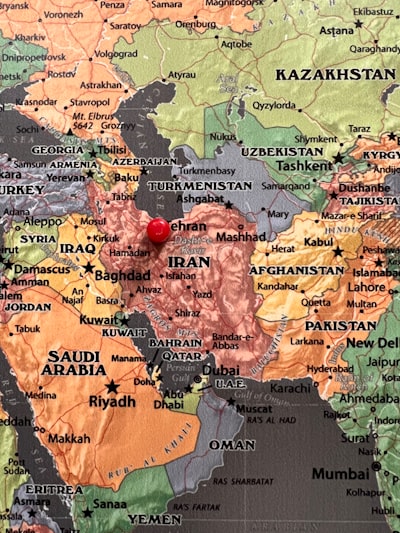
Arabic dialect geolocation has traditionally been approached as a discrete classification problem: cities or regions are labeled, and a model is trained to predict fixed categories. However, dialects do not fall into airtight compartments; they flow gradually across the territory, forming a linguistic continuum. An innovative approach, based on artificial intelligence and neural networks, proposes modeling this variation as a continuous geographic space, directly predicting latitude and longitude coordinates. This captures nuances that categorical systems miss, offering more realistic precision useful for business applications and research.
The model employs a hierarchical neural architecture that combines pre-trained speech encoder representations —such as XLS-R-300M and Whisper-large-v3— with phonotactic descriptors. Through a Transformer and an attention-pooling mechanism, continuous coordinates are obtained. The loss function is spherical geodesic, directly optimizing the great-circle distance on the Earth's surface, avoiding the distortions inherent in planar coordinate regression. Results show a median localization error of 481.2 km under controlled conditions, and when applying a city-masking zero-shot protocol, the error rises to 1,173.3 km, revealing both potential and room for improvement.
This paradigm has direct implications for companies that need to understand the geographic origin of their users from speech — such as multilingual customer service centers, regional market analysis, or context-aware recommendation systems. The ability to geolocate with continuous precision allows finer audience segmentation, adapting marketing campaigns and detecting usage patterns that discrete models do not reveal.
At Q2BSTUDIO, we tackle such challenges with a comprehensive approach. We develop custom artificial intelligence solutions capable of processing audio and text signals to extract geographic, demographic, or sentiment information. Our cloud AWS and Azure platform provides the scalable infrastructure needed to train and deploy such models, ensuring high availability and data security. We combine these capabilities with Business Intelligence (Power BI) to visualize geographic results and make data-driven decisions, and with AI agents that automate verification and response workflows.
Cybersecurity is another key piece: when handling voice recordings and personal data, any dialect geolocation system must comply with regulations like GDPR. At Q2BSTUDIO we integrate cybersecurity practices from design, performing audits and penetration testing to protect sensitive information.
Furthermore, the continuous space concept can be applied to other areas: from accent detection in virtual assistant applications to content localization on streaming platforms. Companies looking to innovate in this field need technology partners capable of developing custom applications that integrate cutting-edge models with production environments.
Research in continuous dialect geolocation shows that the boundary between language and geography is more blurred than we think. Adopting this vision allows organizations to gain a competitive advantage, because they do not merely classify but understand linguistic variation in its real context. At Q2BSTUDIO we are ready to turn these scientific advances into robust business solutions, combining artificial intelligence, cloud, BI, cybersecurity, and intelligent automation.