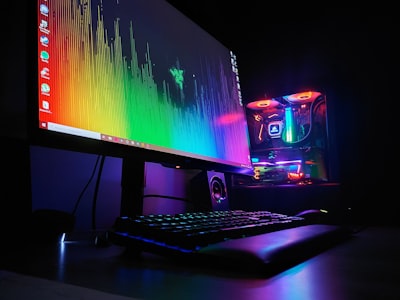
The world of gaming hardware has turned RGB lighting into almost a mandatory standard, from mice to motherboards. However, few accessories have brought this trend to such an unexpected territory as VESA mounts. MSI has introduced its new MPG MT201RG and MPG MT201DRG arms, which integrate RGB strips on the base and articulated sections. At first glance, it might seem like another aesthetic whim, but when analyzed from a technical and business perspective, we discover a missed opportunity for true innovation. In this article, we will explore why these arms shine, but not enough, and how companies like Q2BSTUDIO could transform this concept into a smart solution.
MSI's arms offer solid specifications: up to 44 pounds capacity, support for monitors up to 49 inches on the single version and 35 inches per screen on the dual, gas spring mechanisms, and quick-release plates. The price is around $120 for the single model and $200 for the dual, which is reasonable for a branded product. However, the main appeal — the RGB — is relegated to mere decoration. The strips are too small to illuminate the wall behind the desk, and control via a single button only allows cycling through predefined modes without any connectivity. No Wi-Fi, no Bluetooth, no integration with virtual assistants. In an era where home automation and smart systems are increasingly demanded, this is a significant shortcoming.
From an ergonomic standpoint, the idea of using ambient background lighting (bias lighting) is excellent. Reducing eye strain when working or playing in dark environments is a real need. But MSI stopped halfway: they offer the concept, but not the full functionality. We need arms that not only have lights but can adapt to the environment, adjust intensity and color based on time of day or screen content, and allow remote control from any device. This is where Q2BSTUDIO's vision comes in.
Imagine a smart VESA arm, equipped with ambient light sensors and cloud connectivity. It could sync with services like AWS or Azure to collect usage data and adjust lighting using artificial intelligence algorithms. For example, an AI agent could learn user preferences and anticipate needs: turn on warm light during late-night work sessions or switch to cool tones to improve concentration. This integration would not only enhance user experience but also open doors for enterprise applications. In offices, these arms could connect to smart building management systems, reducing energy consumption and improving employee well-being.
Cybersecurity also plays a crucial role. By connecting these devices to a network, they become vulnerable to attacks if not properly protected. At Q2BSTUDIO, we develop cybersecurity solutions that ensure secure communication between hardware and the cloud, preventing unauthorized access. Additionally, data analysis using Business Intelligence tools (like Power BI) allows companies to monitor equipment usage, identify behavior patterns, and optimize workstation layouts. All of this is part of a technological ecosystem that goes beyond mere decorative lighting.
MSI has created a product with potential, but limited by its purely aesthetic focus. The industry needs a leap toward smart functionality. That's why at Q2BSTUDIO we bet on developing custom software that integrates peripherals into automation platforms. We have already implemented systems that control ambient lighting via APIs, using AI agents to adapt light to user tasks. Likewise, our experience in cloud services AWS/Azure allows us to scale these solutions to corporate environments, where remote management and security are priorities.
MSI's RGB arms are a first step, but not the final one. The real revolution will come when manufacturers understand that light should not only be seen, but also think. Meanwhile, from software engineering, we will continue working to turn any accessory into a smart node. If MSI wants to truly shine, it should look beyond RGB and bet on connectivity, AI, and automation. Only then will we achieve an ecosystem where arms not only hold monitors but also illuminate the path to the future of work and entertainment.