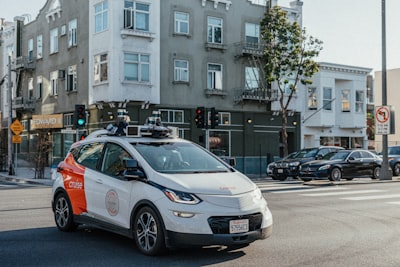
In the rapid advancement of autonomous driving, the ability to perceive the environment and predict trajectories from raw sensor data has become a fundamental pillar. Traditionally, modular systems break this process into independent stages—detection, tracking, and prediction—which introduce bottlenecks and amplify upstream errors. However, a new generation of query-based, fully differentiable models is redefining the paradigm. Li-ViP3D++ represents a quantum leap in intelligent camera-LiDAR fusion, integrating both sensors in a unified query space that eliminates heuristic steps and maximizes information flow.
The core innovation of Li-ViP3D++ lies in its Query-Gated Deformable Fusion (QGDF) mechanism. Instead of rigidly aligning visual and geometric data, QGDF allows each query to adaptively weight evidence from multi-view cameras and LiDAR. This is achieved through masked attention across different visual feature levels and differentiable deformable sampling in the BEV (Bird’s Eye View) space. The result is a model that jointly optimizes detection, tracking, and multi-hypothesis trajectory prediction, overcoming the limitations of previous architectures.
According to published results on the nuScenes benchmark, Li-ViP3D++ achieves an EPA (Efficacy Prediction Accuracy) of 0.335 and an mAP of 0.502, while significantly reducing false positives (FP ratio 0.147). Moreover, its inference time is lower (139.82 ms vs. 145.91 ms for its predecessor). These numbers not only demonstrate greater robustness in complex scenarios but also pave the way for real-time deployment in commercial autonomous vehicles.
For companies seeking to integrate cutting-edge solutions into their processes, Li-ViP3D++'s approach offers valuable lessons. Differentiable sensor fusion is a perfect example of how custom software can solve complex heterogeneous data integration problems. Instead of relying on rigid pipelines, organizations can benefit from adaptive architectures that learn from data. This is especially relevant in sectors such as logistics, mobile robotics, and Industry 4.0, where the combination of computer vision and depth sensors is increasingly common.
The underlying artificial intelligence in models like Li-ViP3D++ not only improves accuracy but also reduces the need for intensive manual labeling thanks to self-supervised learning and end-to-end optimization. These advances are directly transferable to other areas such as intelligent surveillance, autonomous navigation in warehouses, or advanced driver-assistance systems (ADAS).
Of course, implementing these systems requires robust cloud infrastructure. Training and deploying multimodal perception models demand scalable computational resources. This is where services like cloud AWS/Azure come into play, enabling companies to train massive models without investing in on-premise hardware. At Q2BSTUDIO, we develop custom platforms that orchestrate data pipelines—from sensor ingestion to real-time inference—ensuring low latency and high availability.
Cybersecurity also plays a critical role in autonomous driving. A connected vehicle is a potential target for attacks that could manipulate system perceptions. Therefore, any custom software solution must include layers of protection against threats. At Q2BSTUDIO, we integrate cybersecurity into all development phases, from architecture design to penetration testing (pentesting). Trust in sensor data is as important as model accuracy.
Furthermore, data analytics is essential for measuring system performance. Through BI/Power BI, we can build dashboards that monitor real-time metrics such as prediction accuracy, false positive rate, or system latency. This visibility enables engineering teams to iterate quickly and continuously improve models.
Another emerging concept is that of AI agents: autonomous entities that make decisions based on environment perception. Li-ViP3D++ can be seen as a perception agent that, by fusing cameras and LiDAR, generates a rich and robust representation of the world. In business environments, these agents can automate complex decision-making processes, such as route planning for autonomous fleets or drone navigation in warehouses.
From a business perspective, adopting technologies like Li-ViP3D++ is not only a matter of technical performance but of competitive advantage. Companies that integrate multimodal perception solutions will be better prepared for the challenges of transportation and logistics automation. At Q2BSTUDIO, we accompany our clients every step of the way, from conceptualization to implementation of custom applications that incorporate these advances.
The intelligent fusion strategy of Li-ViP3D++ can also inspire developments in other domains. For example, in precision agriculture, combining multispectral imagery with LiDAR data allows more accurate crop monitoring. In construction, digital twins benefit from 3D models generated from heterogeneous sensors. The key is designing architectures that are end-to-end differentiable, allowing joint optimization of all components.
Finally, we cannot ignore the role of automation in the software lifecycle. CI/CD pipelines for AI models require specific tools to manage data versions, experiments, and deployments. At Q2BSTUDIO, we offer process automation services that accelerate development and ensure result reproducibility. This includes everything from container orchestration on Kubernetes to continuous integration of machine learning models.
In conclusion, Li-ViP3D++ is much more than an academic advancement: it represents a roadmap for the next generation of autonomous perception systems. By adopting a fully differentiable, query-based fusion approach, it overcomes the limitations of modular pipelines, delivering higher accuracy, lower latency, and fewer false positives. Companies wishing to incorporate these capabilities will find in Q2BSTUDIO a technology partner capable of translating innovation into tangible solutions, integrating artificial intelligence, cloud computing, cybersecurity, and data analytics coherently. The future of autonomous driving—and intelligent automation—is built with custom software, and Li-ViP3D++ is a key piece in that puzzle.