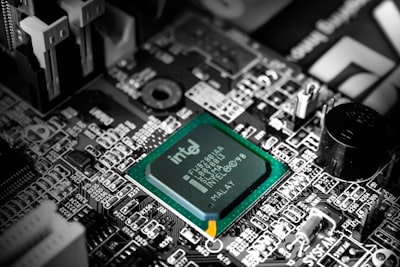
Black-box optimization (BBO) has emerged as a crucial tool in modern chip design, where component placement defines performance, power consumption, and commercial viability of an integrated circuit. Until now, BBO approaches faced immature formulations and inefficient algorithms, lagging behind traditional analytical methods. However, the recent release of BBOPlace-Bench (arXiv:2510.23472v2) marks a turning point. This benchmark, the first specifically designed to evaluate and develop BBO algorithms for chip placement, unifies three problem formulations and provides a modular framework that allows researchers and companies to implement, test, and compare their own solutions in a standardized way. It includes real modern chip cases, uniform formats, and key metrics such as density, wirelength, and runtime. Additionally, it integrates representative algorithm families: simulated annealing, population-based search (genetic algorithms, CMA-ES, PSO), and Bayesian optimization. Preliminary results show that certain configurations, such as genetic algorithms under the mask-guided formulation, directly compete with analytical and reinforcement learning methods.
From a business perspective, BBOPlace-Bench not only accelerates academic research but also opens the door to concrete industrial applications. Companies like Q2BSTUDIO, specialized in custom software development and AI solutions, can leverage such benchmarks to optimize processes in sectors like semiconductors, logistics, or energy. The ability to model complex problems as black boxes and apply advanced search algorithms aligns perfectly with the services we offer in custom software, where computational efficiency and adaptability are critical. For instance, a client needing to design a chip layout system could benefit from a tailored BBO implementation, integrated with cloud infrastructure on AWS or Azure to scale experiments, and protected by robust cybersecurity measures.
The relevance of BBOPlace-Bench extends beyond microelectronics. Its principles are transferable to any domain where the objective function is expensive to evaluate and lacks a clear analytical expression. This includes everything from financial portfolio optimization to machine learning model calibration. At Q2BSTUDIO, we understand that businesses need tools that combine cutting-edge research with practical implementation. Therefore, we offer consulting services in AI agents and intelligent automation, as well as data analytics with Power BI and cloud solutions that enable deploying these benchmarks in production environments. Integrating BBOPlace-Bench with BI platforms could, for example, visualize optimization progress in real time, while AI agents could dynamically adjust algorithm hyperparameters.
Another key aspect is cybersecurity. When handling sensitive chip designs, the data and optimization processes must be protected against unauthorized access. Q2BSTUDIO offers cybersecurity services that ensure the cloud infrastructure where these benchmarks run meets the highest protection standards. This allows companies to focus on innovation without worrying about vulnerabilities.
The benchmark also facilitates fair algorithm comparison, essential for strategic decision-making. Standardized metrics (such as wirelength, density, and compute time) allow technical teams to quickly assess which approach delivers the best performance for their specific case. At Q2BSTUDIO, we apply this philosophy in our custom software development projects, where each client receives a solution tailored to their business metrics. For example, a logistics route optimization system could benefit from the same BBO principles used in chip placement.
The release of BBOPlace-Bench represents a milestone for the black-box optimization community. It not only provides a unified testbed but also demonstrates that BBO can be competitive with traditional methods in a domain as demanding as chip design. This has direct implications for enterprise software: if population-based or Bayesian search algorithms can rival analytical techniques in microelectronics, what could they achieve in areas like production planning, resource allocation, or fraud detection? At Q2BSTUDIO, we believe the future of software lies in hybrid methods—combining domain knowledge with the power of automatic optimization. Our team is already working on integrating BBO algorithms into AI modules for industrial clients, always with a focus on cloud scalability and data security.
Finally, it is important to note that BBOPlace-Bench is not an end in itself but a tool to drive innovation. Companies that adopt these benchmarks can reduce development cycles, improve product quality, and explore solutions previously unfeasible due to computational cost. Q2BSTUDIO provides precisely that bridge between research and commercial application: through custom software development, implementation of cloud infrastructures, and integration of BI platforms, we help organizations turn theory into tangible results. The black-box optimization benchmark for chips is just the beginning; its true value lies in the solutions built upon it.