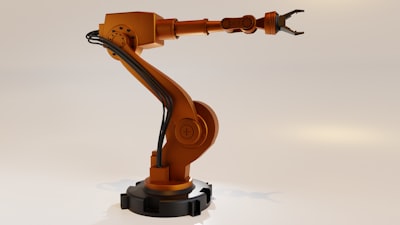
Robotic trajectory planning has been a central challenge in robotics for decades, especially in complex environments with obstacles. Traditionally, sampling-based approaches such as RRT or PRM offer robust solutions but with high computational cost, which worsens in high-dimensional spaces. However, inspiration from biological systems and self-supervised learning are opening new avenues for more efficient and adaptive planners. In this article we explore how the combination of neural networks, forward and inverse models, and self-supervision strategies are transforming trajectory planning, and how companies like Q2BSTUDIO integrate these concepts into custom software solutions for industry.
Bioinspiration is key: living organisms solve navigation with efficiency that surpasses classical algorithms. For instance, certain insects use optical flow and spatial memory to avoid obstacles with minimal energy consumption. Translating these principles into robotics involves designing neural architectures that learn internal representations of the environment, similar to cognitive maps. Instead of relying on predefined rules, a bioinspired planner can generalize from previous experiences, improving with each iteration. Self-supervision, on the other hand, allows the system to train without external labels: the robot itself generates data through interaction with the real or simulated world, using forward models (which predict the next state) and inverse models (which infer the action needed to reach a state) as internal supervisory signals.
A recent approach, similar to that described in academic literature, uses a network that learns to plan collision-free trajectories through bounded forward passes. The network receives the current state and goal, and outputs a sequence of actions. Training is done by minimizing the error between the predicted trajectory and the actual simulated trajectory, using a differentiable forward model. This method offers significant advantages: fast inference, adaptability to changing environments, and reduced dependence on expert demonstrations. However, as researchers note, the planner tends to exploit the learning signal, generating suboptimal behavior. To mitigate this, additional training regimes such as regularization or adversarial data are proposed, improving robustness.
From a business perspective, implementing these systems requires a comprehensive software development approach. This is where Q2BSTUDIO brings its expertise in developing custom software applications, integrating modules of artificial intelligence, cybersecurity, and cloud computing. For example, a self-supervised trajectory planner can be deployed as a microservice on AWS or Azure, enabling scalability and low latency. Cybersecurity is critical, as any vulnerability in robotic control could have serious consequences; that is why Q2BSTUDIO offers pentesting and cybersecurity services to ensure secure communications between the robot and the cloud. Moreover, analytics data generated by robots (trajectories, times, success rates) can be processed with BI tools like Power BI, allowing engineers to optimize processes and detect patterns.
Artificial intelligence is the core of these planners. Q2BSTUDIO develops AI agents that combine reinforcement learning and generative models to adapt to specific tasks, such as warehouse navigation or infrastructure inspection. Integration with cloud services (AWS Lambda, Azure Functions) allows real-time model updates without interrupting operations. Likewise, process automation through automation software reduces human intervention and speeds up the training cycle. In short, bioinspired and self-supervised trajectory planning is not only a research topic but a real business opportunity for companies seeking efficient and safe robotic solutions.
Current challenges include generalization to unseen environments, integration of noisy sensors, and explainability of planner decisions. Here, techniques of explainable AI (XAI) and monitoring with Power BI dashboards can help operators understand why the robot chooses a particular trajectory. Q2BSTUDIO, with its multidisciplinary approach, offers consulting and development services covering cloud architecture, cybersecurity, and custom AI agents. If your company needs an autonomous navigation system, a robotic assistant, or simply wants to explore the possibilities of self-supervised learning, a technology partner like Q2BSTUDIO can make a difference.
In summary, the convergence of bioinspiration, self-supervision, and artificial intelligence is redefining robotic trajectory planning. Advances in forward/inverse models and regularization techniques promise faster and more robust planners. For organizations, adopting these technologies requires a tailored ecosystem of custom software, cloud, cybersecurity, and BI to ensure viability. Q2BSTUDIO stands as a strategic ally on this journey, offering integrated solutions that turn innovation into tangible results. The future of robotics is already here, built with self-supervised code, biological inspiration, and the best available technology.