Artificial intelligence is transforming medical diagnosis, but one of its greatest challenges remains the lack of reliable mechanisms to express uncertainty. Traditional models provide point predictions without indicating when they might be wrong, limiting their adoption in clinical settings where a mistake can have serious consequences. Bayesian uncertainty estimation, particularly through techniques like Monte Carlo dropout, allows quantifying the model’s confidence level and improving clinical decision-making. This approach not only detects ambiguous or atypical cases but also reduces misdiagnoses when information is communicated appropriately to healthcare professionals.
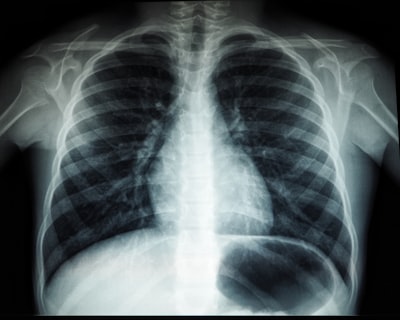
Uncertainty in AI models is divided into two main categories: aleatoric uncertainty, inherent to data noise, and epistemic uncertainty, which reflects the model’s limited knowledge. While the former is irreducible, the latter can be reduced with more data or better training. Bayesian estimation, especially through approximations like Monte Carlo dropout, enables quantifying this epistemic uncertainty without requiring complex architectures. In chest radiography, for example, this technique has shown that high-uncertainty predictions often correspond to atypical findings or regions poorly represented in the training set, providing a valuable signal for clinicians to decide whether to trust the result or request additional tests.
A recent study in medical imaging applied Monte Carlo dropout to a multi-task chest radiograph classifier with eight thoracic findings and 137,593 training images. Results showed that epistemic uncertainty correlates with model generalization across different training set scales and, more importantly, flags confident but incorrect predictions. Adding this signal to the point prediction raised the error detection AUROC from 0.74 to 0.77, a statistically significant improvement (ΔAUROC +0.023, 95% CI [+0.014, +0.033]). However, the real benefit lies not only in the metric but also in how that information is presented to the end user.
In a controlled 2x2 factorial experiment, researchers compared two ways of communicating uncertainty: raw scores versus a binary error-risk flag. When uncertainty was presented as a clear “high error risk” indicator, clinicians reduced misdiagnoses on unreliable findings from 8.5% to 2.7%. In contrast, when numerical scores were shown without interpretation, the improvement was much smaller. This demonstrates that interface design and uncertainty communication are as important as the underlying model’s accuracy. For companies developing clinical decision support systems, like Q2BSTUDIO, this finding has direct implications for application architecture.
Q2BSTUDIO, as a software and technology development company, understands that integrating Bayesian uncertainty estimators into medical applications requires a multidisciplinary approach. It is not enough to train a model; workflows must be designed to allow healthcare professionals to correctly interpret the uncertainty signal. That is why the company focuses on developing custom AI agents that not only predict but also communicate their confidence level intuitively. These agents can be integrated into electronic health records, telemedicine platforms, or imaging dashboards, always with an interface adapted to the clinical context.
Large-scale deployment of these systems also requires robust and secure cloud infrastructure. AWS and Azure cloud solutions offer the elasticity needed to process large volumes of medical images, store data in compliance with regulations like HIPAA or GDPR, and deploy models with low latency. Q2BSTUDIO designs specific cloud architectures for the healthcare sector, ensuring scalability and protection of sensitive data. Additionally, cybersecurity is a fundamental pillar: any system handling clinical information must include encryption, access controls, and continuous audits to prevent breaches that compromise patient privacy.
In parallel, business intelligence (BI) plays a key role in monitoring the performance of AI models. Through Power BI dashboards, clinical and technical teams can visualize metrics such as error rates, uncertainty distribution by finding type, or precision evolution with new data. This information enables informed decisions about when to retrain a model, which specialties benefit most from the tool, or whether confidence thresholds need adjustment. Q2BSTUDIO implements custom BI solutions that connect directly with model data, providing real-time visibility.
The trend toward personalized medicine and value-based care demands that AI systems be not only accurate but also transparent and trustworthy. Bayesian uncertainty estimation, combined with effective communication, allows clinicians to delegate screening and assisted diagnosis tasks with greater confidence. For example, in an emergency department, an AI agent can prioritize radiographs with low uncertainty for critical findings, while those with high uncertainty are automatically referred to a senior radiologist. This kind of workflow reduces workload and speeds up care without compromising quality.
From a business perspective, competitive differentiation in the digital health market lies in offering solutions that not only automate but also inform. Companies that develop custom applications for the clinical sector, like Q2BSTUDIO, integrate these principles into every project. Whether by designing interfaces that show a red flag when the model is uncertain, or by implementing feedback loops that allow the model to be adjusted with new expert-labeled examples, the key is to close the loop between AI and human judgment.
In conclusion, Bayesian uncertainty estimation represents a significant advancement for medical AI, but its true value depends on how it is communicated to end users. Studies show that a binary error-risk signal can drastically reduce misdiagnosis rates, while raw scores barely improve clinical performance. To maximize impact, companies must invest in custom software development that includes adapted interfaces, secure cloud infrastructure, robust cybersecurity, and BI analytics. Q2BSTUDIO, with its expertise in these areas, is ready to help healthcare organizations implement AI systems that not only predict but also know when to stay silent and ask for help.