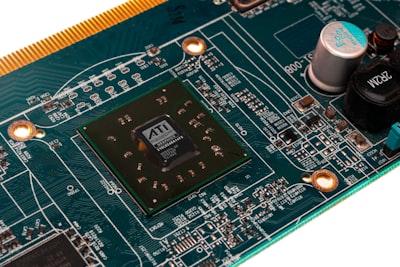
Approximately two decades ago, in 2006, AMD made a strategic decision that would transform the landscape of computing and gaming: the acquisition of ATI Technologies. This $5.4 billion deal not only allowed AMD to directly compete with Nvidia in the integrated and discrete graphics market but also laid the foundation for the dominance of its Radeon solutions in gaming consoles for years to come. Today, looking back, we understand that this business move was much more than a simple purchase; it was the genesis of an era where graphics processing became the central axis of the digital experience.
At that time, AMD was a CPU manufacturer struggling to gain market share from Intel, while ATI was one of the two major players in graphics, alongside Nvidia. The synergy seemed obvious: integrating CPU and GPU into a single architecture could offer performance and efficiency advantages. However, the path was not easy. The early years after the acquisition were marked by cultural and technological integration challenges, but the bet on a unified ecosystem (APU) began to bear fruit with the arrival of the Fusion series and later the Radeon HD line. The real turning point came when AMD managed to position its graphics in next-generation consoles: Sony chose an AMD APU for the PlayStation 4, and Microsoft did the same for the Xbox One. This dominance continues today, with current consoles (PS5, Xbox Series X|S) using customized Radeon architectures.
The impact of the ATI purchase was not limited to consumer hardware. In sectors such as artificial intelligence, scientific visualization, and custom software development, AMD GPUs have proven to be solid alternatives. Companies like Q2BSTUDIO, specialized in cross-platform software development and cloud solutions, have leveraged this graphics infrastructure to offer advanced services. For example, in the realm of cloud AWS/Azure, Q2BSTUDIO teams use instances with AMD GPUs to accelerate rendering and machine learning processes, reducing costs and execution times. Furthermore, the company integrates AI into its platforms, from intelligent agents that optimize operations to computer vision systems that benefit from the parallelism of Radeon GPUs.
Another relevant aspect is cybersecurity. Modern consoles, being connected to the internet, require robust protections; AMD has implemented hardware-level security technologies that are also used by pentesting firms. Q2BSTUDIO offers cybersecurity services that assess vulnerabilities in embedded and cloud systems, critical when handling sensitive data in graphics applications. On the other hand, the analysis of massive data generated by console usage and graphics software relies on Business Intelligence tools. BI/Power BI solutions enable companies to gain insights into hardware performance, usage patterns, and user preferences, facilitating strategic decisions.
The story of AMD's acquisition of ATI is also a lesson in technological adaptation. In the early years, the Radeon brand fiercely competed with GeForce, alternating leadership in performance and efficiency. The arrival of GCN (Graphics Core Next) and later RDNA (Radeon DNA) architectures consolidated AMD's presence in desktops, laptops, and of course, consoles. In the enterprise sector, Radeon Pro GPUs became popular options for design and rendering workstations, competing with Nvidia's Quadro. Today, with the rise of heterogeneous computing and artificial intelligence, AMD continues to invest in its ROCm ecosystem, which allows running deep learning workloads on its GPUs.
For companies developing custom software, like Q2BSTUDIO, the availability of open APIs such as Vulkan and ROCm has facilitated the creation of cross-platform applications that fully leverage AMD hardware. In process automation projects, for example, AI agents run on Radeon GPUs to process images in real time or detect anomalies on production lines. The flexibility of these cards, combined with cloud services, allows efficiently scaling solutions without relying solely on a single vendor.
Looking to the future, the influence of that acquisition remains strong. AMD has announced new graphics architectures promising significant improvements in ray tracing and energy efficiency, while next-generation consoles will likely continue using Radeon technology. In the software domain, Q2BSTUDIO positions itself as a strategic ally for companies wanting to integrate advanced graphics capabilities into their products, whether through custom applications, cloud solutions, or artificial intelligence systems. The lesson from ATI is clear: a good technological merger, managed with a long-term vision, can redefine entire industries.