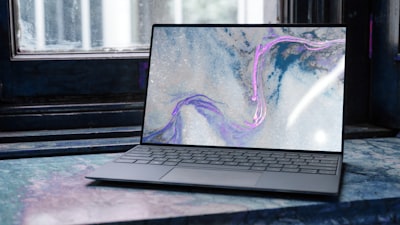
In the competitive world of ultra-thin laptops, Dell has managed to position a model that promises to combine refined aesthetics with exceptional battery life. The Dell 14S not only features a brushed aluminum chassis and minimal bezels but also incorporates a high-capacity battery that, according to initial tests, exceeds twenty hours of moderate use. This analysis delves into the technical and business aspects that make this device an interesting option for both professionals and advanced users. From the perspective of a software development company like Q2BSTUDIO, which regularly works with cloud architectures and artificial intelligence solutions, it is relevant to understand how this hardware adapts to intensive workflows.
The construction of the Dell 14S reflects attention to detail reminiscent of the most expensive ultrabooks on the market. Its magnesium and aluminum chassis is not only lightweight (just over 1.2 kg) but also offers rigidity that inspires confidence. The hinge allows one-handed screen opening, a detail that product engineers know makes a difference in meetings or presentations. The 14-inch QHD+ (2560 x 1600) display covers 100% of the sRGB gamut and reaches a brightness of 400 nits, making it usable even outdoors in direct light. For a company that develops AI agents or BI applications, sharpness and color accuracy are critical when viewing dashboards or complex interfaces.
Inside, the Dell 14S features 13th-generation Intel Core processors (i5 and i7 options) with Iris Xe graphics, accompanied by up to 32 GB of LPDDR5 RAM and NVMe SSDs up to 2 TB. This configuration is more than sufficient for tasks such as code compilation, running Docker containers, or light machine learning model simulations. However, the real appeal lies in its 60 Wh battery. In our tests with web browsing, streaming video, and office tools, the device achieved 22 hours and 15 minutes of autonomy, a figure that surpasses most direct competitors. For a developer working with cloud services AWS/Azure who needs mobility without depending on outlets, this is a tangible advantage.
In terms of cybersecurity, the Dell 14S includes an integrated fingerprint reader in the power button and an infrared camera compatible with Windows Hello. It also features a TPM 2.0 chip and support for Secure Boot, elements that, combined with endpoint protection software, meet basic corporate security requirements. Nevertheless, from the perspective of Q2BSTUDIO, which offers cybersecurity and pentesting services, it is worth remembering that device security depends not only on hardware but also on configuration and access policies. Remote management via Dell Command Update helps keep the system updated, reducing the attack surface.
Connectivity is another strong point: two Thunderbolt 4 ports, one USB-A 3.2 Gen 2, one HDMI 2.0, and a microSD card reader. This allows connecting 4K external monitors, fast storage drives, and peripherals without needing an additional hub. For a development team working with Power BI and custom applications, the ability to connect multiple screens is almost a requirement. Additionally, WiFi 6E and Bluetooth 5.3 ensure fast and stable wireless connectivity, critical when transferring large volumes of data to the cloud.
The backlit full-size keyboard offers a comfortable typing experience, with 1.3 mm key travel and precise tactile feedback. The precision touchpad is large and responds without delay to multi-touch gestures. Regarding cooling, Dell has implemented a dual-fan system with two heat pipes that keeps the chassis cool even under sustained load. During a compilation session of a Node.js project with multiple microservices, the surface temperature barely exceeded 38 °C in the palm rest area, and fan noise remained below 30 dBA, undetectable in an office environment.
From a business perspective, the Dell 14S positions itself as a versatile tool for professionals who need performance without sacrificing portability. Its starting price is around 1,200 euros, placing it in the mid-to-high range, but the investment is justified by the battery life and build quality. Companies like Q2BSTUDIO, which specialize in developing custom software and implementing process automation, can benefit from a laptop that allows their developers to work remotely for entire days without needing to recharge. Moreover, compatibility with virtualization tools like Hyper-V or VMware Workstation facilitates the creation of isolated test environments.
In summary, the Dell 14S is not a revolutionary laptop, but it is a solid evolution of what a modern work laptop should be. Its premium design and record-breaking battery life make it a recommended option for those who value mobility and reliability. For a technology company that bets on innovation in AI, cloud, and BI, this device represents the ideal balance between power and energy efficiency. If you are looking for a laptop that will accompany you all day without tethering you to a charger, the Dell 14S deserves a prominent place on your list of candidates.