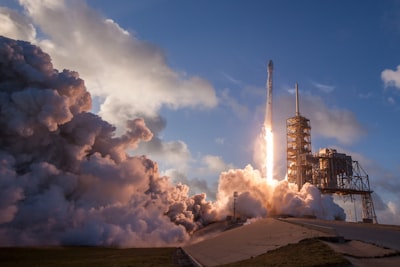
SpaceX is gearing up for another attempt to launch Starship, the 13th flight test of the largest vehicle ever built, after an automatic abort halted the countdown in the final seconds on July 16, and a weather delay on July 23 forced a postponement. The company founded by Elon Musk has confirmed that the 90-minute launch window will open on Friday, July 24, at 5:45 p.m. CT, weather permitting. The first attempt failed when two of the Super Heavy booster's Raptor engines did not ignite, triggering an automatic shutdown. Musk stated that 'two Raptors will be removed and replaced.' Interestingly, SpaceX did not perform a static fire test of the booster with the new engines on July 22, opting for what appeared to be a leak check. The Register asked the company about the tests conducted but received no response. In a post on X, the company only stated that 'additional preflight testing on Super Heavy complete.' There is speculation that last-second shutdowns, whether during a static fire or launch attempt, may not be kind to Raptor engines, which are extremely complex and operate at high pressures.
The Starship project faces unprecedented scrutiny. NASA requires it to have orbital capability for the Artemis III mission in 2027, and a launch cadence high enough to support a lunar landing in 2028. Additionally, SpaceX is a publicly traded company, and while its current stock price has already fallen below its IPO, it could do without further rattling investor nerves with a failure. Should all go well, the entire mission should last just over an hour. After launching, the Super Heavy booster is expected to make a controlled splashdown in the Gulf of Mexico. Starship will use its Raptor engines to enter a suborbital trajectory before coming down in the Indian Ocean. Before re-entry, SpaceX plans to deploy 20 Starlink V3 satellites, which will follow the vehicle on its suborbital trajectory, and attempt a relight of a Raptor engine. The latter is a critical step on the path to Starship going orbital.
The complexity of a system like Starship, with its 33 Raptor engines on the booster, requires extremely precise software control. Software development companies like Q2BSTUDIO understand that code reliability is as vital as hardware reliability. In the aerospace domain, custom software that manages sequential ignition, real-time monitoring, and abort algorithms must be robust and thoroughly tested. Artificial intelligence (AI) plays a growing role in these processes, whether for predicting engine failures through predictive maintenance models or optimizing reentry trajectories. Q2BSTUDIO offers AI services that could be applied to telemetry and diagnostic systems, helping detect anomalies before they become aborts. Additionally, cybersecurity is paramount: any vulnerability in control software could be exploited with catastrophic consequences. Therefore, having experts in cybersecurity to audit and protect these systems is a necessary investment.
Cloud infrastructure from AWS and Azure is also a pillar in SpaceX's operations. Computational fluid dynamics simulations, thermal stress models, and telemetry data analysis run in cloud environments that offer scalability and redundancy. Q2BSTUDIO, as a specialist in AWS and Azure cloud services, collaborates with companies that need to migrate or optimize their workloads, ensuring high availability and cost reduction. In SpaceX's case, the massive data processing from each launch allows continuous design improvements. Business Intelligence (BI) tools like Power BI transform that data into visual dashboards that engineers use for rapid decision-making. Q2BSTUDIO implements BI and Power BI solutions that facilitate the visualization of key indicators, from engine performance to atmospheric conditions.
Another emerging concept is AI agents—autonomous systems capable of executing complex tasks without human intervention. During a launch, an agent could monitor hundreds of parameters and activate safety protocols if a deviation is detected, similar to what automatic abort systems already do, but with greater learning capability. Q2BSTUDIO develops AI agents tailored to industrial sectors, including aerospace, where reliability and reaction speed are critical. The combination of custom software, cloud, cybersecurity, AI, and BI allows companies like SpaceX to address technical challenges with a comprehensive vision. Although Starship's 13th flight is just one test on a long road to Mars, each abort and success provides valuable data that, analyzed with the right tools, accelerates progress. The tech industry as a whole benefits from these advances, and companies like Q2BSTUDIO are ready to provide the digital support that the new space age demands.
Ultimately, Friday's attempt will not only test the limits of aerospace engineering but also demonstrate the importance of a robust software ecosystem. With an eye on 2027 and the Moon, SpaceX needs every flight to yield lessons, and the tech community—from application developers to cloud experts—plays a key role in that journey. Q2BSTUDIO, with its focus on high-performance software solutions, aligns with that vision: building the future, line by line of code.