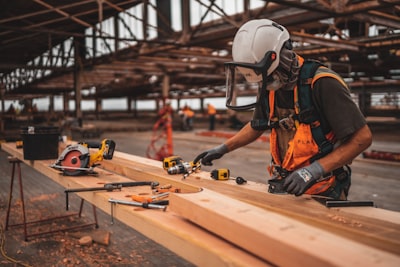
In the construction sector, occupational safety is a top priority, but detecting hazards such as workers under suspended loads remains a technical and ethical challenge. Collecting real videos of these incidents is difficult due to their rarity, the dangers of staging them, and strict privacy regulations. To overcome these barriers, synthetic benchmarks emerge, allowing controlled scenario simulation without compromising sensitive data. This approach not only accelerates the development of computer vision systems but also opens the door to more robust and ethical solutions.
The concept of a privacy-aware synthetic video benchmark focuses on generating clips that preserve the essential geometric relationships for hazard assessment while concealing workers’ identities. Recent research shows that obfuscation techniques that maintain visual structure (such as localized blurring) retain downstream utility better than global appearance smoothing. This underscores the importance of not only suppressing appearance but also preserving geometric cues for risk reasoning. For companies looking to implement these technologies, having a specialized technology partner makes a difference.
Q2BSTUDIO, as a software and technology development company, offers comprehensive solutions in this field. Creating a synthetic benchmark requires custom applications that automate video generation with variable parameters: viewpoints, lighting, occlusion, and surveillance conditions. These tailored software platforms allow safety teams to train artificial intelligence models with high-quality labeled data, avoiding the costs and risks of real filming. Furthermore, integrating advanced artificial intelligence enables real-time detection of dangerous worker-load relationships, overcoming the limitations of isolated object detection.
The scalability of these solutions depends heavily on cloud infrastructure. Using cloud services such as AWS or Azure ensures efficient processing of large video volumes, secure storage of sensitive data, and deployment of AI models in production environments. Cybersecurity plays a critical role here: protecting both synthetic data and algorithms from unauthorized access is essential, especially when handling construction site and worker information. Q2BSTUDIO incorporates security practices at every development layer, from encryption to identity management, ensuring regulatory compliance.
Beyond detection, the resulting data analysis can be enhanced with Business Intelligence tools. Using interactive Power BI dashboards, safety managers can visualize risk trends, identify critical areas, and make informed decisions. Combining synthetic benchmarks with BI also allows validating model effectiveness before deployment. Finally, AI agents (intelligent agents) can act autonomously to alert about dangerous situations, integrating the benchmark output with real-time notification systems.
In conclusion, adopting privacy-aware synthetic video benchmarks represents a significant advance for construction safety. Companies like Q2BSTUDIO offer the expertise needed to design and implement these solutions end-to-end: from custom application development to cloud integration, including artificial intelligence, cybersecurity, and business intelligence. Investing in these technologies not only improves worker protection but also positions organizations at the forefront of innovation in occupational risk prevention.