Seismic hazard and risk assessment is fundamental for infrastructure safety, urban planning, and disaster management. Traditionally, these analyses require deep technical expertise and handling complex computational pipelines, limiting access to experts. However, the evolution of artificial intelligence, particularly agent-based large language models (LLMs), is transforming this landscape. An agentic interface for seismic hazard and risk analysis allows non-specialist users to obtain accurate and transparent results in minutes, democratizing critical tools for resilience.
This new generation of platforms uses an orchestration approach where the LLM acts as planner, translator, and explainer, while underlying calculation engines —such as OpenQuake— execute numerical simulations. The result is a solution that combines the flexibility of natural language with the robustness of validated scientific models. Behind this architecture, strong custom software development capabilities are needed to integrate multiple data sources, APIs, and computing systems.
From a business perspective, implementing an agentic interface for seismic analysis involves several key technology components. First, cloud infrastructure is essential to scale intensive calculations and store large volumes of seismic data. Cloud AWS/Azure platforms provide elastic computing, distributed databases, and content delivery networks that guarantee availability and performance. At Q2BSTUDIO, we design cloud architectures that optimize cost and speed, allowing seismic hazard analysis to run in minutes even for large regions.
Another pillar is artificial intelligence, not only in the LLM agent but also in machine learning models for predicting ground motion or classifying terrain types. Integrating AI into the workflow allows incorporating user-supplied ground motion models, whether empirical or machine learning-based, expanding analysis capabilities beyond predefined models. Q2BSTUDIO develops customized artificial intelligence solutions tailored to the specific needs of each engineering and risk project.
Cybersecurity is critical when handling sensitive data from critical infrastructure and economic loss models. An agentic interface must ensure user authentication, result integrity, and protection against unauthorized access. Cybersecurity practices such as end-to-end encryption, access auditing, and penetration testing are essential. Q2BSTUDIO offers cybersecurity services that shield these platforms from threats, ensuring trust in hazard and risk data.
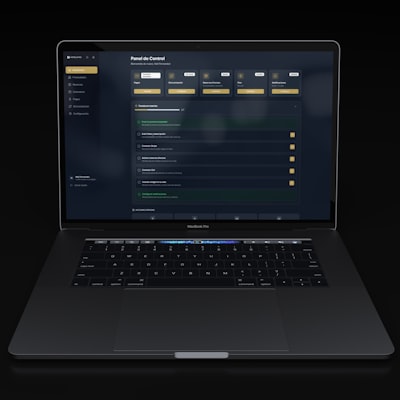
Result visualization is another key point. Decision-makers need interactive dashboards showing hazard maps, loss curves, and scenario analyses. Here, BI/Power BI tools allow connecting data generated by calculations with dynamic panels, facilitating interpretation and communication of risks. Q2BSTUDIO integrates Power BI into its solutions to provide automated reports and real-time alerts, improving response to seismic events.
AI agents not only simplify the interface but also add functionalities that previously required manual programming. For instance, generating conditional spectra, deterministic scenarios, surface hazard, per-building loss, retrofit comparison, and record selection with waveform retrieval. All this is orchestrated by the agent, which translates user requests into precise queries to the calculation engine. Transparency is guaranteed: each response includes source model provenance, ground motion model, and certified data, enabling full auditability.
From a technical standpoint, implementing these interfaces requires deep knowledge of software engineering, probabilistic models, and communication protocols such as the Model Context Protocol (MCP). Q2BSTUDIO, as a software and technology development company, has experience in creating modular and scalable systems that can integrate multiple calculation engines and geographic databases. Our focus is to deliver custom applications that not only meet technical requirements but also adapt to regulatory evolution and each client's specific needs.
Replicability is another key benefit: the same agentic interface architecture can be transferred to other regional models or even other natural hazards like floods or tsunamis. This makes the investment a versatile platform that reduces long-term costs. Moreover, the ability to accept user-supplied ground motion models, whether empirical or machine learning, broadens the application horizon in areas where global models are not accurate.
In summary, an agentic interface for seismic hazard and risk analysis represents a qualitative leap in accessibility and efficiency for these assessments. The combination of AI, cloud computing, cybersecurity, and BI, orchestrated by an intelligent agent, enables engineers, insurers, and disaster managers to make informed decisions quickly. Q2BSTUDIO is positioned to help organizations develop these solutions, offering experience in custom software development, cloud integration, artificial intelligence, and cybersecurity. If your organization seeks to modernize its risk analysis capabilities, explore how our solutions can be tailored to your needs.