
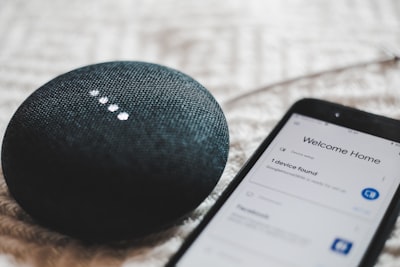
The evolution of smart home assistants has moved from simple command executors to systems capable of interpreting ambiguous and context-dependent requests. However, solutions based on large language models (LLMs) often require heavy cloud infrastructure, leading to latency, cost, and privacy issues. In this scenario, AdaHome emerges as an adaptive assistant designed to run locally with small language models, offering an efficient, customizable, and secure alternative. This approach not only optimizes performance in resource-constrained environments but also opens new possibilities for integrating artificial intelligence into the smart home.
AdaHome stands out for its intent-aware planning framework. Instead of applying complex reasoning to every command, the system dynamically classifies requests into two categories: those that can be resolved with direct template-based responses and those requiring lightweight reasoning. For the latter, it employs a strategy known as Chain-of-Draft, which reduces computational cost by generating only the essential inference steps. This design allows devices with limited memory and processing power to deliver fast and accurate responses without relying on cloud connectivity.
One of the most critical challenges in home assistants is long-term personalization. Traditional approaches resort to prompt augmentation or model retraining, both costly and difficult to maintain. AdaHome introduces a preference adaptation mechanism that learns from user interactions without modifying the base model. Through implicit and explicit feedback, the assistant gradually adjusts its behavior, achieving 88% consistency in multi-turn scenarios, compared to 52.5% for prompt augmentation baselines. This represents a qualitative leap in user experience, where the assistant truly understands and remembers individual preferences.
From a technical and business perspective, AdaHome exemplifies how artificial intelligence can be deployed efficiently and sovereignly. Companies like Q2BSTUDIO, specialized in custom software development, are in an ideal position to integrate such solutions into home and commercial ecosystems. The ability to run small models locally reduces dependence on external cloud services, mitigating cybersecurity risks and protecting data privacy. Moreover, the system's adaptability allows it to combine with cloud AWS/Azure platforms for tasks requiring greater computing power, creating an efficient hybrid that maximizes performance and minimizes costs.
The rise of AI agents in the smart home poses new challenges and opportunities. AdaHome not only interprets direct commands like 'turn on the living room light' but also handles ambiguous requests such as 'play relaxing music' or 'adjust the temperature for a romantic dinner.' In comparative tests, it achieved 86.7% accuracy on direct commands, reducing latency by up to three times compared to cloud-based LLM systems. This performance is crucial for real-time applications where instant response makes a difference.
For companies developing smart home software, integrating systems like AdaHome represents a competitive advantage. The ability to offer personalization without retraining and with lightweight models allows scaling solutions to low-cost devices such as smart speakers, routers, or home hubs. Furthermore, combining with BI/Power BI tools can provide insights into household usage patterns, helping users optimize energy consumption or improve daily routines, all while keeping security as a central pillar.
Cybersecurity is, in fact, one of the pillars that differentiates AdaHome from cloud solutions. By processing data locally, the transmission of sensitive information to external servers is eliminated, reducing the attack surface. Companies like Q2BSTUDIO offer pentesting and auditing services that ensure these local systems meet the most demanding standards. End-user trust depends on their data never leaving the home, and AdaHome makes this possible without sacrificing advanced artificial intelligence.
In the realm of home automation, AdaHome aligns with the trend toward autonomous AI agents that make contextual decisions. A user might say 'prepare the house for my arrival' and the assistant, based on learned preferences, would adjust lights, thermostat, and music without further intervention. This intentional planning capability, combined with the efficiency of small models, enables even resource-constrained devices to execute complex tasks. Synergy with cloud services (AWS/Azure) allows, when necessary, delegating heavy analysis while maintaining local agility.
The future of smart assistants lies in lightweight, personalized, and secure models. AdaHome demonstrates that it is possible to offer a rich user experience without sacrificing performance or privacy. For technology companies, adopting this approach means reducing operational costs, improving customer satisfaction, and complying with increasingly strict data protection regulations. From designing custom software to integrating with cloud platforms and BI systems, the ecosystem of smart solutions is evolving toward a decentralized model where artificial intelligence becomes ubiquitous yet respectful of the user.
In conclusion, AdaHome is not just another assistant; it is a paradigm shift in how we conceive artificial intelligence in the home. The combination of small models, intent-aware planning, and continuous adaptation makes it a versatile and scalable tool. Companies like Q2BSTUDIO, with their expertise in software development, cloud, and cybersecurity, are poised to lead this transformation, offering solutions that put the user at the center without compromising technology. The smart home of tomorrow will be more autonomous, more personal, and above all, more secure.

