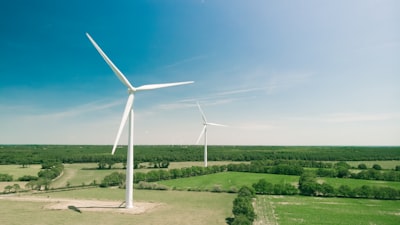
Accurate short-term wind power forecasting is a critical challenge for grid stability and operational planning. Complexity arises from the nonlinear interactions between atmospheric conditions and turbine dynamics, which traditional methods fail to capture adequately. Addressing this need, an innovative approach combines point-based SCADA data with grid-based Numerical Weather Prediction (NWP) using a multimodal framework that integrates a geometric encoder to extract rotation-invariant features from wind vectors and a Fourier Neural Operator (FNO) that performs global convolutions in the frequency domain. This architecture efficiently models long-range spatiotemporal relationships, overcoming the limitations of conventional convolutional networks. Experimental results across three real wind farms show consistent improvements over state-of-the-art baselines, validating the effectiveness of a physically informed design.
For energy companies looking to deploy such solutions, the key lies in having a technology partner that understands both the underlying physics and software engineering. At Q2BSTUDIO, as a software and technology development company, we offer custom software development services that integrate advanced forecasting models into production environments. Our team combines expertise in artificial intelligence, cybersecurity, and cloud computing to build robust platforms that manage sensor data, process weather predictions, and automate alerts. For example, a cloud-based solution on AWS or Azure can scale the training of Fourier Neural Operators with large historical datasets, while AI agents monitor prediction quality in real time. Additionally, BI and Power BI dashboards transform model outputs into actionable insights for grid operators.
From a technical perspective, the model explicitly separates inputs into scalar features (e.g., temperature, pressure) and vector features (e.g., wind direction and speed). The geometric encoder processes wind vectors through operations that guarantee rotational invariance—a crucial physical property because turbine performance depends on the relative orientation of airflow, not the absolute wind direction. This invariance is achieved via decomposition into angle and magnitude, or by using spherical harmonic representations, which are then fed into the FNO. The Fourier Neural Operator learns spatiotemporal patterns by applying fast Fourier transforms on forecast grids, capturing long-distance correlations without the computational cost of traditional convolutions. This combination allows the system to understand how an approaching low-pressure front from the ocean will affect a specific turbine’s output hours later.
Practical implementation of these models requires solid data infrastructure. Historical SCADA data must be cleaned, labeled, and synchronized with NWP grids, involving complex ETL pipelines. This is where AWS and Azure cloud services offer decisive advantages: scalable storage in data lakes, serverless processing for massive transformations, and workflow orchestration with tools like Step Functions or Logic Apps. Moreover, cybersecurity is critical when handling energy infrastructure data; at Q2BSTUDIO we embed security protocols from design, including encryption at rest and in transit, role-based access control, and continuous audits. The custom applications we develop not only deploy the forecast model but also connect to existing control systems to automate decisions, such as adjusting turbine yaw or managing grid injection.
From a business standpoint, forecast accuracy directly impacts wind farm revenues. A 5% improvement in precision can reduce penalties for grid deviations and optimize power purchase agreements. Business Intelligence tools like Power BI enable visualization of these metrics and comparison of model performance against official weather forecasts. At Q2BSTUDIO we help companies design these dashboards, integrating heterogeneous data sources and applying AI techniques to detect anomalous patterns. Finally, autonomous AI agents can act as virtual assistants that alert operators when extreme weather approaches, suggesting preventive actions based on historical learning. This combination of technologies—custom software, cloud, AI, cybersecurity, and BI—forms the ecosystem needed to turn geometric Fourier forecasting into a real operational tool.
Ultimately, the advance represented by the fusion of geometric encoders and Fourier Neural Operators opens new possibilities for the wind energy industry. However, success depends on careful implementation that addresses both computational requirements and legacy system integration. At Q2BSTUDIO we offer the expertise to lead this transformation, from conceptualization to continuous deployment. We invite energy sector companies to explore how our custom software applications can accelerate adoption of these advanced forecasting techniques while ensuring security and cloud scalability.