The current automotive market is pushing drivers to extend the lifespan of their vehicles like never before. With new car prices at historic highs and the average age of vehicles in the U.S. approaching 13 years, keeping a car in good condition has become an economic priority. Among the simplest and most affordable maintenance tasks is replacing the engine air filter and cabin air filter. A small gesture that, for less than $30 and a few minutes of work, can make a big difference in performance and longevity. In this article we will explore not only the how and why of this replacement, but also how modern technology, including custom software and cloud platforms, is transforming even the most traditional car maintenance tasks.
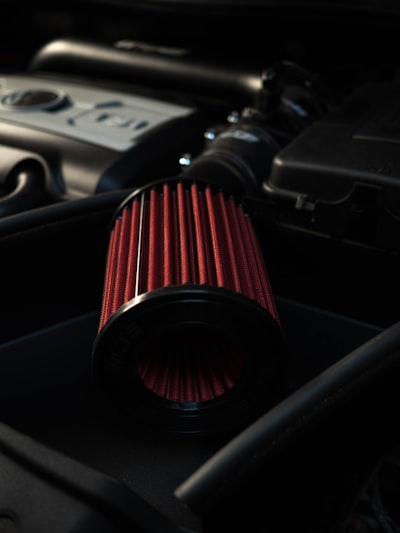
The engine air filter is a fundamental part that protects the heart of the car. Its function is to prevent particles such as dust, pollen, sand or road debris from entering the cylinders. If this filter is clogged, the engine receives less oxygen, forcing it to inject more fuel to maintain power. The result is inefficient combustion, loss of acceleration, increased fuel consumption, and in the long term, premature wear of internal parts. Manufacturers recommend changing it every 12,000 to 15,000 kilometers, but in dusty or highly polluted environments the interval shortens. A quality filter costs around $10-15, and replacing it barely requires removing a few clips or screws on the filter box, usually located on the top or side of the engine. It is one of the most rewarding DIY operations any driver can perform without specialized tools.
On the other hand, the cabin air filter (also known as the pollen or HVAC filter) is responsible for cleaning the air that enters the vehicle interior through the ventilation, heating or air conditioning system. It traps pollen, mold spores, bacteria, dust and exhaust particles. A dirty filter reduces airflow, makes the HVAC system work harder, and can cause bad odors or the growth of microorganisms in the evaporator. Changing it every 10,000-15,000 kilometers or once a year improves air quality for occupants and prevents costly repairs to the HVAC system. The filter is usually located behind the glove compartment or under the dashboard, and its replacement, costing between $10 and $20, is completed in a few minutes by following the owner's manual instructions.
From a business and technical perspective, this seemingly simple task reflects a principle that also applies in software development: prevention is cheaper than correction. Just as a clean filter prevents major engine failures, a well-designed software architecture and continuous maintenance prevent technical debt and security flaws. Companies like Q2BSTUDIO, specialized in AI agents and cloud solutions, understand that proactive maintenance is key in any system. For example, modern cars are no longer just mechanical machines; they incorporate electronic control units (ECUs), sensors and software that manage everything from fuel injection to driver assistance systems. These connected vehicles generate large volumes of data that, when analyzed with BI/Power BI tools, can predict when a filter needs to be changed or detect engine anomalies. In addition, cybersecurity is vital to protect onboard systems from attacks that could compromise driver safety. Q2BSTUDIO develops custom applications that integrate artificial intelligence for predictive diagnostics, and deploys infrastructure on AWS/Azure cloud to manage connected vehicle fleets. But even with all this technology, basic maintenance remains the owner's responsibility. Replacing filters periodically is a common-sense act that no app can replace.
The replacement process is accessible to anyone with a minimum of patience. First, consult the car's manual to locate both filters and know the exact specifications. For the engine filter, you usually access it from the hood, opening the filter box cover (which often has metal clips or screws). Remove the old one (paying attention to the orientation) and insert the new one in the same direction. For the cabin filter, empty the glove compartment, remove the side stops and slide out the filter cover; take out the old one, clean the compartment, and place the new one with the arrows indicating airflow. In total, it only takes about 15 minutes and, as mentioned, less than $30. The savings compared to a workshop (which can charge between $50 and $100 for labor) are significant, and the satisfaction of doing it yourself is added.
The benefits go beyond the wallet. An engine that breathes well performs better: it regains acceleration, reduces emissions, and extends the life of the catalytic converter and spark plugs. Interior comfort also improves, especially for people with allergies or asthma, since the cabin filter traps allergens. Furthermore, an efficient HVAC system prevents the air conditioning compressor from overworking, saving fuel and preventing breakdowns. These are small details that, added together, allow a car to exceed 200,000 kilometers without major investments.
In a world where technology advances by leaps and bounds — with generative AI designing virtual assistants, cybersecurity securing connected systems, and the cloud centralizing data from millions of vehicles — manual maintenance remains an irreplaceable pillar. The key is to combine both worlds: use technology to remind when it's time to change a filter (for example, through an app that integrates with the car's diagnostic system) and physically act to do it. Q2BSTUDIO, as a software development company, works precisely at that intersection: creating digital solutions that empower users and companies to make informed decisions. From Power BI dashboards showing fleet status to AI agents that anticipate failures, technology complements, but does not replace, direct vehicle care.
In conclusion, spending $30 every so often on two air filters is one of the best investments to extend your car's life. It does not require deep mechanical knowledge, just a little willingness and following instructions. By doing so, you not only save money, but also help your vehicle run cleaner and more efficiently. Meanwhile, the tech industry — with companies like Q2BSTUDIO leading the way — continues to innovate so that the car of the future is smarter, safer and more durable. But remember: no matter how connected your car is, no one will change the filter for you.