
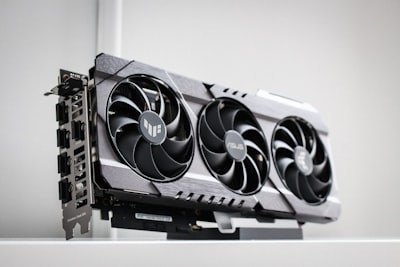
In the era of artificial intelligence and big data, optimizing computational performance has become a critical factor for any company aiming to stay competitive. High-performance GPU kernels are the invisible engine behind language models, recommendation systems, scientific simulations, and real-time cybersecurity applications. TileLang, a high-level domain-specific language (DSL) for Python, is revolutionizing how developers design and compile these kernels, enabling maximum hardware utilization without dealing with the complexity of manual CUDA code.
TileLang abstracts complex concepts such as shared memory management, register fragments, software pipelines, and tensor-core operations, offering an intuitive syntax reminiscent of NumPy or PyTorch. Instead of spending hours debugging thread indices or synchronizations, development teams can focus on algorithmic logic. This is especially relevant in enterprise environments where time-to-market and code efficiency make the difference. Custom software development directly benefits from this capability, allowing optimized kernels to be integrated into tailored products without incurring long R&D cycles.
The heart of TileLang lies in its ability to generate native instructions such as mma.sync, wgmma, ldmatrix, and cp.async, automatically adapting to the GPU architecture (sm_80, sm_90, etc.). This means that the same Python code can scale from a consumer GPU to an H100, maintaining performance close to optimized libraries like cuBLAS. In the field of artificial intelligence, this translates into faster training, lower inference latency, and the possibility of deploying complex models on edge environments without sacrificing accuracy.
TileLang also simplifies the implementation of advanced operations such as FlashAttention, which combines online softmax with matrix-matrix products without materializing the full attention matrix in global memory. This drastically reduces HBM traffic and accelerates transformer models, a cornerstone in AI agent applications and virtual assistants. Furthermore, its autotuning system explores dozens of tile, stage, and thread configurations to find the optimal combination for each hardware and tensor shape, a process that would otherwise require hours of manual tuning.
For a software development company like Q2BSTUDIO, integrating TileLang into the technology stack opens new possibilities. For instance, in AWS and Azure cloud projects, optimized kernels can be deployed to reduce inference costs, improving service profitability. In cybersecurity, high-performance kernels enable processing large volumes of network traffic in real time, identifying threats with minimal latency. And in Business Intelligence with Power BI, GPU acceleration of queries and aggregations can make complex dashboards update in milliseconds instead of seconds.
TileLang's flexibility also extends to epilogue fusion: for example, combining GEMM + bias + GELU in a single kernel eliminates intermediate buffers, saving memory bandwidth and reducing the number of kernel launches. This is essential in software process automation, where every millisecond counts in complex data pipelines. Moreover, introspection tools like T.print and get_kernel_source allow developers to debug and understand the generated code, easing adoption by teams that are not CUDA experts.
Looking ahead, the trend toward heterogeneous architectures and the proliferation of large language models make tools like TileLang indispensable. They not only democratize access to high-performance computing but also allow companies to differentiate themselves through proprietary kernels optimized for their specific workloads. At Q2BSTUDIO, we see this as an opportunity to help our clients build custom applications that fully leverage available hardware, whether in the cloud, on-premise, or on edge devices.
In summary, mastering TileLang is not just a technical skill; it is a competitive advantage. It enables engineering teams to focus on innovation while the tool handles low-level optimization. For any company looking to scale its AI capabilities, improve cybersecurity, or simply accelerate analytical processes, investing in this type of technology is a strategic step. The future of GPU performance lies in the hands of those who know how to combine high-level abstraction with the fine-grained control that TileLang offers, and at Q2BSTUDIO we are ready to accompany that journey.

