
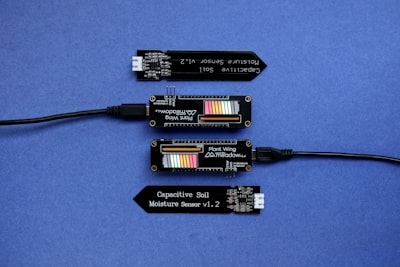
When a data team moves from working with consumer or enterprise data to industrial sensor data, the shock is immediate. At first glance, they are just numbers with timestamps, but in practice they break almost every assumption we take for granted in machine learning pipelines. The reason is not that industrial data is exotic, but that it has statistical properties and failure patterns absent from other domains, violating principles that are rarely made explicit. In this article, we analyze the four most critical challenges and how to design robust pipelines to overcome them, from the perspective of a company that has been building technology solutions for industrial environments for years.
1. Stationarity fails in predictable yet deceptive waysTime series models and most ML approaches assume that the statistical properties of the data remain stable over time, or at least that any non-stationarity follows patterns that can be modeled. Industrial sensors, however, exhibit a slow but steady drift: hardware aging, mounting fatigue, and environmental exposure gradually shift the baseline of readings. A temperature sensor might show a mean of 42.3 °C in the first month and 47.1 °C after twelve months, with a similar standard deviation. If we train a model on initial data and set fixed thresholds, after a few months that model will systematically generate false positives, interpreting natural equipment wear as anomalies.
The solution involves implementing explicit baseline tracking that distinguishes genuine drift from real anomalies. This is not trivial, because anomalies can masquerade as drift if the appropriate time scales are not analyzed. This is where having custom software that incorporates dynamic threshold adaptation algorithms makes the difference. A well-designed pipeline must periodically recalibrate its references using sliding time windows and allow operators to validate whether observed changes correspond to actual sensor degradation or changing operational conditions.
2. Missing data is not random: it is informativeIn enterprise software, imputation of missing values often assumes that data are missing at random, meaning the probability of a reading being absent is independent of its actual value. In industrial environments, this assumption is false and dangerous. Network connectivity degrades during peak operational load: heavy equipment generates electromagnetic interference, and wireless infrastructure saturates just when it is most needed. The result is that data is lost precisely during the highest stress moments of machinery, those most likely to produce anomalies.
If we impute those values with standard methods (mean, median, or even interpolation), we are training our models on a dataset that systematically underrepresents critical conditions. The robust approach is to treat connectivity gaps as features in themselves. A prolonged disconnection during production hours carries information about the network state, equipment activity, and the readings that might have been recorded. Incorporating gap indicators and gap duration as model inputs allows the algorithm to learn to interpret those silences. Specialized AI agents can analyze these absence patterns to improve early failure detection.
3. Retry logic duplicates readings and biases the dataIndustrial IoT device firmware typically implements retry logic: if a transmission fails, the sensor resends the same reading. This is correct for ensuring delivery, but it creates a pipeline problem: the same measurement arrives multiple times with near-identical timestamps, and nothing in the data indicates which is the original. In aggregate ML training data, this inflates the representation of readings taken during high-connectivity-failure periods, which as we saw often coincide with high-load periods. The model learns a biased version of behavior under extreme conditions.
Deduplication must be done via time windows, not strict timestamp matching, because firmware clock drift can cause retransmissions to differ by seconds. An effective approach is to group readings from the same sensor within a window of, say, 500 milliseconds and with a value tolerance, keeping the first or most frequent one. Implementing this reliably in real time requires solid data processing infrastructure, such as that provided by cloud services AWS or Azure managed by specialists.
4. Operational context is not in the data: it must be integratedThe same temperature reading can be normal if the equipment is under full load, or indicate overheating if it is idling. A vibration on a bearing means something different depending on its age, maintenance history, and recent load. All this contextual information resides in production systems such as MES, ERP, or maintenance management software, which were not designed to be queried in real time by ML pipelines.
Ignoring context generates false positives that erode operator trust over time. The solution involves bidirectional integration of those legacy systems into the data flow, or building proxy features from the sensors themselves (e.g., detecting operating regimes through clustering). In both cases, expertise in systems integration and business intelligence is needed. BI solutions like Power BI can help visualize these contexts, but the real power lies in combining advanced analytics with cybersecurity layers that protect the integrity of industrial data, an aspect we explore deeply in our cybersecurity services.
In summary, industrial sensor data is not simply time series; it is a reflection of complex physical processes that require pipelines specifically designed to handle drift, informative missingness, duplicates, and context dependency. Companies that master these challenges gain a huge competitive advantage in predictive maintenance, operational efficiency, and reduction of unplanned downtime. At Q2BSTUDIO, we have been helping organizations build these capabilities for years through custom applications, cloud platforms, automation, and AI agents that learn from each production cycle. If your organization is starting to work with industrial data or already facing these problems, the first step is recognizing that traditional pipelines are not enough. The second, smarter decision is to have a technology partner that understands both hardware and software.

