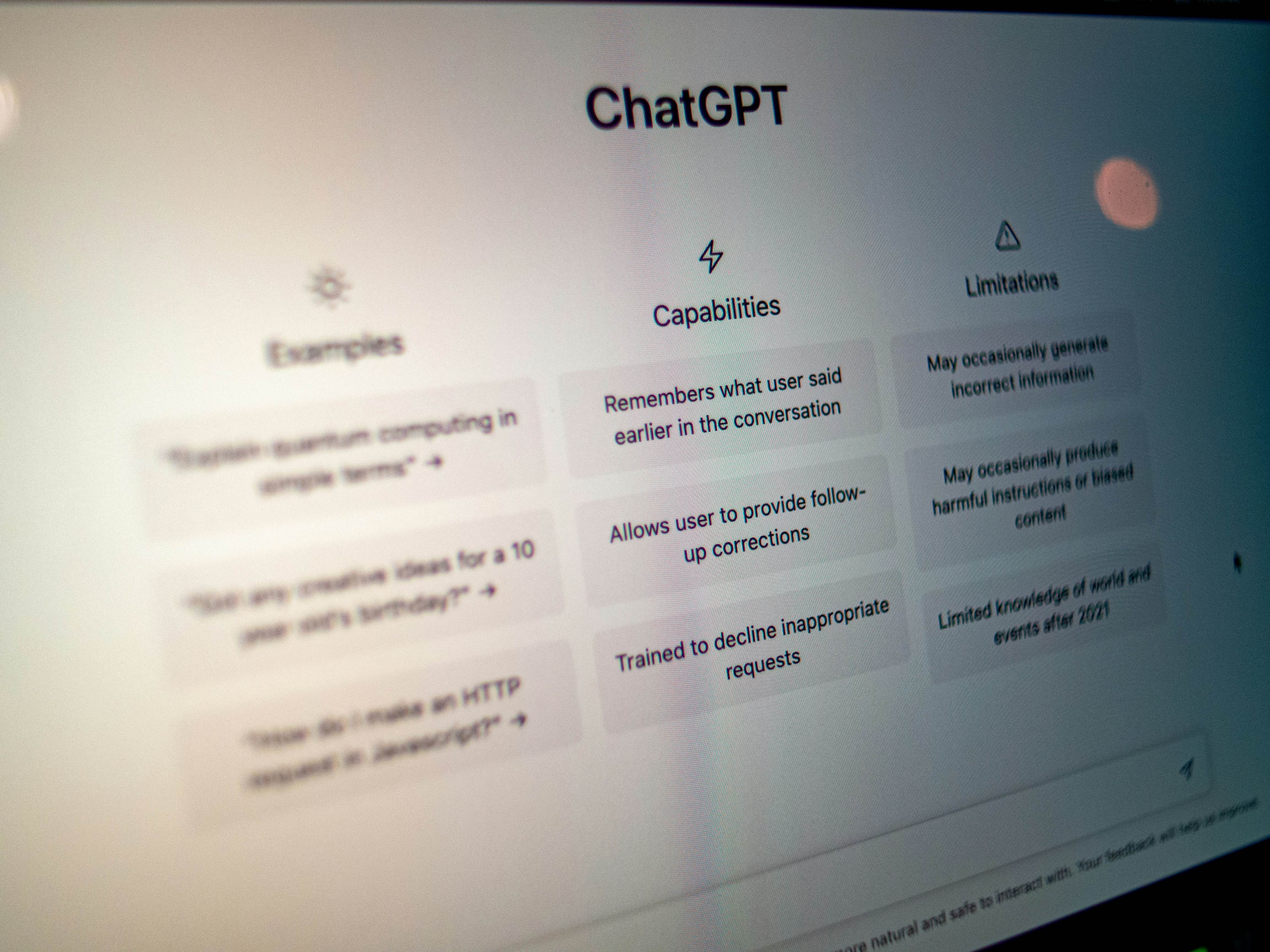
The emergence of artificial intelligence in education is no longer a future promise but a tangible reality reshaping how teachers and students interact with knowledge. By 2026, the ability to design effective prompts for ChatGPT and other generative tools will have become an essential pedagogical skill. However, the success of these practices depends not only on teacher creativity but also on a robust technological infrastructure that allows ethical, secure, and scalable integration of AI solutions. Companies like Q2BSTudio, specialized in custom software development, provide the necessary support for educational institutions to implement these tools without compromising privacy or learning quality.
Below, we present 50 original prompts grouped by thematic categories, adaptable to any teaching context. Each block includes references to key technological services that enhance their effectiveness, such as AWS/Azure cloud, cybersecurity, Business Intelligence with Power BI, and intelligent agents. The goal is not only to teach with AI but to prepare students for a world where technology and critical thinking converge.
1. Prompts for critical thinking and digital ethics.These prompts encourage students to reflect on the social impact of AI. For example: 'Analyze how algorithmic bias can affect university scholarship evaluations. Propose measures to mitigate it.' Another: 'Debate whether AI agents should bear legal responsibility for their decisions in educational settings.' To safely run these exercises, schools need protected cloud environments; Q2BSTudio offers cybersecurity services that ensure data integrity during simulations.
2. Prompts for creative writing and language.AI can be a creative co-author if properly guided. For instance: 'Write a short story where a virtual assistant helps a student overcome stage fright before an oral presentation.' Another: 'Create a dialogue between two people from different countries discussing the meaning of the word ‘freedom’ in their respective cultures.' These prompts gain depth when combined with custom applications developed by Q2BSTudio, allowing personalized interaction and feedback.
3. Prompts for science and mathematics.Scientific prompts should foster conceptual experimentation. Example: 'Explain Heisenberg’s uncertainty principle using a video game analogy. Then design a thought experiment illustrating it.' In math: 'Calculate the derivative of a logistic function and explain its application in population growth models. Compare the result with a simulation run on AWS cloud.' Here, Q2BSTudio’s ability to deploy computing environments on cloud AWS/Azure becomes crucial for real-time simulations.
4. Prompts for history and social sciences.These prompts promote historical empathy and systemic analysis. For example: 'Simulate a 2025 UN Security Council meeting where representatives debate a treaty regulating autonomous weapons. Generate arguments based on historical data.' Another: 'Compare the role of propaganda in the Cold War with AI-generated disinformation today. Propose verification protocols.' To handle large historical datasets and generate visual reports, BI / Power BI dashboards are invaluable tools that Q2BSTudio implements in educational centers.
5. Prompts for career development and soft skills.AI can act as a mentor in career planning. For instance: 'Draft a five-year professional development plan for a data engineer, including certifications in cloud computing and cybersecurity.' Another: 'Describe a workplace situation where emotional intelligence resolved a conflict between a software development team and the marketing department.' These exercises directly connect with Q2BSTudio’s expertise, as the company trains its teams in agile methodologies and emerging technologies.
6. Prompts for educational technology and automation.These prompts explore advanced digital tools. Example: 'Evaluate the advantages of using an AI assistant to grade multiple-choice exams versus a traditional system. Consider biases, costs, and scalability.' Another: 'Design an automated workflow using AI agents that helps teachers generate personalized progress reports for each student.' Process automation is one of Q2BSTudio’s specialties, developing custom solutions to optimize administrative workload.
7. Prompts for data science and Business Intelligence.Data literacy is crucial. Example: 'Using a simulated dataset of student performance, create a Power BI chart showing the correlation between study hours and grades. Interpret the results.' Another: 'Explain how machine learning algorithms can predict student dropout rates. Propose an intervention plan based on those patterns.' Q2BSTudio has BI experts who help institutions implement interactive dashboards.
8. Prompts for exploring AI agents and the future of work.Finally, forward-looking prompts: 'Imagine an AI agent designed to assist teachers in creating instructional materials. Describe its functions, ethical limits, and ideal interface.' Another: 'Debate whether autonomous AI agents should have rights similar to legal persons in the workplace.' These debates require a solid technical foundation, which Q2BSTudio provides through custom application development and integration of advanced AI APIs.
In summary, effective integration of ChatGPT in the classroom goes beyond writing good prompts; it requires a technological architecture ensuring security, scalability, and personalization. Q2BSTudio, as a software and technology development company, accompanies educational centers in this process, offering everything from custom applications to cloud solutions, cybersecurity, and Business Intelligence. The 50 prompts proposed here are just the starting point; true potential unfolds when pedagogy and technology advance hand in hand.