The promise of unlimited cloud storage has faded. Google Photos, iCloud, and other services have drastically reduced free limits, pushing users toward monthly subscriptions that, in the long run, represent a significant expense. For those who value privacy, full control over their data, and don't want to rely on recurring payments, there is a technical and elegant alternative: building your own photo backup system with a Raspberry Pi. This project not only eliminates the subscription but also gives you a personalized, scalable infrastructure that integrates perfectly with other systems. In this article we will explore how to carry it out from a technical and business perspective, and how companies like Q2BSTUDIO, specialists in custom software development, can apply similar concepts in corporate environments.
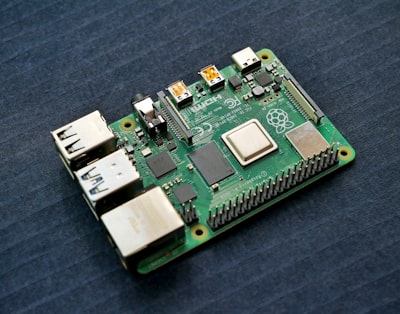
The first step is to choose the right hardware. A Raspberry Pi 4 or 5 with at least 4 GB of RAM is sufficient, along with an external USB 3.0 drive or a large-capacity SSD. The Raspberry Pi acts as a lightweight server, consuming just 10-15 watts, making it an energy-efficient solution for 24/7 operation. On top of that we will install an operating system like Raspberry Pi OS Lite (without graphical interface) and then deploy photo management software: Nextcloud, PhotoPrism, or Immich are the most popular options. Nextcloud offers a complete private cloud with sync apps; PhotoPrism specializes in organization and AI-powered search; Immich is a modern alternative that mimics Google Photos but locally. The choice depends on your needs: if you are looking for AI agents that automate facial tagging and object classification, PhotoPrism or Immich integrate machine learning models without sending data to third parties.
Installation requires basic Linux knowledge, but detailed guides and automated scripts are available. Once configured, remote access is key. Here cybersecurity comes into play: exposing your home server to the Internet carries risks. It is recommended to use a VPN (e.g., WireGuard) or an SSH tunnel to access it securely from outside. Another approach is to use a reverse proxy with SSL certificates and multi-factor authentication. For businesses, at Q2BSTUDIO we implement hybrid cloud solutions with AWS and Azure that offer robustness and scalability, but for a home user the Raspberry Pi is perfect. Additionally, you can add automatic sync from your phone with apps like Syncthing or the Nextcloud app. The result: your photos are backed up in real time, with no space limits beyond the disk you choose, and without paying a cent per month after the initial investment.
From a business perspective, this model reflects the philosophy of custom software. Many companies prefer to develop their own backup solutions rather than subscribe to generic services that do not fit their workflows. For example, a professional photography company may need to store terabytes of RAW files, with custom metadata and role-based access control. This is where custom application development, like the one offered by Q2BSTUDIO, makes a difference. Furthermore, artificial intelligence can enhance the system: train AI models to recognize clients, products, or events in photos, and generate automatic reports. It can even be connected to Business Intelligence tools like Power BI to analyze usage trends, image popularity, or storage patterns. All without depending on externalities or monthly fees.
Automation also plays a crucial role. With scripts in Python or Bash, you can schedule incremental backups, email notifications, or integration with cloud services (AWS S3 or Azure Blob Storage as an additional backup layer). In fact, many companies opt for a hybrid architecture: a Raspberry Pi as a local node for fast backups and a cloud environment for disaster recovery. At Q2BSTUDIO we design solutions that combine the best of both worlds, ensuring data availability without incurring excessive recurring costs. And when it comes to AI agents, they can monitor the system, detect anomalies, or even suggest automatic duplicate removal, freeing up space.
Building your own photo backup system with a Raspberry Pi is not just a DIY project; it is a statement of digital independence. It frees you from subscriptions, protects your privacy, and teaches you the fundamentals of computer infrastructure. For businesses, it represents a practical case study on how custom software, automation, and AI can transform a basic process into a competitive advantage. If you are ready to take the leap, the hardware is cheap, the software is free, and the knowledge is invaluable. And if you need professional guidance, companies like Q2BSTUDIO are ready to assist you in implementing similar systems, whether on a Raspberry Pi or in enterprise cloud environments.