
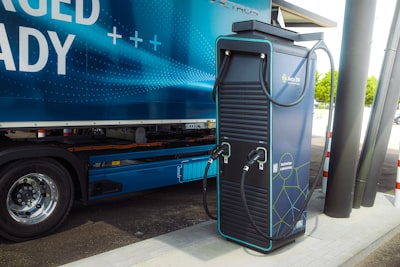
Einride's recent $38 million investment in electric vehicle (EV) charging infrastructure marks a milestone in the transition toward sustainable heavy-duty transport. The Swedish company, known for its autonomous electric trucks, aims to scale its electric logistics operations by expanding an intelligent charging network. This move not only responds to the growing demand for zero-emission solutions but also highlights the need for a robust digital ecosystem that manages energy, fleets, and data in real time. In this context, the development of custom software applications becomes a key enabler for optimizing routes, scheduling charging sessions, and monitoring battery performance.
From a technical perspective, expanding Einride's charging network involves deploying hundreds of high-power charging points integrated with energy management systems and analytics platforms. This is where artificial intelligence (AI) plays a critical role: machine learning algorithms can predict charging demand based on driving patterns, weather, and electricity prices, enabling efficient resource allocation. Moreover, cybersecurity becomes indispensable to protect communication between trucks, charging stations, and control centers. Solutions like AI agents can automate anomaly detection and incident response, ensuring the integrity of the entire ecosystem.
Deploying a large-scale charging network requires robust cloud infrastructure. Einride likely leverages AWS or Azure services to host its fleet management and data analytics platforms. Cloud computing allows dynamic scaling of computing resources, processing large volumes of telemetry, and running AI models in real time. Companies like Q2BSTUDIO offer specialized cloud services that facilitate migration, cost optimization, and integration with legacy systems. Additionally, implementing BI and Power BI enables visualization of key metrics such as charging efficiency, cost per kilometer, and carbon footprint, providing fleet managers with actionable insights for decision-making.
Another fundamental aspect is process automation. From charging scheduling to energy billing, custom software can eliminate manual tasks and reduce errors. AI agents can, for example, dynamically negotiate electricity rates with suppliers or reschedule charges to take advantage of lower demand periods. This not only improves profitability but also alleviates pressure on the local power grid. Integration with accounting and enterprise resource planning (ERP) systems is another area where tailored solutions make a difference.
Einride's investment also reflects the maturity of the electric truck market. As more fleets become electrified, challenges arise such as interoperability between different charger manufacturers, grid capacity management, and the need for open standards. In this scenario, software development companies play an integration and consulting role. Q2BSTUDIO, with its experience in digital transformation projects, helps logistics companies design modular architectures that combine AI, cloud, and cybersecurity, enabling a more agile adoption of electric mobility technologies.
From a business perspective, Einride's move aims to consolidate its leadership in heavy-duty electric transport. Building its own charging network reduces dependency on third parties and provides full control over the customer experience. However, the key to success lies in the software layer that orchestrates all operations. Without a robust digital platform, hardware investment may not translate into operational efficiency. That is why developing process automation is a strategic enabler for any fleet electrification project.
In the future, we will see even greater convergence between generative artificial intelligence and electric fleet management. AI agents will not only optimize routes but also predict charger failures, schedule maintenance, and facilitate integration with renewable energy sources. Cybersecurity will remain a priority, especially with the growing interconnection of IoT devices. Companies that invest in security-by-design solutions, like those offered by Q2BSTUDIO, will be better prepared to mitigate risks.
In summary, Einride's $38 million injection into EV charging is a significant step forward, but its success will depend on the ability to build a digital ecosystem that integrates hardware, software, and data. Technology companies, especially those specializing in custom software development, AI, cloud, and cybersecurity, have a unique opportunity to support logistics players in this transition. The combination of modular, scalable, and secure solutions will be the true engine of large-scale electric transport.

