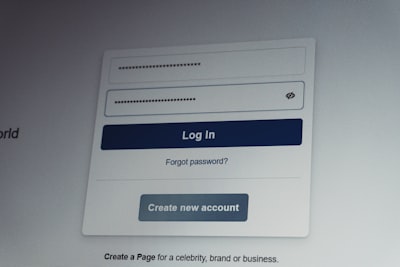
When we talk about corporate cybersecurity, attention usually focuses on firewalls, intrusion detection systems, endpoint protection, and security operations centers (SOCs). However, there is a critical entry point that often falls off the strategic radar: the login page. This seemingly simple and functional interface has become the most exploited attack vector by cybercriminals, surpassing even sophisticated techniques like ransomware. And it is not a matter of lack of awareness; companies know authentication is important. The real issue is priority: consumer identity is still treated as background infrastructure, when in fact it is the gateway to digital trust.
In recent years, we have seen organizations with strong perimeter defenses suffer massive account takeover incidents simply because their login page was not designed to distinguish between a legitimate user and an automated bot. A credential stuffing attack, where stolen credentials from other breaches are injected, can compromise thousands of accounts in minutes. The login page, often built on infrastructure from a decade ago, lacks mechanisms to detect anomalous patterns or adapt security based on context. The result: multi-million dollar financial losses, irreversible reputational damage, and customers abandoning the platform.
The problem is not only technology but the fragmented identity architecture that most companies carry. When an organization has grown through acquisitions or migrated applications to the cloud incrementally, it is common to find each application with its own authentication mechanism, its own identity store, and its own password policies. A customer accessing from the mobile app experiences different security than one accessing through the web portal. Consent records collected years ago lie in databases no one reviews. Password reset flows still rely on email, the most phishable channel. All this happens because there was no unified vision of consumer identity (CIAM).
Organizations that make real progress in CIAM do not start by asking which platform to deploy, but rather ask three fundamental questions. First: what is the customer experience at every identity touchpoint and where is it costing us? Abandoned registrations, repeated password resets, and checkout friction are identity problems with measurable revenue consequences. When a CIAM conversation starts with user experience rather than compliance, it tends to get executive attention much faster. Second: where are we actually exposed and how would we know? Many organizations have some form of fraud detection, but few have continuous risk-based authentication that evaluates each login attempt in context (device, location, behavior, transaction value) and adjusts security requirements without adding steps for the legitimate customer. The gap between these two capabilities is precisely where account takeovers occur. Third: can we demonstrate consent and data governance to a regulator today if asked? With 19 US states having their own privacy legislation and GDPR enforcement not easing, this question has moved from theoretical to operational. The average cost of managing consumer identity compliance on a legacy stack exceeds $3 million annually. That figure tends to focus minds quickly.
The threat landscape has become even more complex with the rise of generative AI. Attackers can now automate phishing campaigns with convincing messages, create personalized social engineering content, and even use deepfakes during identity verification processes. Static authentication models that only verify at a single point in time are no longer sufficient. Identity must be adaptive, continuously assessing trust throughout the session. This is where concepts like AI agents can make a difference: systems that analyze user behavior in real time and decide whether a transaction should be allowed, blocked, or require an additional verification step. At Q2B Studio, we have developed cybersecurity solutions that integrate these intelligent agents to protect the authentication layer without compromising user experience.
The future of identity is passwordless. Passwords are simultaneously the primary attack vector for account takeover and the biggest source of customer friction: forgotten credentials, locked accounts, reset loops that drive abandonment. Eliminating them solves both problems at once. FIDO-based passkey implementations have shown a 99% reduction in credential-related account takeovers, according to recent studies. But passwordless is not a project you complete; it is a direction that identity architecture must move toward. Not all applications or user segments will get there at the same time, but if your CIAM roadmap is not oriented towards that destination, you are building a foundation that the threat landscape is actively working to undermine.
Companies that truly put the customer at the center understand that identity is where trust lives. A well-designed login experience not only protects against attacks but generates loyalty. Customers who can access services securely and without friction, who trust their data is handled correctly, and who never have reason to doubt account security, are customers who stay. That relationship is built transaction by transaction on a foundation that starts at the login page.
At Q2B Studio, we approach consumer identity management as a trust architecture, not a mere authentication mechanism. Our custom software development services include integrating modern CIAM platforms, migrating to cloud infrastructures like AWS or Azure to ensure scalability and availability, and implementing Business Intelligence systems (Power BI) that monitor fraud indicators and user experience in real time. Additionally, we incorporate AI agents for anomaly detection and adaptive authentication, all under a holistic cybersecurity approach that protects the most critical touchpoint in the digital customer relationship: the login page.
It is not just about preventing an attack; it is about building a solid foundation for digital trust. In an environment where threats evolve faster than static defenses, consumer identity must shift from a maintenance cost to a strategic investment. Organizations that act today with foresight will not only protect their assets but differentiate themselves in a market where trust is the new competitive advantage.