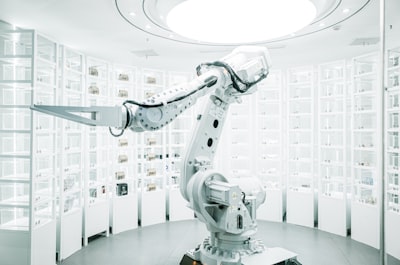
Automation driven by artificial intelligence is no longer a distant threat for physically demanding jobs. According to recent OECD projections, sectors such as construction, agriculture, fishing, industrial production and material transportation face an unprecedented level of disruption. Far from being excluded due to their manual nature, these jobs are being redefined by intelligent robots, computer vision systems and logistics optimization algorithms. The international body points out that routine and low-skilled tasks are the most vulnerable, while those requiring creative thinking, social skills or complex cognitive abilities — such as social work or business management — maintain greater resistance to automation. However, even in highly specialized roles, generative AI (GenAI) can already perform a significant portion of tasks up to twice as fast as a human, a phenomenon accelerated by global AI adoption rising from 7% in 2021 to 20% in 2025.
The impact is not uniform: it varies by industry and region, with exposure rates ranging from 16% to over 70% across different territories. In the United States, for instance, a study by Challenger, Gray & Christmas revealed that in June 2025 AI was the main cause of layoffs, with over 14,000 jobs cut that month alone, led by the tech sector. Since 2021, AI has caused 173,568 job cuts. Nonetheless, new opportunities are also emerging: job postings requiring AI skills have doubled in the past year, reaching nearly 500,000 openings, according to CompTIA. This duality — destruction and creation — forces companies to rethink their workforce and technology strategy.
In this context, digital transformation is not an option but a necessity. Companies that manage to integrate intelligent solutions into their manual operations can boost productivity without losing competitiveness. This is where custom process automation software becomes a key differentiator. Partnering with a technology firm like Q2BSTUDIO allows designing systems that not only replace repetitive tasks but also enhance workers' capabilities through virtual assistants, AI agents and collaborative platforms.
Artificial intelligence alone does not solve all challenges. Companies need robust cloud infrastructure to deploy machine learning models, store large volumes of data and ensure scalability. Both AWS and Azure offer pre-trained AI services that can be integrated into production, logistics or predictive maintenance processes. The implementation of artificial intelligence in industrial environments also requires a strong cybersecurity layer. The connectivity of IoT devices and exposure to ransomware attacks make it essential to have data protection protocols and advanced authentication.
Another crucial aspect is the ability to extract value from data generated by physical processes themselves. Business Intelligence tools like Power BI allow real-time visualization of efficiency indicators, operational costs and bottlenecks. A factory that integrates sensors, collaborative robots and BI dashboards can anticipate failures, optimize transport routes and reduce material waste. Q2BSTUDIO, as a software and technology development company, offers comprehensive services ranging from initial consulting to deployment of cloud, cybersecurity and business analytics solutions.
Automation does not necessarily mean eliminating jobs, but transforming them. AI agents — autonomous systems capable of planning and executing complex tasks — are beginning to assume supervision and control functions that previously required human supervisors. In construction, drones equipped with computer vision inspect structures and generate automatic reports; in agriculture, autonomous tractors perform planting and harvesting with millimeter precision; in transportation, dynamic routing algorithms reduce delivery times and fuel consumption. These technologies not only increase efficiency but also improve workplace safety by removing people from hazardous environments.
However, the transition is not without obstacles. Many companies lack the internal expertise to evaluate which processes are truly automatable and what the return on investment is. AI adoption has been hindered by regulatory, ethical and talent shortage barriers. OECD data shows that although exposure to disruption is high, adoption speed varies enormously. Organizations that have already started experimenting with generative AI report productivity improvements of up to 40%, but those waiting for the technology to mature risk falling behind.
In this scenario, having a strategic ally like Q2BSTUDIO makes the difference. Its focus on custom application development, cloud AWS/Azure integration, cybersecurity and BI/Power BI allows companies to address disruption in an orderly and cost-effective manner. It is not just about adopting technology, but rethinking processes from a continuous improvement perspective. AI agents, for example, can be designed to collaborate with workers rather than replace them, augmenting their capabilities and freeing up time for higher-value tasks.
The future of physical labor is not written. The OECD warns us, but also provides a roadmap: invest in training, develop digital infrastructure and foster innovation. Companies that understand that AI is a transformation tool, not a threat, will be better prepared for the changes ahead. The key lies in the intelligent integration of technologies — from collaborative robots to data analytics platforms — and in collaboration with partners who understand both business and technology. Q2BSTUDIO, with its experience in automation, cloud and cybersecurity, positions itself as the ideal partner to navigate this new era.