In today’s manufacturing world, the transition to circular models is a strategic necessity. Circular supply chains aim to maximize material reuse, reduce waste, and close production loops. However, when critical recovery windows occur — such as natural disasters, logistical failures, or demand spikes — uncertainty skyrockets. In this context, probabilistic inference using Graph Neural Networks (GNNs) emerges as a powerful tool for making robust decisions under uncertainty.
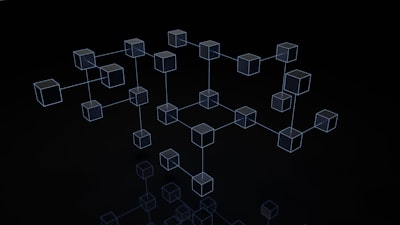
Traditional deterministic GNNs assume static, fully observed graphs. In practice, nodes (factories, recycling centers) and edges (material flows) exhibit stochastic behavior: a machine may fail, a shipment may be delayed. Probabilistic GNNs, by incorporating Bayesian layers, learn probability distributions over predictions. This allows risk quantification and the design of contingency plans.
From the perspective of Q2BSTUDIO, a company specialized in software development and technology, implementing these solutions requires a comprehensive approach. It is not just about an AI model, but about integrating it with custom applications that manage data in real time, with robust cloud infrastructure (AWS or Azure), and with cybersecurity layers that protect sensitive supply chain information.
In this article we will explore the fundamentals of probabilistic inference with GNNs, their practical application in circular supply chains, and how to combine them with AI agents to automate decisions during critical recovery windows.
Technical Foundations
A probabilistic GNN differs from a conventional one in that its convolution layers use weights distributed according to a prior distribution (e.g., Gaussian). During training, variational evidence is optimized by combining the fitting loss (such as cross-entropy) with the KL divergence between the posterior and the prior. This acts as a regularizer, preventing overfitting and providing confidence intervals.
In practice, for a circular supply chain, the graph contains nodes with deterministic attributes (capacity, location) and stochastic ones (failure probability). Edges represent flows of recycled, reused, or remanufactured materials. The model predicts the success probability of each flow within a recovery window. Bayesian layers are implemented using reparameterization techniques that allow stochastic gradient descent. For example, a Bayesian convolutional layer samples weights each forward pass, thus generating a distribution of outputs.
Real-World Implementation
Consider a recovery network for electronic devices after a hurricane. We have collection centers, refurbishment plants, and rare metal recycling facilities. Transport routes may collapse. A probabilistic GNN trained with synthetic data (generated by a GAN) can predict which routes have high success probability and which are uncertain. The model produces a mean and a standard deviation for each edge. If the standard deviation is high, the system knows it must seek alternatives.
Q2BSTUDIO has worked on projects where integrating AI with Business Intelligence solutions (Power BI) allows real-time visualization of model predictions and triggers alerts. Furthermore, cybersecurity is critical: supply chain data is sensitive and must be protected through encryption and access controls in cloud environments. The combination of cloud AWS/Azure with advanced security policies ensures business continuity even during cyberattacks.
AI Agents for Autonomous Decisions
A significant advancement is combining probabilistic inference with autonomous agents. If the model predicts a very low success probability (e.g., below 0.3), an AI agent can automatically activate an alternative route or request a drone shipment. If uncertainty is high (standard deviation above 0.15), the system asks for human operator review. This hybrid approach improves resilience and reduces reaction time.
At Q2BSTUDIO, we develop these types of agents as part of process automation solutions, using frameworks like LangChain and connecting them to cloud services such as AWS (Lambda, SQS) or Azure Functions. Additionally, we integrate Power BI dashboards so operators can see the status of each decision and intervene if necessary. Cybersecurity ensures that communications between the agent and the cloud are protected.
Challenges and Solutions
Scalability remains a challenge. Bayesian GNNs require multiple samples during inference (Monte Carlo), which increases computational cost. However, techniques such as variational dropout and sparse message passing reduce complexity to O(E), where E is the number of edges. For large-scale graphs, sampling architectures like GraphSAINT can be used.
Another challenge is the lack of real data in circular supply chains. Realistic synthetic graphs can be generated using generative adversarial networks (GANs) trained on historical industry data. Q2BSTUDIO offers consultancy to design these data pipelines and ensure training quality, as well as to deploy the model on scalable cloud infrastructure.
The non-stationarity of recovery windows demands online learning. Kalman filters can be implemented over Bayesian layers to update the posterior with each new observation. This allows the model to quickly adapt to changes in the logistics network without retraining from scratch.
Future of Probabilistic Inference in Circular Supply Chains
The next frontiers include quantum inference for massive graphs and federated probabilistic GNNs, which allow multiple factories to train a shared model without exposing sensitive data. Causal models that answer counterfactual questions such as “What if we reroute all materials through node X?” are also being researched. These capabilities will elevate supply chain resilience to a higher level.
At Q2BSTUDIO, we closely follow these trends to offer our clients cutting-edge solutions in cloud AWS/Azure and cybersecurity, combined with probabilistic artificial intelligence. Our engineering team works on integrating these techniques with custom applications, ensuring each client gets a system tailored to their specific needs.
Conclusion
Probabilistic inference with GNNs is not an academic luxury, but an operational necessity for circular supply chains that must operate under uncertainty. By integrating these capabilities into custom applications, with secure cloud infrastructure and AI agents, companies can recover faster from disruptions.
If your organization is looking to develop such a system, Q2BSTUDIO offers the technical knowledge and experience to implement it. From creating the probabilistic model to deploying it in production with Power BI monitoring, including the incorporation of cybersecurity measures and cloud optimization. Contact us to discover how probabilistic AI can transform your circular supply chain.