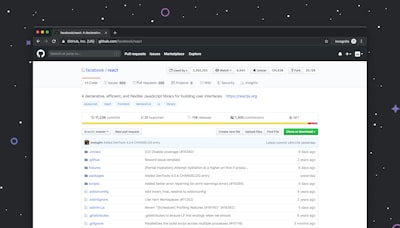
In recent weeks, cybersecurity researchers have focused on a campaign named FakeGit that has managed to infiltrate nearly 7,600 malicious repositories on GitHub. Of these, over 800 impersonate artificial intelligence skills or MCP (Model Context Protocol) servers to distribute a malware family known as SmartLoader. This discovery not only highlights the growing sophistication of attackers but also alerts developers and companies that rely on open-source platforms for their workflows. In this article, we analyze in depth the modus operandi of FakeGit, the impact of SmartLoader, and how companies can protect themselves through cybersecurity strategies, custom software development, and secure adoption of artificial intelligence.
The FakeGit campaign is characterized by an elaborate impersonation process. Attackers clone legitimate projects—especially those related to artificial intelligence—and modify names, descriptions, and author profiles to create an appearance of authenticity. They then upload repositories with very convincing README files detailing supposed innovative AI functionalities, accompanied by ZIP files containing the malicious payload. The goal is to attract developers looking to accelerate their projects by integrating prebuilt AI models or MCP tools, an emerging protocol for communication between language models and applications. By downloading and executing those ZIPs, the system becomes infected with SmartLoader, a malware that acts as a backdoor and enables additional payload downloads, credential theft, and remote control of the machine.
SmartLoader is particularly dangerous because it combines evasion techniques with persistence capabilities. Once inside the system, it communicates with command-and-control (C2) servers to receive instructions and download other malicious modules, such as ransomware or information stealers. Researchers have identified that fake repositories use names very similar to well-known AI projects, such as 'GPT-Model-Connector' or 'AI-Agent-Builder,' making detection difficult at a glance. Additionally, author profiles often include fictitious contributions and AI-generated photographs to appear more trustworthy. This campaign not only affects individual developers but can compromise an entire company's software supply chain if an employee downloads the malicious code in a corporate environment.
The impact of FakeGit goes beyond mere data theft. By simulating AI tools, attackers capitalize on the artificial intelligence frenzy sweeping the tech sector. Many companies are adopting AI agents and BI solutions without proper security checks, making them perfect targets. The key lesson is that open source is not synonymous with automatic trust. Therefore, at Q2BSTudio, a software development and technology company, we insist on the need to integrate cybersecurity into every phase of the software lifecycle. A proactive approach includes repository audits, static code analysis, and the implementation of secure download policies.
For organizations handling critical data, having specialized cybersecurity services is essential. An antivirus is not enough: penetration tests, continuous threat monitoring, and staff training on social engineering detection are required. At Q2BSTudio we offer comprehensive security solutions covering everything from infrastructure assessment to incident response, tailored to cloud environments like AWS or Azure. Precisely, the cloud is another attack vector exploited by campaigns like FakeGit, as many malicious repositories host scripts that interact with cloud services to exfiltrate information. For this reason, we recommend that our clients combine AWS/Azure cloud with good security practices, such as managed identities and network segmentation.
From a development standpoint, the best defense is to build custom applications that incorporate security from the design phase. Custom software allows control over every dependency and avoids blindly integrating third-party components without verification. At Q2BSTudio we develop multiplatform software with continuous testing cycles and vulnerability analysis, minimizing the risk that a malicious repository like those from FakeGit slips into the production pipeline. Additionally, we offer artificial intelligence consulting so companies can implement AI agents and BI solutions, such as Power BI, without compromising security. Our team designs secure data flows and isolated training environments, ensuring that the models used do not introduce backdoors.
The FakeGit case also highlights the importance of automation in security processes. Manual detection of thousands of repositories is unfeasible, so automation tools, like those we develop at Q2BSTudio, can scan suspicious patterns, analyze metadata, and block downloads before they reach the user. Our process automation systems integrate with CI/CD platforms to validate every code package, preventing malware like SmartLoader from spreading through software updates. Likewise, artificial intelligence can be used as an ally: machine learning models trained to recognize fake repositories or anomalous commit behaviors.
In conclusion, the FakeGit campaign is a reminder that cybersecurity must evolve at the same pace as threats. With over 7,600 malicious repositories and 800 fake AI servers, developers and companies cannot let their guard down. The solution is not to abandon open source or AI, but to adopt a multidisciplinary approach that combines cybersecurity, custom software development, secure cloud, BI, and reliable AI agents. At Q2BSTudio we are ready to accompany organizations on this path, offering services ranging from security auditing to the creation of personalized solutions. If your company uses GitHub or any other open-source platform, we invite you to review your download policies and contact us to strengthen your security posture. Investment in prevention is always less than the cost of an incident.