
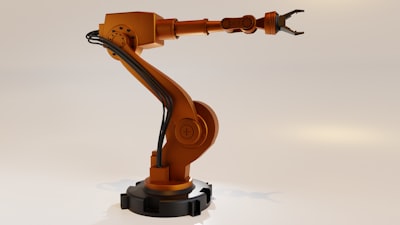
Deep reinforcement learning (DRL) has proven to be a powerful tool for addressing reach-avoid tasks in robotics, especially for controlling robotic arms. However, most previous studies have focused on simplified and restricted environments, such as laboratory tables with static obstacles and predictable geometries. A recent research paper, presented on arXiv (2607.15935), challenges this simplification by introducing a comprehensive benchmark that captures real-world complexities without artificial reductions. This work uses the MuJoCo MJX physics engine together with the Brax library to parallelize both the simulation and DRL algorithms, achieving success rates of 96.1% (UR5e) and 98.8% (Franka Emika Robot) for the reach task, and 86.8% and 95.2% respectively for the static reach-avoid task. Although these results are promising, the authors warn that agent performance collapses when evaluated in realistic scenarios, indicating that additional research is still needed to claim a complete resolution of the problem.
From a technical perspective, this benchmark represents a significant advance because it eliminates common idealizations: environments with perfect lighting, noise-free sensors, and simplified contact dynamics. Vectorized simulation, which runs multiple episodes in parallel on modern hardware (GPUs), accelerates training and evaluation, opening the door to industrial applications where robotic arms must operate in dynamic and unstructured environments. For example, in a real assembly line, a robot must reach moving parts while avoiding collisions with other robots, tools, and human operators. The ability to train DRL agents in massive simulations and then transfer them to the real world is key to flexible automation.
For businesses, this type of research has direct implications. Implementing DRL-based control systems requires not only robust algorithms but also custom software infrastructure to integrate simulations, sensors, and actuators. This is where a company like Q2BSTUDIO can add value, offering custom application development that connects reinforcement learning models with cloud platforms such as AWS or Azure, enabling scaling of training and real-time execution. Additionally, integrating AI agents for autonomous decision-making combined with Business Intelligence (Power BI) systems allows continuous performance monitoring and process optimization.
Cybersecurity is another critical aspect when deploying cloud-connected robotic arms. An attack on control algorithms could have catastrophic consequences. Therefore, Q2BSTUDIO also provides cybersecurity services to protect communications and trained models. Moreover, software process automation via DRL can be applied beyond robotics: in logistics, finance, or healthcare, where agents learn optimal policies for resource allocation or inventory management.
In conclusion, the presented benchmark underscores that, although DRL has advanced, there is still a long way to go to achieve reliable systems in real environments. Vectorized simulation and parallelization are tools that accelerate this progress, but the real key lies in combining these advances with solid and customized software engineering. Companies like Q2BSTUDIO are ready to accompany organizations in this process, from model conceptualization to cloud deployment, ensuring security, scalability, and efficiency. The future of intelligent robotics passes through collaboration between academic research and business development, and solutions like those discussed here pave the way towards truly intelligent automation.

